Expect to practice what you watch. Official fly-fishing guidance stresses learning by doing and getting hands-on lessons from an instructor. Use online instruction to prepare for that help and to revisit a movement afterward. Choose lessons for water near you, whether a lake, river or the sea.
How to learn to fly fish online
You can learn to fly fish online by pairing each lesson with hands-on practice. Learn to Fish: Fishing Basics, our Android app, guides a river fly-fishing path from setup to release. Learn line connections and practice short casts with yarn first, then take line control and safe fishing practice to the water.
How much can you learn to fly fish online?
Separate the skills you can rehearse at home from those that need real water. Watching a lesson starts a skill; it does not prove you can do it.
In fly fishing, the weight of the fly line carries the cast. The artificial fly can be very light. Your first casting goal is to control that moving line, with space for it behind and in front of you.
| Skill | Learn from a screen | Check through practice |
|---|---|---|
| Line connections | Identify each part and follow the knot steps | Assemble them and pull-test the joins |
| Overhead cast | Watch the grip, stops and pause | Cast yarn safely on grass |
| Fly types | Distinguish surface and sinking flies | Choose one for local fish and conditions |
| Reading water | Recognize different current speeds | Observe those differences from shore |
| Mending | See how moving the line changes its position | Adjust line on water without pulling the fly |
| Wading safety | Learn hazards and precautions | Get local instruction before entering current |
You can start for free. Some fishing authorities and park services publish illustrated beginner fly-fishing guides online that cover the outfit, the knots and the overhead cast. Keep the page you need beside your gear while you practice.
Learn to Fish: Fishing Basics, our Android app, has a river-shore fly path covering outfit assembly, yarn casts and dry-fly presentation, with guided practice. The first 2 lessons of a path are free; a weekly or yearly subscription opens the rest.
When choosing a fly fishing course online, check that its lesson list covers your intended water, shows equipment like yours and gives you something to practice after watching. For broader course options, see online fishing courses.
Learn the line connections before adding a fly
Use a close view to learn what each join connects, then make it with your own line.
You need a fly rod, a matching reel and fly line, backing, a leader and tippet. Backing is reserve line beneath the thicker fly line; the leader connects that line to the fine end section, called the tippet. For equipment choices and which knot to use at each join, see how to learn fly fishing.
Pause the demonstration at these checks:
- Fly line to leader: if both ends have suitable loops, compare how the loop-to-loop join sits after tightening.
- Leader to replacement tippet: for a joining knot such as the surgeon's knot, keep both loose ends in view. Check which strands the teacher pulls.
- Tippet to fly: for an attachment knot such as the improved clinch, follow the loose end through each opening before tightening.
Moisten knots before tightening them and test the connections with a controlled pull, keeping clear of any hook point. Retie a connection that slips. A knot that looks right on a paused screen still needs testing in your hands.
The app shows assembling the fly outfit, joining backing and line, connecting the leader loop to loop, threading every guide and adding tippet. Follow with the outfit in front of you.
Practice the overhead cast on grass
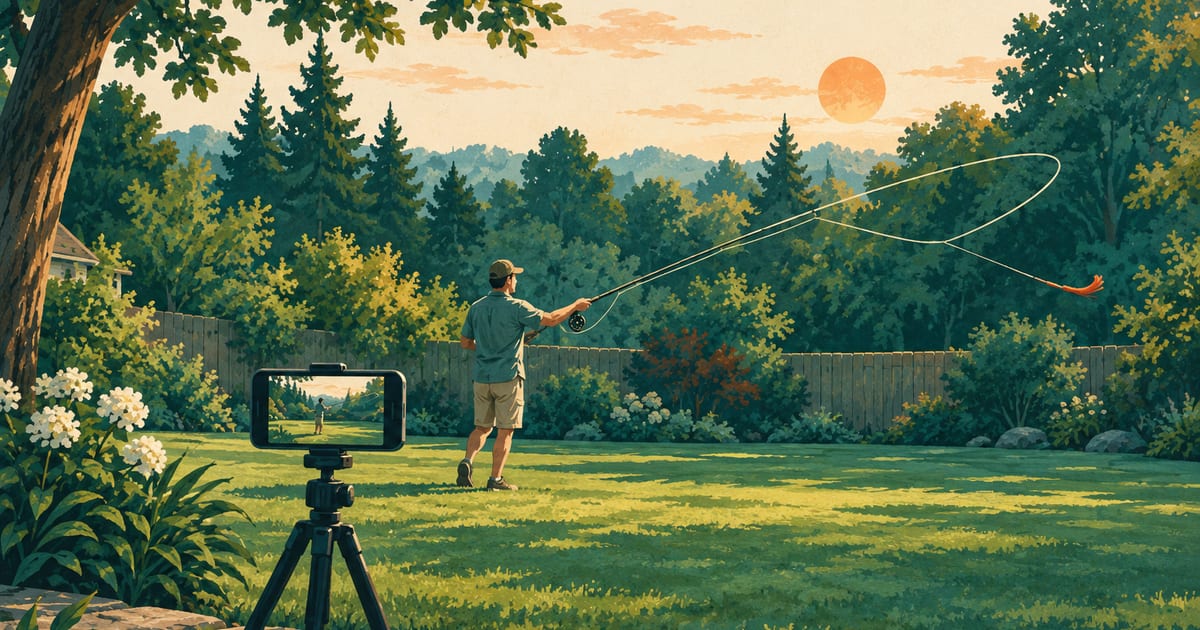
Use an open grassy area where the rod and the whole moving line can stay clear of people, pets and obstacles. If your yard lacks room behind you, use a suitable open space where practice is permitted.
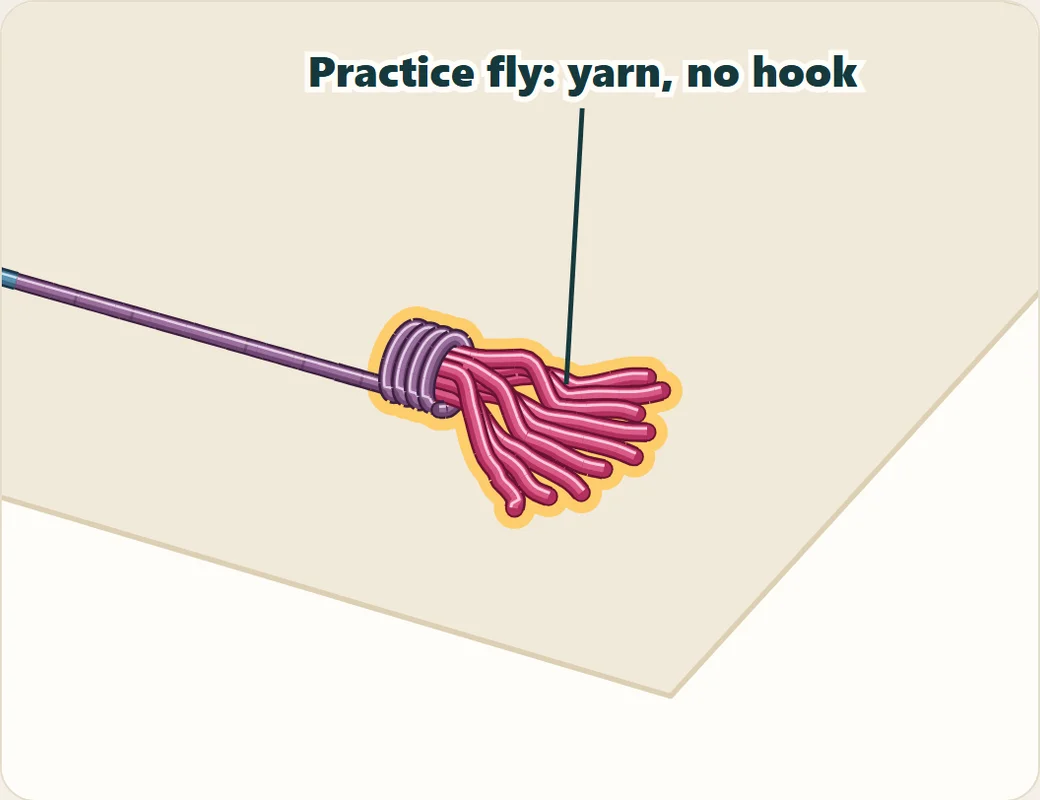
Remove the fly completely so lawn practice stays hookless. Tie a small piece of yarn to the tippet so you can see where the cast ends. Wear sunglasses and a hat. Check behind you, overhead and along the casting direction. Stop if anyone enters the space.
Use your chosen casting lesson for the movement, then organize practice this way:
- Start short. Let about one rod length of the thick fly line extend beyond the rod tip. That means fly line outside the tip, with the leader and yarn beyond it.
- Watch one complete cast. Find the back movement, stop, pause, forward movement and landing before trying to copy them.
- Make one cast at a time. Let the yarn land after each attempt, as the official illustrated guide recommends.
- Check the pause. Watch the line extend behind you before starting forward. Keep the same short line length while checking this.
- Reset before repeating. Put the rod down to replay a confusing part. Choose one movement to compare on the next attempt.
The app's fly path teaches the grip, pause and overhead cast, then short practice casts with yarn instead of a fly. Most lessons have a 3D animation you can slow down and replay when comparing your movement with a demonstration.
Film a few casts and check the pause
A side view gives you a way to compare your movement with the lesson after you put the rod down. A clip helps you practice, but it cannot replace an instructor watching you.
Place the phone securely outside the path of the rod and line. Frame your casting hand, rod tip and as much of the line as possible. If another person films, keep them outside the casting space too. Record your ordinary short cast, rather than reaching farther for the camera.
Replay it and ask:
- Does the line extend behind me before my hand starts forward?
- Can I see a clear stop at the end of each casting movement?
- Does the line unroll ahead before I lower the rod?
- Can I repeat the movement without adding more line?
Compare the same part of the demonstration, at the same line length where possible. Change one movement, then record again. Do not force your hand to copy an exact clock position while ignoring what the line does. The pause must give the line time to extend.
If you still cannot tell which part fails, save the clip and ask a casting instructor to watch. A useful question is, "Am I starting forward before the line straightens behind me?"
Check what the lesson shows after the fly lands
Grass practice teaches the casting movement, but moving water adds a new problem: different parts of your line can travel at different speeds.

When a lesson names a fly, check where it is meant to fish: a dry fly stays on top, while a nymph imitates an insect living underwater. A streamer often copies a small fish. The beginner fly-fishing guide explains choosing and fishing these types.
For a river dry-fly lesson, watch where faster water meets slower water and follow the line after it lands. From a stable bank beside gentle current, look for those same differences before trying the exercise.
A naturally drifting dry fly travels with the surface water. When the line pulls it sideways or makes it leave a wake, that unwanted pull is called drag. Mending means repositioning the line to reduce that pull. Look for a demonstration that keeps both the line and fly visible before and after the adjustment.
The app's fly path shows presenting a dry fly in gentle current and mending the line. Watch the movement first, then judge your attempt by what the fly does on the water.
Stay on stable ground and wear a properly fitted life jacket. Learn wading separately with an experienced person; a screen cannot judge the current or footing for you.
Book a casting lesson early
An instructor can watch your first attempts, before you have a repeated fault to fix. Official fly-fishing guidance says hands-on lessons from an instructor have no substitute, and a long-standing fly-fishing guidebook recommends having someone who can cast work with you at the beginning.
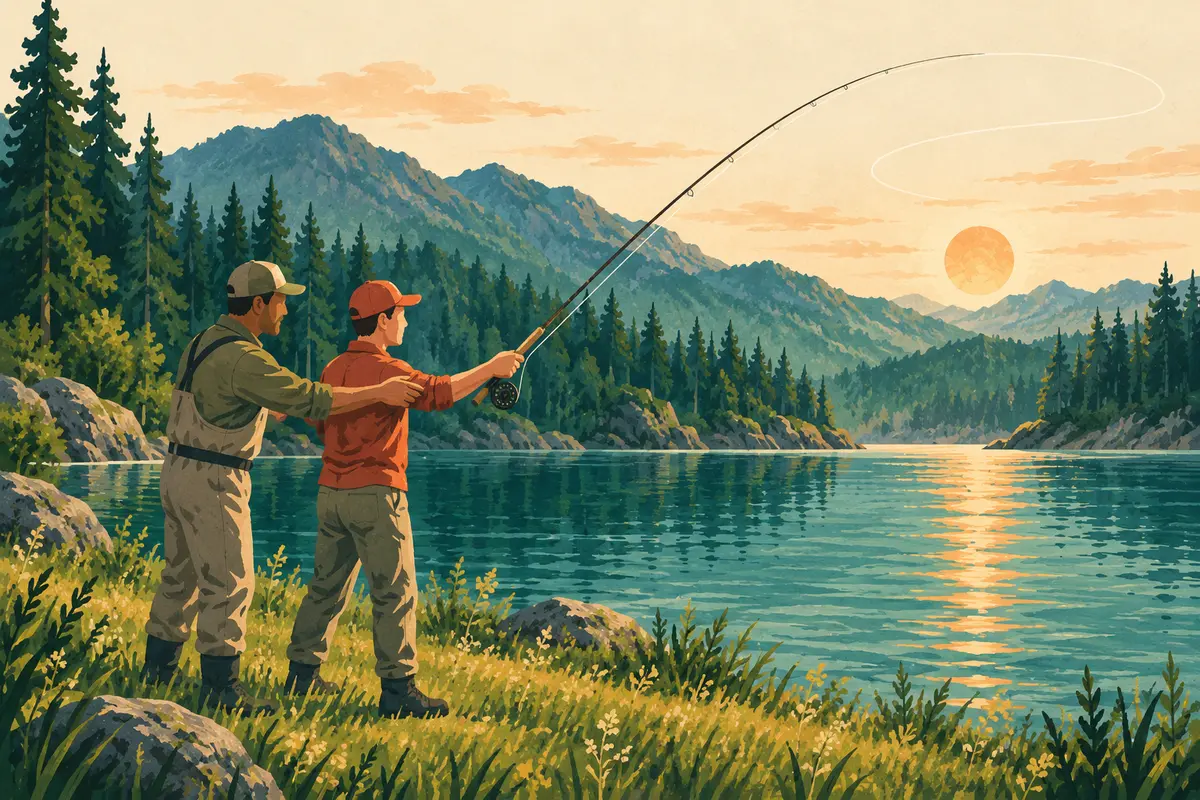
Book early if you can. If you have already started, ask for help when the line repeatedly falls behind you, the forward cast piles up, or you cannot find a pause that lets the line extend.
Tell the instructor whether you want casting help or a lesson on the water. These solve different problems. A casting lesson can focus on your hand movement and line. A waterside lesson can add fly placement, current control, mending and safe access.
Before booking, ask whether adults with no experience can attend, whether equipment is supplied, and how much time you will spend practicing under observation. Take your own outfit if the instructor agrees.
Some public programs offer free beginner events or gear loans; ask whether adult fly-fishing instruction and fly outfits are included. For ways to find help locally, see can you teach yourself to fish.
Avoid these online learning mistakes
Keep your practice tied to a task you can check, so collecting more explanations does not replace using the rod.
Copying a long cast first. Return to a short length of line and individual casts. Check the stops and whether the line extends before adding distance. A demonstration of an advanced cast is not a requirement for your next practice.
Using a real fly for lawn practice. Keep the yarn on until you are fishing. Even a barbless hook still has a point.
Opening a fly-tying course when you wanted casting lessons. Making an imitation on a hook and attaching a finished fly to your line are different skills. Read the lesson list before enrolling so you know which one it teaches.
Copying a hand position without watching the line. A close view can show the grip, but you also need to see whether the line extends between movements. Use a wider view for the pause and line path.
If you can cast but get no takes, move to why am I not catching fish for the fishing checks.
Follow this plan from screen to river
Move forward when you can perform the practice task, rather than when you have finished a playlist. Repeat any stage that still feels uncertain.
| Stage | Your task | Before moving on |
|---|---|---|
| Screen and table | Identify the line parts and make the connections | You can repeat and test the joins |
| Open grass | Make short overhead casts with yarn | You check the space and let the line extend |
| Video or coach | Review first casts or a recurring problem | You know which movement to practice |
| Safe riverbank | Observe current, present one dry fly and try a mend | You can see whether line pulls the fly |
| Later practice | Review one difficulty | Choose one task for the next session |
Before fishing, check your local fishing authority. Rules, licenses, seasons, limits and life jacket requirements differ by country and region. Check the exact water and permitted methods, including separate saltwater requirements where they exist.
For lakes or the sea, choose instruction for your intended fish and location. At sea, waves, tides and rip currents need local safety advice; read first-time fishing before planning the trip. Before fishing with a hook, use learn fishing to learn careful landing, unhooking and release; it also covers gear care after salt water.
Choose your next lesson from the part of the practice you could not yet do comfortably. For the whole route from equipment to your first fish, follow how to learn fly fishing.
Frequently asked questions
What should I look for when I film my fly casting?
Film from the side, keeping the phone outside the casting space. Include your hand, rod tip and as much line as possible. Check whether the line extends behind you before your hand starts forward and whether each movement ends in a clear stop. Change one movement, then film again.
What should an online fly fishing course include?
Look for outfit assembly, line connections, safe casting practice, basic fly types, reading water, presentation, fish handling and safety. It should tell you what to practice after each lesson. Check whether it covers the water you intend to fish and whether it offers feedback on your attempts.
Can I practice fly casting without water?
Yes. Use an open grassy area, remove the fly and attach a small piece of yarn to the tippet. Check behind you and overhead before casting. Grass lets you practice the overhead movement, but it does not reproduce how current pulls the line after it lands.
How much line should I use for casting practice?
An official beginner guide starts with about one rod length of thick fly line beyond the rod tip. The leader and yarn extend beyond that. Keep the same short length while checking the stops and pause. Add line as you gain control, rather than starting with a distance target.
Are in-person fly fishing lessons worth it?
Yes. Official fly-fishing guidance recommends hands-on instruction, and help at the start can give you a clear movement to practice between lessons. Ask for casting instruction for the movement, or a waterside lesson for presentation and mending. Check adult beginner places and supplied equipment before booking.
Why should a casting video show the whole fly line?
The line tells you whether the pause is long enough. A close view of the hand can show the grip and stops, but it may hide a back cast that has not extended yet. Look for a wider view that lets you follow the line behind and in front of the caster.
Can I learn to mend fly line on grass?
You can watch the movement online, but grass does not reproduce current pulling different parts of the line. Practice at a safe bank beside gentle water, ideally with an instructor. Judge the adjustment by whether the fly continues drifting naturally, rather than just by the rod movement.
Sources
- Texas Parks and Wildlife Department: Basic Fly Fishing
- Missouri Department of Conservation: Fly Fishing
- National Park Service: Fly fishing
- Wiley: Fly Fishing For Dummies, 2nd edition, by Peter Kaminsky (2021)
- Ontario Ministry of Natural Resources: Learn to Fish
- Texas Parks and Wildlife Department: Tackle Loaner Program
- Fisheries and Oceans Canada: Learn about and apply for a recreational fishing licence
- Surf Life Saving NSW: Rock fishing
- Surf Life Saving NSW: Rip currents
- Texas Parks and Wildlife Department: A Basic Guide for the Beginning Angler
- Wiley: Fishing For Dummies, 2nd edition, by Peter Kaminsky and Greg Schwipps (2011)