The idea that you need lots of expensive equipment to start fishing is wrong. Official beginner guides say a basic rod and reel, line, a hook and bait are enough to get started. Choose equipment for the water and fish near you, then learn to use it before buying more.
Learn fishing: the basics every beginner needs
To learn fishing, start with one simple setup on calm water: a lake, a slow river or a sheltered sea spot. Learn to Fish: Fishing Basics, our Android app, guides you step by step, with 3D animations you can slow down. Check local rules, learn one knot, practice casting, then watch for bites and handle your catch carefully.

How to learn fishing, step by step
Learn in this order: check the rules, choose a safe spot and gear, tie your setup, practice casting, then add bait. Read the fish-handling steps before casting.
Your first place can be a lake, a slow river or a sheltered sea spot: a pier, a jetty, a calm beach or the shore behind a breakwall (breakwater). Piers and jetties extend from shore; breakwalls shelter water from waves. Use marked paths or firm sand. Check public access, or get permission on private land.
Saltwater fishing can have its own license and rules, different from fresh water. Check your local fishing authority, the government agency managing fishing, for the water you plan to fish. Look up:
- Whether you need a license or qualify for an exemption.
- Which fish you may catch and when fishing is allowed.
- Size limits and how many fish you may keep.
- Legal bait, hooks and other equipment.
- Which fish you must release, and which you must not put back in the water.
Rules differ by country, region and water. Learn to identify local fish and measure any you plan to keep.
Choose calm water and a small gear kit
Choose somewhere you can cast and land fish without entering the water. Take a companion, tell someone your plans and check the weather.
At sea, also check waves and tides, the regular rise and fall of sea level. Watch the waves from dry ground for at least 30 minutes, and never turn your back on them. Waves can reach unexpectedly far; rising water can cut off your exit. As a beginner, stay off rocks, including rock breakwalls, which can be slippery or wave-washed. Leave if waves threaten your spot.
Rip currents flow away from shore and can form beside piers and jetties. Darker gaps with fewer breaking waves can warn of one, but rips can be hard to see. Stay out of the water. If someone falls in, never jump in after them: throw something that floats and call emergency services. Wear a fitted, fastened life jacket, and check local life jacket rules.
The app's shore safety lesson shows how to look from dry ground, judge how far waves reach and spot a rip current. It also covers staying off rocks, choosing firm sand and keeping help within reach.
Match the gear to local fish
Ask a local fishing equipment shop which fish and gear suit your shore spot. Sea fishing may need stronger equipment than a small-fish freshwater setup.
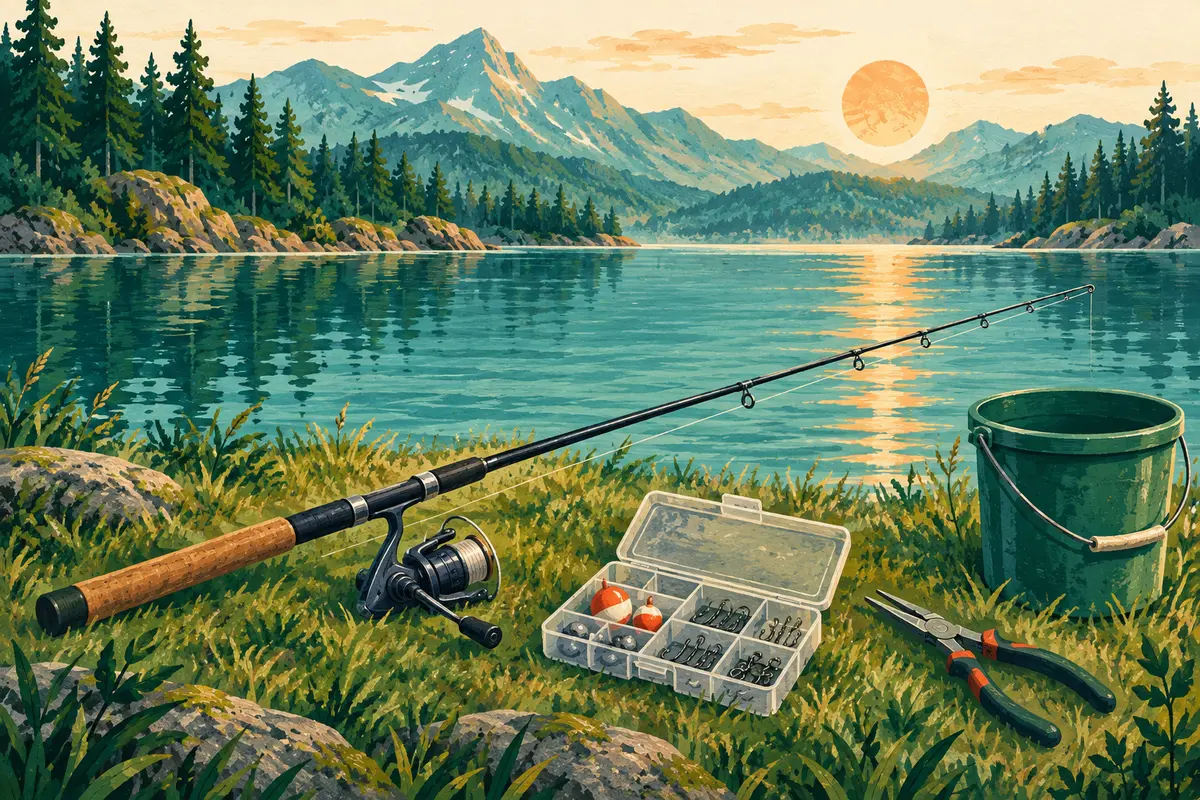
A spinning reel hangs below the rod; its wire arm, the bail, opens to release line. Monofilament is single-strand line suitable for beginners. Bring small hooks, a float, weights, legal bait, line clippers, a ruler, a hook-removal tool and a soft knotless-mesh or rubber landing net. For small freshwater fish, official guides suggest hooks around sizes 6 to 10 and line of about 4 to 8 lb (1.8 to 3.6 kg). Hook sizes run backward: a size 10 is smaller than a size 6.
Before buying, check for free gear loans or learn-to-fish events through fishing authorities or libraries. For a practice plan, see can you teach yourself to fish.
Tie one good knot and choose a simple rig
A rig is the hook, weights and any float arranged on your line.
In calm fresh water, try a bobber (float) rig. It holds bait at a chosen depth and shows bites. Tie on the hook. If needed, pinch split-shot weights onto the line above it with pliers to hold the bait down. Attach the float above them. Move it farther from the hook to fish deeper, or closer to fish shallower.
Use the smallest float you can easily see that supports the bait without sinking. A float rig can also work in calm salt water for fish feeding above the bottom.
From a pier or sheltered shore, try a bottom rig. Its weight takes bait to the bottom. For a sliding-weight version, called a running sinker rig, thread the main line through the weight. Tie the line's end to a swivel, a small rotating metal connector, then tie a leader, a short length of line, between swivel and hook. The weight slides along the main line.
Tie the improved clinch knot
The eye is the hook's small hole. The tag end is the loose line end; the standing line runs back to your rod.
- Pass the tag end through the hook eye.
- Wrap it 5 to 6 times around the standing line.
- Pass the tag end through the small loop next to the hook eye.
- Pass it through the larger loop you just formed.
- Wet the knot, hold the hook clear of its point, and pull the standing line slowly to tighten.
- Clip off the extra tag end, leaving a short stub.
Test with a firm pull, keeping fingers clear of the point. Retie slipping knots or damaged line.
The app's knot animation shows each step and can be slowed down and replayed. You can practice with thick cord first.
Set the drag before you go
The drag is the reel's adjustable resistance, letting a strong pull take line before it breaks.
With the reel ready to wind in, pull the line, not the hook. It should give line against firm resistance. Tighten the drag if line comes off almost freely; loosen it if the line will not come off or breaks.
Practice a controlled cast before adding a hook
Tie on a casting plug (a practice weight with no hook) and find an open area away from people. Practice reaching a target before casting farther.
Look behind you and overhead before every cast, including on a pier. Check that the line is not wrapped around the rod tip.
Cast with a spincast reel
A spincast reel sits above the handle and releases line with a push button. Hold the button, raise the rod, then move it forward smoothly. Release the button during the forward movement. Turn the handle to start winding line again.
Cast with a spinning reel
- Grip the rod with the reel below it.
- Hook the line with your index finger and press it against the rod. Then open the bail with your other hand.
- Face the target and raise the rod to near vertical.
- Move your forearm forward. Straighten your index finger to release the line when the rod reaches eye level.
- After the cast, close the bail by hand and reel in loose line.
The app's casting lesson uses the same hookless plug and shows the finger-and-bail movement up close. Its sea path also teaches casting a bottom rig with a sliding weight and cut bait (pieces of fish) from shore, then recognizing when the weight touches the bottom.
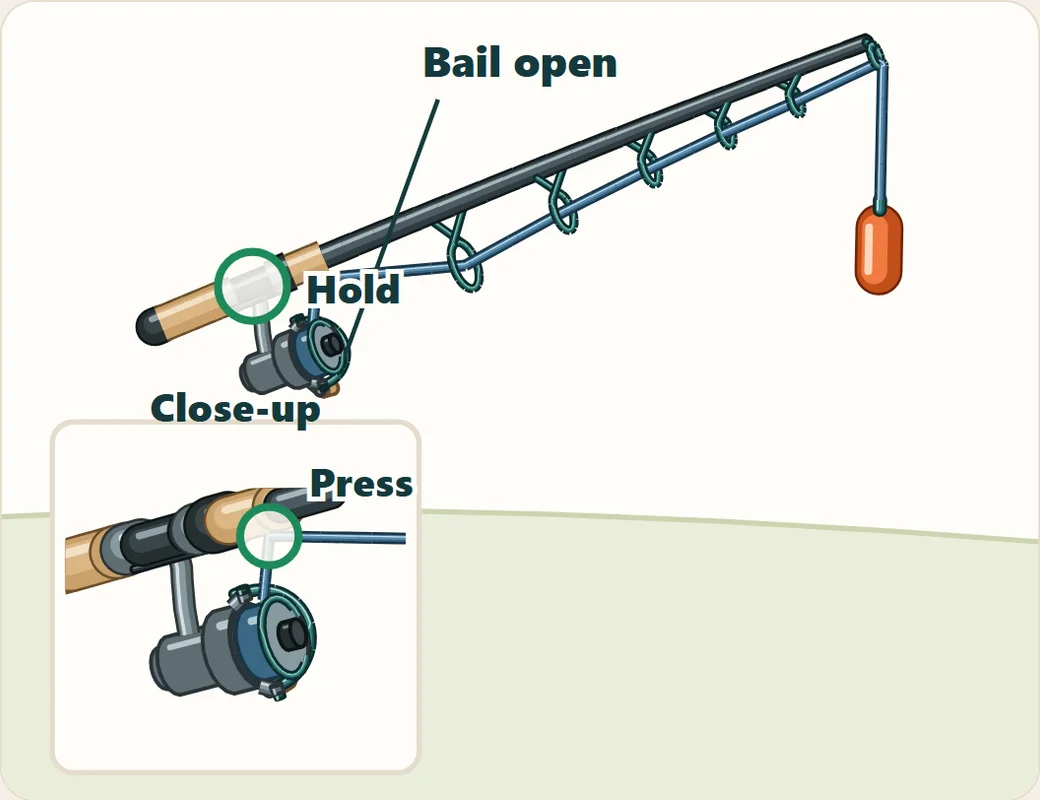
If the plug lands close in front of you, you released too late. If it shoots almost straight up, you released too soon.
If no line comes out, clear any tangles around the rod tip or inside the reel before trying again.
Bait the hook and pick a spot
Use bait that is legal for your chosen water and suits the fish there. Ask locally before buying or collecting it.
In fresh water, worms are one option where allowed. Thread a small piece onto the hook instead of a dangling bundle. At sea, locally permitted prawn or shrimp, squid or cut fish can be options. Buy bait intended and permitted for fishing locally; bait rules can restrict particular species or sources.
On a lake or slow river, try beside water weeds or a fallen branch, without casting into it. At sea, fish may shelter around pier supports or beside underwater structure. Aim beside it from your safe standing place.
For a bottom rig, let the weight settle, then wind in loose line until you can feel light contact with it. Keep hold of the rod and watch for bites.
If nothing bites, check your bait. Try a different float depth or another safe patch for a bottom rig. Change one thing, then watch again.
Read the bite, land the fish and release it carefully
Your bite signal depends on the rig. A float can rise, tip sideways, slide across the surface or disappear. Waves move it too. The app's float lesson shows how to tell a bite from a float bobbing with the waves.
With a bottom rig at sea, watch the rod tip and line and feel for tugs through the rod. A moving tip or line that suddenly tightens or goes loose (slack) can signal a bite. Keep enough contact to notice changes without dragging the weight along.
With an ordinary J-shaped hook, take up loose line and make a short, quick upward lift. This sets the hook, meaning it pulls the point into the fish's mouth. With a circle hook, whose point curves inward, reel steadily instead of jerking the rod. Check whether local rules require that hook type.
Keep the line tight and reel steadily, letting the drag give line when the fish pulls hard. Have a suitable net and hook-removal tool ready. From a high pier, plan how to reach the fish safely before casting; choose a lower spot or get help if your net cannot reach. Never climb onto wet rocks to land it.
Handle and release with care
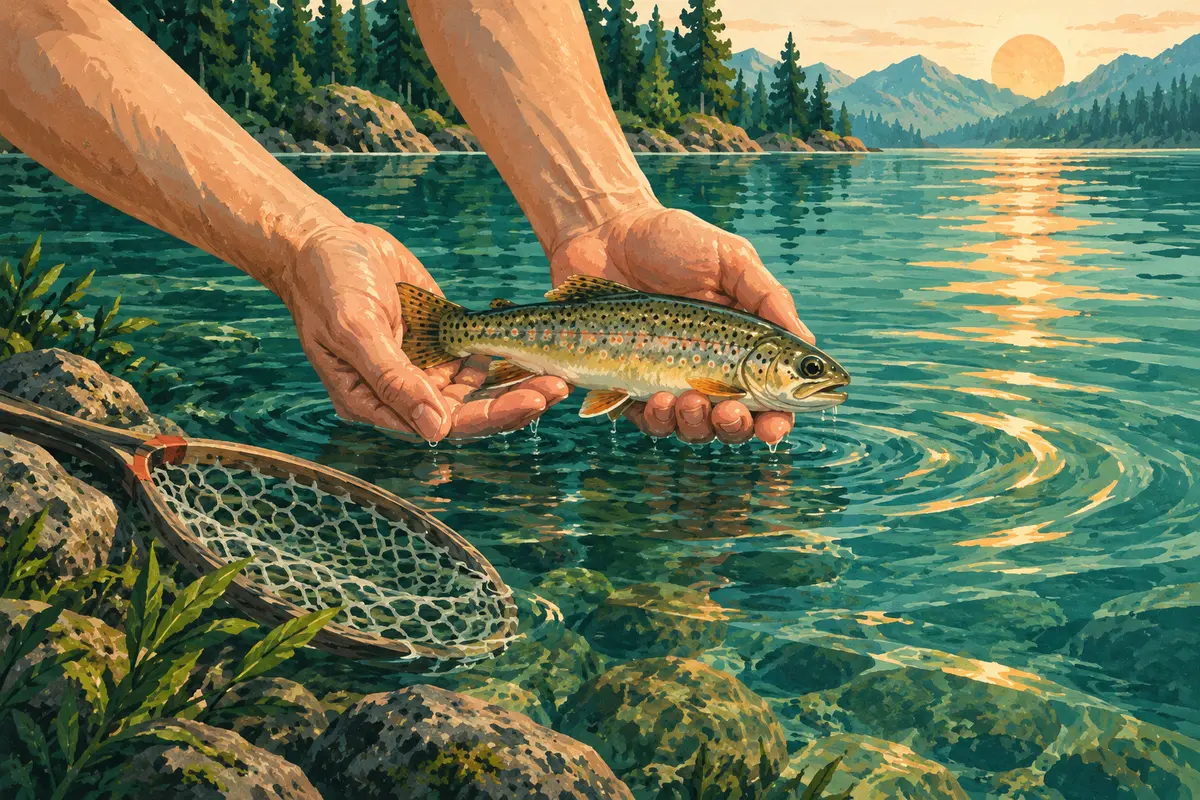
For fish you may legally release, remove the hook while the fish stays in the water whenever possible.
Wet your hands before touching it. If you must lift it, support its body along its length. Keep fingers away from its eyes and gills. Do not leave it hanging by its lip or mouth.
Some fish have sharp spines or teeth. Learn safe handling locally. Keep time out of the water short and return fish gently.
If a swallowed hook cannot be removed easily, cut the line close to it. Do not force it out. For a sluggish fish, face it into the current or move it gently headfirst through the water until it swims away.
Never dump unused live bait into the water. It can introduce species that harm local wildlife and habitats. Take discarded line and other litter home too.
Give your first few trips a clear goal
Pick one skill per trip. Repeat it until you can do it reliably.
| Trip | Practice | What to check |
|---|---|---|
| At home | Knot, drag and hookless casts | The knot holds; casts reach your target |
| First trip | One float or bottom rig | Bait stays on; you notice float or rod-tip changes |
| Next trip | Change depth or position | Compare float depths or safe patches of bottom |
| When you hook one | Land and handle it | Tools ready, line tight, handling brief |
Common beginner mistakes
- A float too big to show a bite.
- Bait too bulky for a small mouth.
- Releasing the line too late during a cast.
- Watching for a float when your bottom rig signals through the rod tip and line.
- Staying when waves or a rising tide threaten your standing place or exit.
Fix one mistake at a time. A controlled cast is progress before you catch a fish.
Rinse gear after salt water
After a sea trip, gently rinse the reel, rod and tools with fresh water and let them dry before storage. Avoid a strong water jet or submerging the reel. Follow its manufacturer's care instructions. The app's sea path also includes rinsing salt off the gear after fishing.
If progress feels slower than expected, is fishing hard to learn covers the frustrations and how to work through them.
Frequently asked questions
Can I learn fishing at sea first?
Yes. Choose a sheltered pier, jetty or calm beach with safe access and local advice. Check saltwater rules, weather, waves and tides. Stay off rocks as a beginner. A simple bottom rig or a float rig in calm water can work, depending on where local fish feed.
Do I need a different license for sea fishing?
Possibly. Saltwater and freshwater fishing can have different license requirements and rules. Check your local fishing authority for the exact water you plan to fish, including any exemptions, permitted bait and hooks, seasons and limits. Do not assume your freshwater license covers the sea.
What bait should a beginner use?
Use legal local bait suited to the fish. Worms are an option in fresh water; prawn or shrimp, squid and cut fish are sea options where permitted. Ask a local fishing equipment shop and check official bait rules. Match the bait and hook to the fish's mouth.
How do I spot a bite without a float?
With a bottom rig, keep light contact with the weight and watch the rod tip and line. Tugs, a bobbing tip or line that suddenly moves or goes loose can signal a bite. With a J-hook, take up loose line and lift quickly; with a circle hook, reel steadily.
Why does my cast land right in front of me?
You are probably releasing the line too late. Practice with a hookless casting plug and release as the rod reaches eye level on the forward movement. If the plug flies almost straight up, you released too soon.
How tight should my reel drag be?
With the reel ready to wind in, it should give line against firm resistance. Tighten it if line comes off freely; loosen it if line will not come off or breaks.
Should I wash fishing gear after using it at sea?
Yes. Gently rinse the rod, reel and tools with fresh water, then let them dry before storing them. Do not blast the reel with a strong water jet or submerge it. Follow the manufacturer's cleaning and lubrication instructions.
What should I do if a fish swallows the hook?
If you plan to release the fish and cannot remove the hook easily, cut the line as close to it as possible. Do not pull hard to force it out. Keep the fish in the water when possible and handle it as little as you can.
Sources
- Ontario Ministry of Natural Resources: Learn to Fish guide
- New York State Department of Environmental Conservation: Basic fishing tackle and techniques
- Texas Parks and Wildlife Department: A Basic Guide for the Beginning Angler
- Fisheries and Oceans Canada: Learn about and apply for a recreational fishing licence
- Surf Life Saving NSW: Rock fishing
- Surf Life Saving NSW: Rip currents
- National Weather Service: Sneaker/high waves and log rolls can be deadly
- Department of Natural Resources and Environment Tasmania: Fishing around Devonport and Port Sorell
- NOAA Fisheries: Catch and release fishing best practices
- Texas Parks and Wildlife Department: Fishing gear maintenance and repair
- Texas Parks and Wildlife Department: Tackle Loaner Program
- National Weather Service: Before you go in the water
- Illinois Department of Natural Resources: Fishing: For anglers of all ages