Free beginner guides from government fishing agencies and free online courses cover the basics: gear, one knot, casting and releasing a fish. Below you will learn how to practice each skill on your own, check your progress and find free help when you want someone to watch.
Can you teach yourself to fish?
Can you teach yourself to fish? Yes, and Learn to Fish: Fishing Basics, our Android app, can guide you step by step. Check local fishing rules, choose one simple rod and reel, and practice casting with a hookless weight. A friend or a beginner class run by a fishing agency or club can help you improve faster.
Can you teach yourself to fish without a teacher?
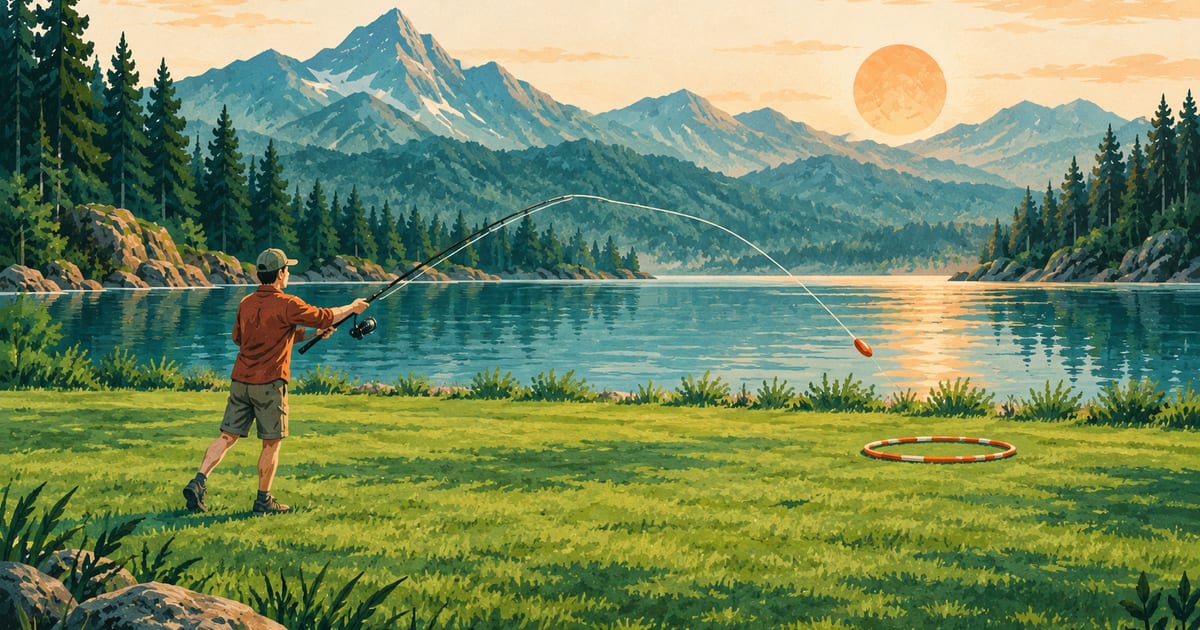
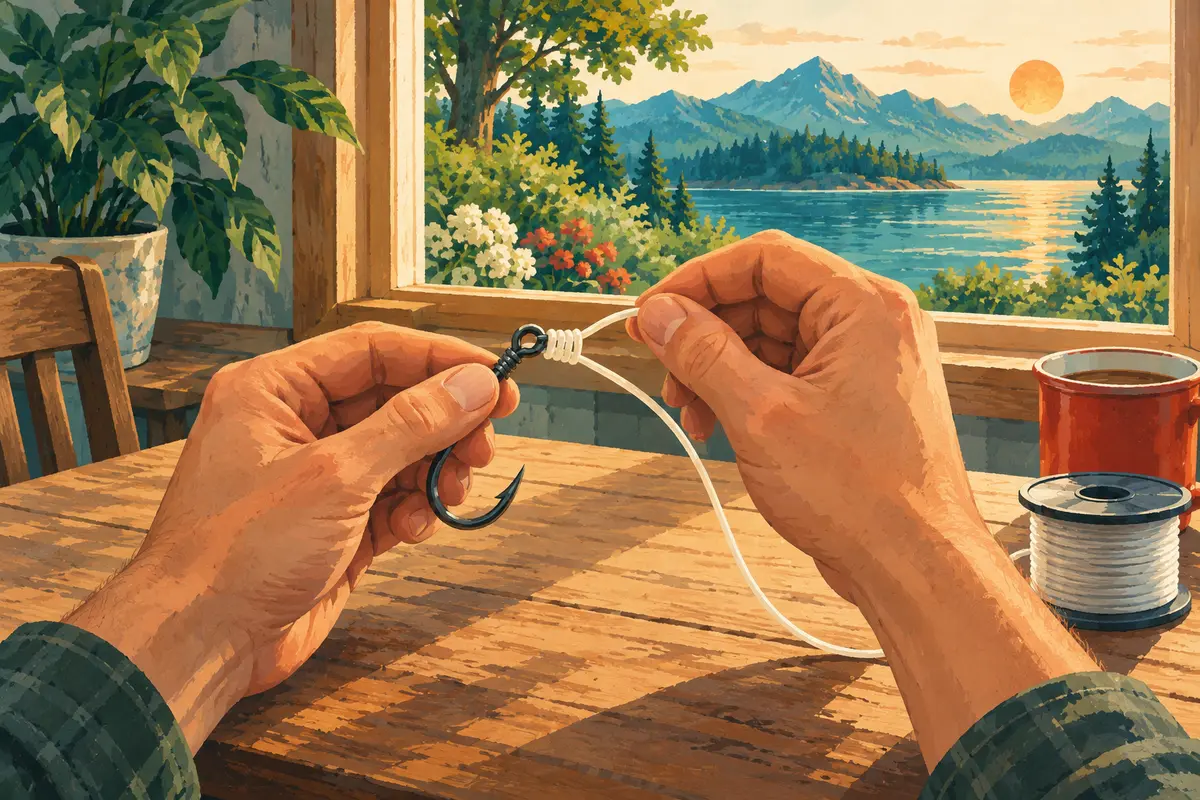
You can learn to attach a hook, tie a knot and cast from a beginner guide. Casting means using the rod to send your line out. Learn those jobs separately before trying them together at the water.
Start with your local fishing authority, the government agency that manages fishing where you live. Depending on the country, this may be a state, provincial or national agency. Look for its beginner guides and demonstrations. They explain equipment and point you toward the fishing rules you need to check.
Use a guide for the kind of reel you have. A spinning reel has an open spool, the part that holds the line, and a wire arm called the bail that flips open to let line out. A spincast reel covers its spool and casts with a push button.
| Skill | What to try yourself | What to ask someone to check |
|---|---|---|
| Fishing rules | Read the rules for your chosen water | Ask the fishing authority about anything unclear |
| Rod and reel | Find the controls and learn how they work | Ask a class instructor to watch you use them |
| One knot | Follow a demonstration, then repeat it | Ask whether you have tied it correctly |
| Casting | Practice with a weight and no hook | Ask someone experienced to watch one cast |
| Releasing fish | Read the steps and prepare the tools | Ask for a demonstration before you catch a fish |
Try tying the knot without looking at the instructions, then compare it with the demonstration. For equipment, knot and casting instructions, use our learn fishing guide.
Practice one skill at a time
Choose one lesson and use your own equipment to try it. If you are learning to cast, do not also change your reel or learn a new way to attach your bait.
- Watch or read one demonstration. Choose an official beginner guide or course that shows your type of reel.
- Try it away from the water. For casting, tie on a practice weight with no hook, such as a plastic casting plug sold in fishing tackle shops. Use an open area away from people. Look behind and around you before every cast.
- Check what happened. If the weight goes almost straight up, you probably released the line too soon. If it hits the ground close in front of you, you probably released it too late. For a knot, compare each step with the demonstration.
- Ask someone to watch the part that fails. Say, "Could you watch one cast and show me when to let the line go?" That gives them a clear way to help.
With a spinning reel, hold the line against the rod with your index finger before opening the bail. Bring the rod back over your shoulder, then move it forward and release the line. Close the bail after the cast. If your reel has a push button, follow a spincast guide instead.
For a visual lesson, try Learn to Fish: Fishing Basics, our Android app on Google Play. Most lessons have a 3D animation you can turn with your finger, slow down and replay. The first 2 lessons of each learning path are free; a weekly or yearly subscription opens the rest.
After practice, write down what you tried, what happened and one thing you want to check next time. "The weight kept landing at my feet" is more useful than "I am bad at casting."
How to teach yourself to fish, one trip at a time
Work through this plan at your own pace. Repeat a stage if you cannot do it comfortably yet.
| Stage | What to do | Before moving on |
|---|---|---|
| Before getting gear | Pick one calm spot (a lake, a slow river or a sheltered sea spot such as a pier) and check its rules | Know whether you need a license and what fishing is allowed there |
| At home | Learn the reel controls and one knot, such as the improved clinch | Prepare the line and tie the knot again without help |
| Casting practice | Use a weight with no hook | Aim near a target and look around before every cast |
| Before fishing | Learn how to bring in, unhook and release a fish | Have a net and release tools ready |
| First trip | Use the setup you practiced | Write down one thing to practice or ask about |
| Next trip | Use the same setup, then change one thing if needed | Note what you changed and what happened |
The app's learning path follows a similar order, and it ends with a short review where you pick what to practice next.
Rules differ by country and region. Check your local fishing authority for current license requirements, seasons (when you may fish for each kind of fish), size and catch limits (which fish you may keep, and how many), legal bait and any restrictions at your chosen water. If the water is on private land, ask the owner first. A general beginner guide does not replace those rules.
A tackle shop sells fishing equipment. Ask the staff or a local fishing club about small, plentiful fish you can catch from the shore nearby, whether on a lake, a river or a sheltered part of the sea. Ask what simple rod, reel and bait suit those fish. You do not need to choose a large fish or buy equipment for several fishing styles.
Find free help and borrowed gear near you
Some places offer three kinds of free help: beginner classes where an instructor supplies the rod, reel and bait; gear loans from agencies, parks or libraries; and free fishing days when you can fish without buying a license. Not every area offers all three.
Search your local fishing authority's website for "learn to fish," "fishing events," "free fishing days" or "tackle loan." Or search the web for "learn to fish" plus the name of your town. A fishing club or tackle shop can also tell you about classes nearby.
Beginner classes and learn-to-fish events
In a good class, you hold the rod and fish while an instructor helps. Some government classes teach setting up a rod, casting, recognizing local fish and the rules, and even include a license for the session.
Before registering, ask:
- Is the session suitable for an adult who has never fished?
- Do I need to book, and can I come on my own?
- Are a rod, reel and bait provided?
- Do I need a license, and are there parking or entry fees?
At the class, ask the instructor to watch you tie a knot and make a cast.
Rod and equipment loans
Some agencies, parks and libraries lend rods and reels for free. Search for "rod lending" as well as "tackle loan."
Call before traveling. Ask whether adults can borrow, what is included, how long you can keep it and how to return it. Check whether you need to bring bait or other equipment. You may still need a fishing license.
License-free fishing days and online lessons
On a few set days each year, some regions let certain people, often local residents, fish without a license. Check current dates, who qualifies and which waters are included. Other rules, including size and catch limits, still apply. Free days do not include gear or lessons.
For a free online course, the International Game Fish Association, or IGFA, offers Intro to Fishing. It is designed for young people and beginners, and adults can take it too. It covers equipment, knots, bait, casting, safety and releasing fish. Pair each demonstration with practice using your own gear.
Make your first trips safer
Invite a companion who can help if something goes wrong. Teaching yourself does not mean you have to go alone.
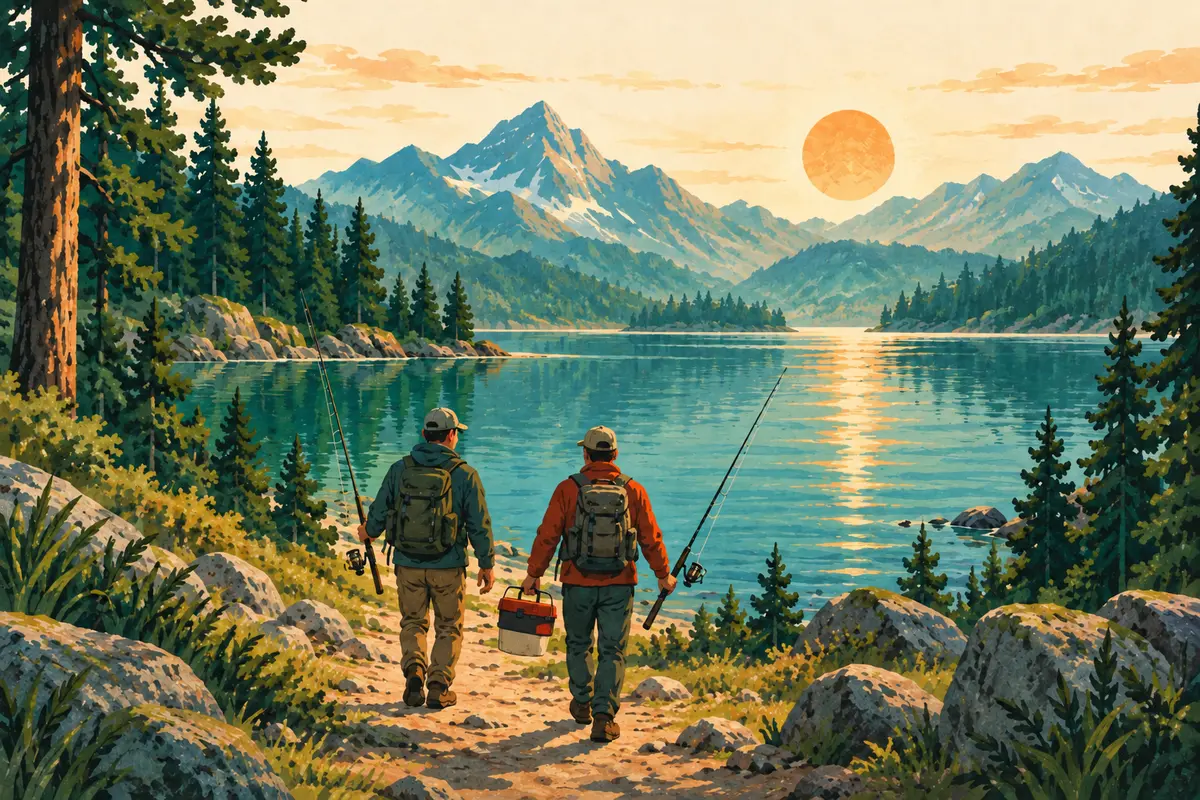
Keep hooks away from people, handle them carefully and leave enough space between yourself and other people fishing. Check the weather and tell someone where you are going and when you expect to return. At the sea, also check the tide times and stay off rocks that waves can reach.
Wear a life jacket, as official beginner guides advise. Rules on when you must wear one differ by country and region. For your first trips, fish from stable ground on the shore and stay out of the water.
Prepare for a catch before casting. Keep a wet rubber or soft, knotless landing net, a hook-removal tool and line cutters within reach. Catch-and-release guidelines recommend removing the hook while the fish stays in the water whenever possible. If you must handle it, wet your hands, support its body and avoid its eyes and gills. Try to keep the fish out of the water for less than 60 seconds.
If a swallowed hook cannot be removed easily, cut the line close to the hook rather than pulling it out. Ask for a demonstration if you cannot picture how to use your release tools.
Check whether you are ready for your first fishing trip
Before your first trip, make sure you can answer yes to each point:
- I have checked the rules for this water. I know the license requirements, seasons, limits and permitted bait and methods.
- I can prepare my rod and line. I can tie the knot without someone finishing it for me.
- I can cast with control. I use a hookless weight for practice and look around before every cast.
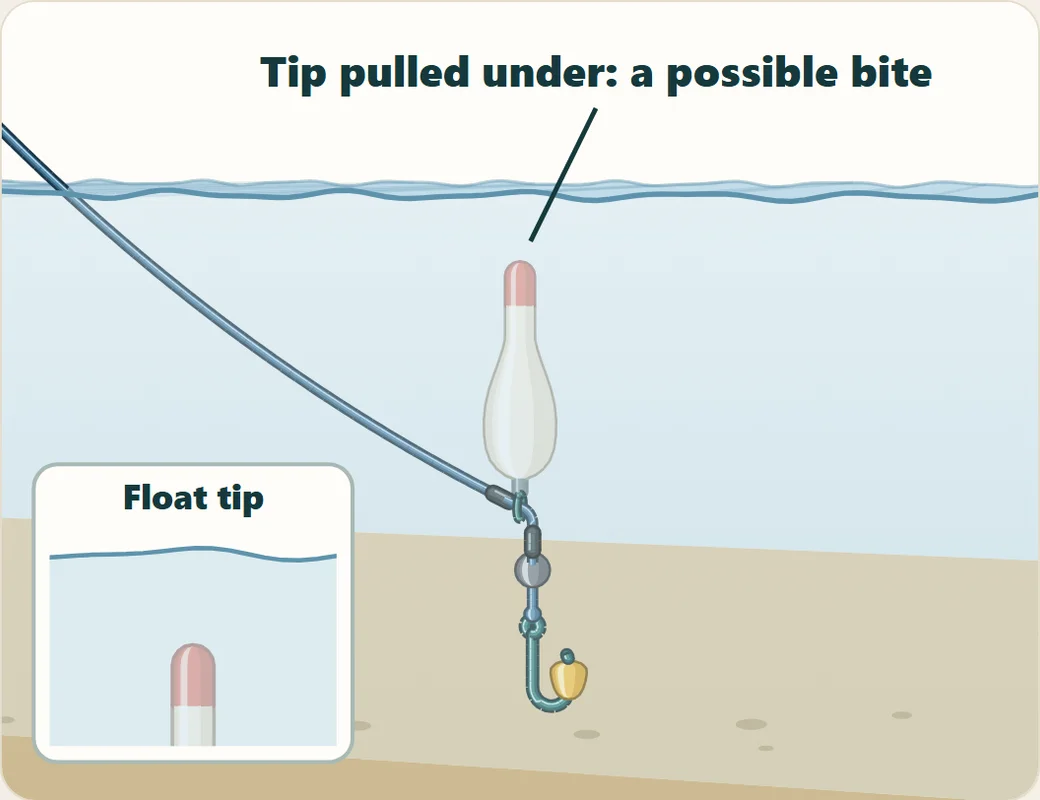
- I know how to respond to a bite. A fish may pull a bobber (float) underwater or, on a rig without a float, tug the rod tip. With a standard J-shaped hook, I know how to lift the rod to set the hook, meaning make it catch in the fish's mouth, then reel the fish toward my net. With a circle hook, whose point curves inward, I reel steadily instead of lifting the rod to set it.
- I am ready to unhook a fish. I have a suitable net, hook-removal tool and line cutters, and know what to do if the hook is swallowed.
- I have planned for help. A companion can come along, and someone knows where I will be.
- I will take home my litter and discarded line. Loose fishing line can harm wildlife.
An unchecked point tells you what to practice or ask about next. If casting is unpredictable, return to the practice weight. If you are unsure about fish handling, ask for a demonstration before your first trip. If reading a bite is your unchecked point, the app's float lessons let you practice telling a bite from a float that is just bobbing with the waves.
Avoid these self-teaching traps
Jumping between videos, reels and setups. Stay with one beginner guide and one setup until you can prepare it and cast it. If a step confuses you, look up that step rather than starting again with different equipment. A learning path in the app keeps you on one setup from start to finish.
Practicing casts with a hook attached. Use a hookless weight in an open area away from people. You can learn the casting movement without a hook flying through the air.
Waiting until you catch a fish to learn about release. Read the instructions first and prepare your tools. Ask a class instructor to show you anything you do not understand, including how to remove a hook.
Waiting until you know everything. Prepare for one simple trip using the checklist. Learning another setup or fishing style can wait.
Judge practice by what you tried to learn, not just by fish caught. Preparing your line without help or casting safely toward a target is progress. For help with tangles, missed bites or lost fish, see Is fishing hard to learn?.
Frequently asked questions
Can I learn to fish if nobody I know fishes?
Yes. Use an official beginner guide or course, learn one setup and practice at home. A friend who fishes can help, but you can begin without one. Look for a local beginner class when you want someone to watch your knot, casting or fish handling.
Can I teach myself to fish from videos?
Yes, videos can teach the basics. Choose a demonstration for your type of reel, then try it with your own equipment. Practice casting with a weight and no hook. Ask someone experienced to watch if you cannot work out why a step keeps going wrong.
Where can adults get free fishing lessons?
Search your local fishing authority's website for "learn to fish" or "fishing events." Ask a fishing club or tackle shop about nearby beginner classes. Check that adults can attend and whether you need to book, bring equipment or get a license. IGFA also offers its free Intro to Fishing course online.
Can I borrow a fishing rod before buying one?
In some places, yes. Some public programs lend rods and reels through agencies, libraries or parks. Search for "tackle loan" or "rod lending" on your fishing authority's website. Call the provider to check availability, whether adults can borrow, what is included and when to bring it back.
Do free fishing days remove all fishing rules?
No. They may remove the usual license requirement for eligible people on specified dates. Size and catch limits and other fishing rules still apply. Check your local fishing authority for current dates, including who qualifies and which waters are covered. Equipment and lessons are not automatically included.
Should my first fishing trip be alone?
Take a companion who can help in an emergency. They do not have to teach you for you to follow your own practice plan. An organized beginner class is another option if you want an instructor there. Tell someone where you are going and when you expect to return.
How do I track progress if I catch nothing?
Choose a practice task before the trip. Afterwards, write down whether you could prepare your line, cast safely and repeat the steps without help. Note one question or mistake to work on next time. Catching nothing does not erase what you learned to do.
Sources
- Ontario Ministry of Natural Resources: Learn to Fish guide
- New York State Department of Environmental Conservation: Freshwater fishing basics for beginners
- Ontario Ministry of Natural Resources: Learn to Fish
- New York State Department of Environmental Conservation: Learn to Fish
- Ontario Ministry of Natural Resources: Free family fishing
- International Game Fish Association: Intro to Fishing
- NOAA Fisheries: Catch and release fishing best practices
- New York State Department of Environmental Conservation: Basic fishing tackle and techniques
- Texas Parks and Wildlife Department: A Basic Guide for the Beginning Angler
- NSW Department of Primary Industries and Regional Development: Come Fish with Us
- Surf Life Saving NSW: Rock fishing