You may hear that fly fishing is only for trout in mountain streams. That is misleading. Fisheries guides describe fly fishing for other fish in ponds and lakes, and it works in coastal water too. Choose fish and water near you rather than copying a distant trout trip.
How to learn fly fishing for beginners
How to learn fly fishing for beginners: set up a matched outfit, practice short casts on grass with yarn instead of a fly, then fish one safe, open spot. Learn to Fish: Fishing Basics, our Android app, guides the setup and casting practice. Before your first trip, learn the line connections and how you will land and release a fish.
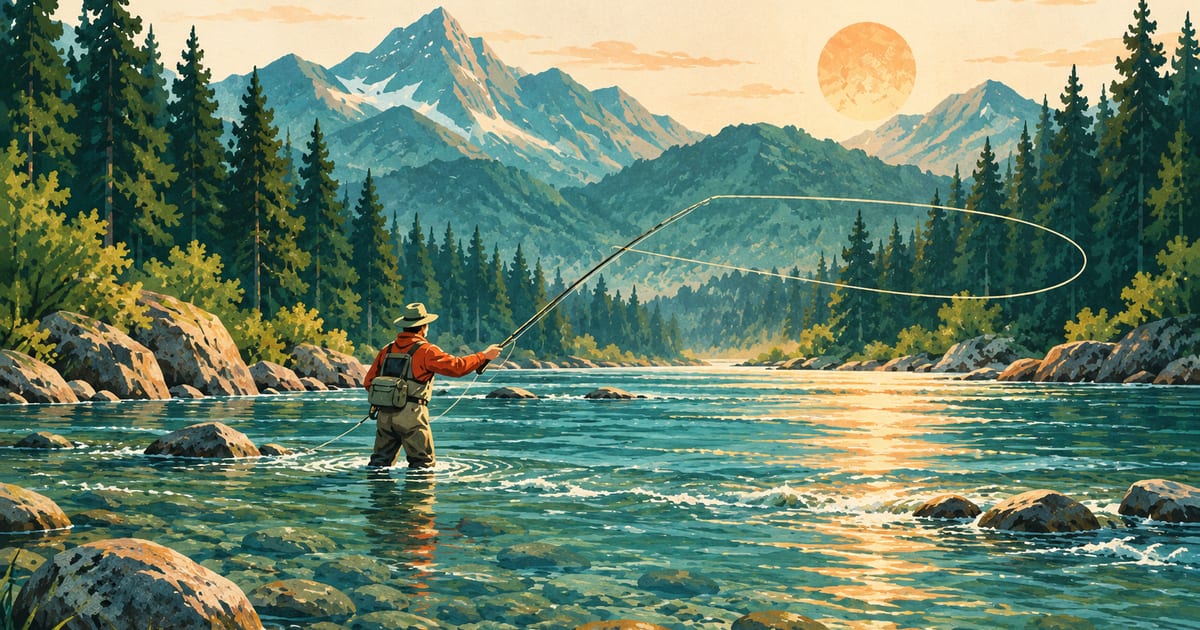
How to learn fly fishing for beginners, step by step
It helps to treat gear setup, casting and fishing as three separate skills, so you can tell which one needs work.
An artificial fly can be too light to cast using its own weight. The fly line supplies the weight for the cast, carrying the fly with it. That difference explains the unfamiliar cast and why learning to manage the line matters.
You can start with fly fishing without learning spinning first. Fly fishing is learnable, but the cast and loose-line control generally take more practice than basic spinning. Learn a short, controlled cast before working on distance.
Use this practice plan without setting a deadline for catching fish:
| Stage | Practice | Check before moving on |
|---|---|---|
| Before buying | Choose local water and fish | Know the rules and suitable gear |
| At home | Assemble the outfit and tie joins | Identify each line section; test knots |
| On grass | Cast yarn without a hook | Stop, pause and land near a target |
| At the water | Fish one fly in a reachable area | Watch its movement and manage loose line |
| Afterward | Review one difficulty | Pick one thing to repeat next time |
For feedback, look for learn-to-fish events through your local fishing authority or beginner casting sessions at fly fishing clubs. Our guide to can you teach yourself to fish explains how to find help and check what is included.
Choose a matched outfit and understand the line
Pick equipment for your local fish and the size of fly you need to cast.
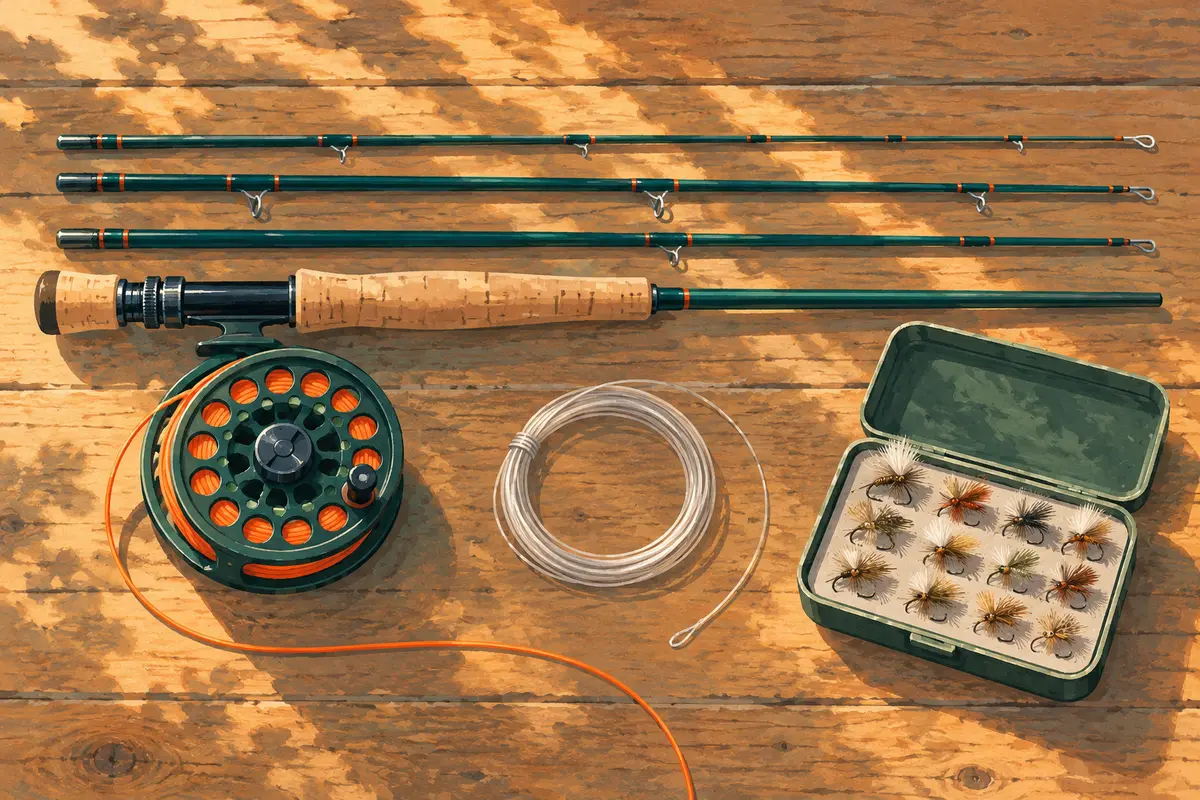
For general beginner freshwater fishing, one official guide recommends a 5- or 6-weight rod, 7.5 to 9 feet (2.3 to 2.7 m) long. The weight is a size number: a 5-weight rod is made to cast a 5-weight fly line. Choose a reel sized for that outfit. A floating line is a straightforward starting point for the surface-fly practice below.
Larger fish and flies may need heavier equipment. Ask locally about a suitable saltwater outfit before buying.
The line system runs in this order:
Reel, backing, fly line, leader, tippet, fly.
- Backing: cord attached to the reel that provides extra line beyond the fly line.
- Fly line: the thick, coated line whose weight makes the cast possible.
- Leader: the clearer, thinner connection between fly line and fly. A tapered leader becomes thinner toward the fly.
- Tippet: the fine end of the leader, which you can replace as tying on flies shortens it.
Tippet labels such as 4X and 6X describe diameter. Higher X numbers mean thinner tippet. Match it to the fly and fish.
Learn to Fish: Fishing Basics, our Android app, has a separate river-shore fly-fishing path. Its setup lessons show assembling the rod and reel, joining backing and line, threading every guide and adding tippet.
Connect the line and practice the knots you will use
Each join has a different job, so follow the line from the reel toward the fly as you check it.
| Connection | A suitable starting option | What to check |
|---|---|---|
| Backing to reel | Arbor knot | It grips the spool center |
| Backing to fly line | Albright knot | The join is seated and secure |
| Fly line to leader | Loop-to-loop, with existing loops | Both loops seat evenly |
| Leader to replacement tippet | Double surgeon's knot | All strands tighten together |
| Tippet to fly | Improved clinch knot | The knot closes at the hook eye |
Ask a shop or instructor to check the backing connections. Practice the leader, tippet and fly connections for use while fishing.
For loop-to-loop, place the fly-line loop inside the leader's loop. Feed the whole leader through the fly-line loop, then ease the lines apart until the two loops seat neatly against each other.
For a double surgeon's knot, overlap leader and replacement tippet by about 6 inches (15 cm), with their ends pointing opposite ways. Form a loose overhand knot using both strands together. Pass the ends through again, wet the knot and tighten all four strands evenly. Trim the loose ends.
Use an improved clinch knot to attach the fly to the tippet. Follow the full sequence in learn fishing, then wet the knot and tighten it slowly.
Test each join with a steady pull, keeping the hook point clear of your hands. Replace damaged tippet before casting again.
Practice a short cast on grass
Learn the timing away from fish, with a piece of yarn tied to the tippet instead of a hooked fly.
Choose an open grassy area where practice is allowed. Check behind you, overhead and to both sides for people, trees and other obstacles. Wear a hat and glasses. Start on a calm day, with about one rod length of fly line outside the rod tip, plus the leader and yarn.
- Hold the cork grip with your thumb on top. Keep your other hand available to manage the line.
- Begin with the line laid out in front. Remove excess loose line and point the rod tip low.
- Lift the rod to about 45 degrees, then move it back crisply and stop just past vertical. Turn your head to watch the line unroll behind you.
- Pause until the line straightens behind you. Starting forward while it is still piled up behind you spoils the cast.
- Move forward smoothly and stop around 45 degrees above the ground. Let the loop unroll in front, then lower the rod as the yarn settles.
The app teaches the grip, pause and overhead cast, followed by short practice casts with yarn instead of a fly. Its animations can be slowed down and replayed when you want to inspect a movement.
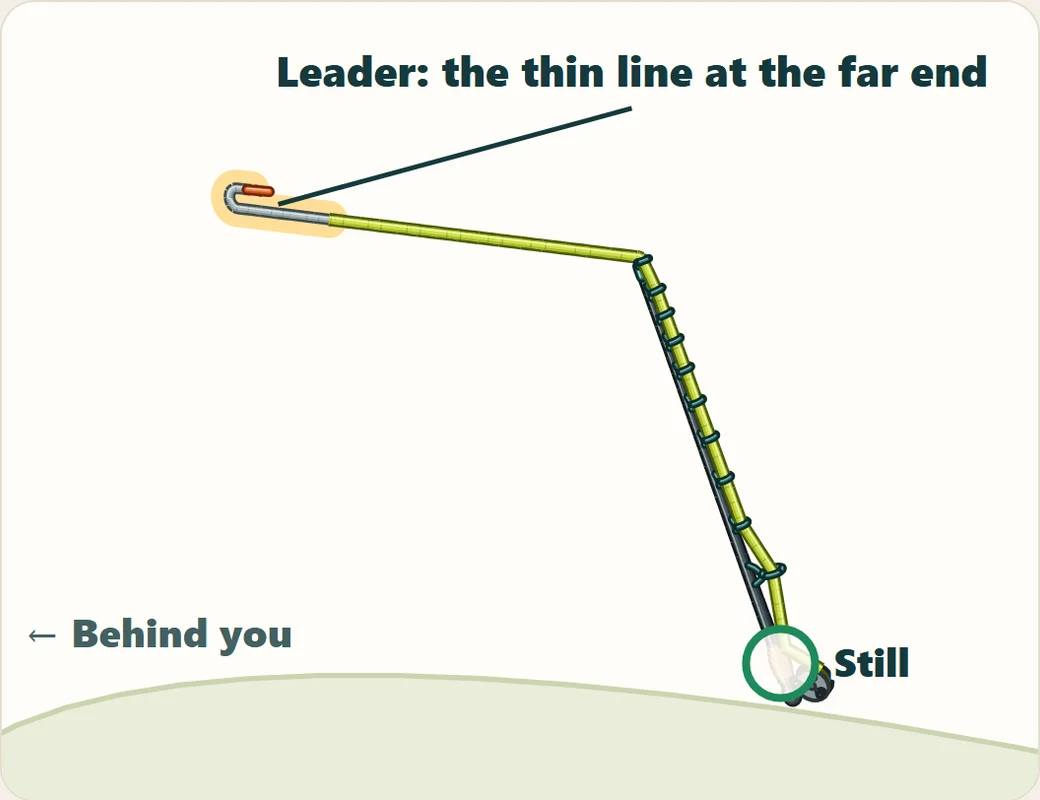
Make one back cast and one forward cast, then let the yarn land. Aim near a visible patch of grass. Your goal is a repeatable, controlled landing. Add distance later, once you can keep the line clear of yourself and your surroundings.
Choose water you can fish safely
Your first fishing place needs room for the line behind you and a safe way to reach a hooked fish.
An open bank beside a pond, lake or gentle stream can suit practice. A small stream is not automatically easier: overhanging branches can leave little casting room. Saltwater flats (shallow coastal areas) also offer fly fishing, but get local advice on access, tides and equipment.
Before fishing, check your local fishing authority. Rules, licenses, seasons, limits and life jacket rules differ by country and region. Check permitted hooks and methods, access rights and any separate saltwater requirements. Do not assume releasing everything removes the need for a license.
Start from stable ground
Take a companion, tell someone your plans and check the weather. You can learn from the bank without buying waders or entering the water. Prepare a landing place your net can reach.
If you later learn to wade, ask an experienced person to show you locally. Wear a fitted life jacket, suitable footwear and a snug wading belt with waders. A wading staff helps test depth and balance. Swift water is dangerous, especially above your knees.
Treat the coast separately
Surf lifesaving guidance recommends watching conditions for at least 30 minutes before taking a position; stay off wave-washed rocks and out of the surf. A darker gap with fewer breaking waves can be a rip current; use our first-time fishing guide to plan around waves, tides and your exit.
After salt water, gently rinse and dry the gear as explained in learn fishing. Clean, drain and dry gear before moving between waters to reduce the spread of unwanted aquatic organisms.
Read the water and choose one fly
Look for reachable places where fish can find food and shelter before choosing what to cast.
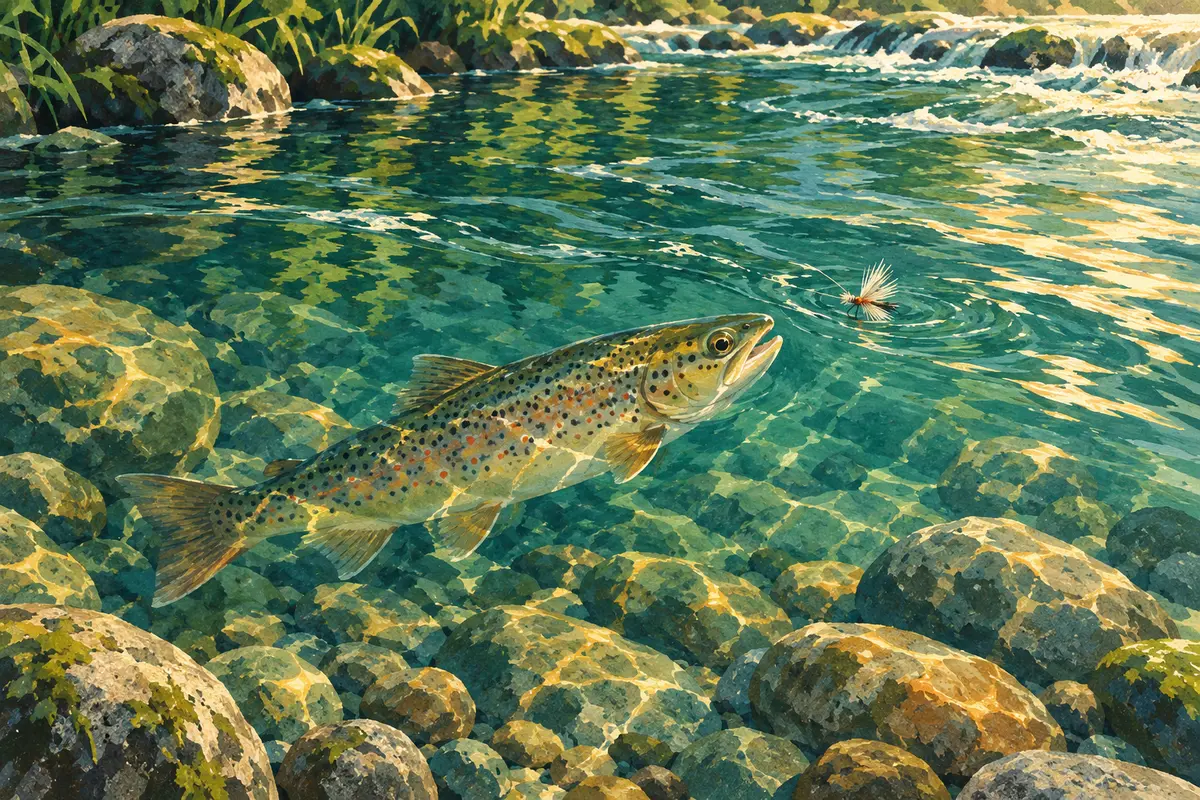
In a stream, watch where faster water meets slower water, including beside rocks and along the bank. These boundaries can bring food past fish without making them stay in the strongest flow. In ponds and lakes, look beside weed edges, shade and changes in depth. Cast beside cover rather than into branches or thick plants.
A fly is an artificial lure built on a hook. Learn these three types:
| Fly type | Where it fishes | What it commonly imitates |
|---|---|---|
| Dry fly | On the surface | An adult insect |
| Nymph | Below the surface | An immature aquatic insect |
| Streamer | Usually below the surface | A small fish or other swimming prey |
Ask locally for a fly that suits the fish and current conditions. A visible dry fly is useful for learning how a surface drift behaves, when fish are feeding there. It is not the answer to every fishing situation.
Watch natural insects or floating material to judge the current's movement. If fish feed below the surface, learning a nymph or streamer presentation may be a better next step than repeatedly changing dry-fly colors.
Control the drift and prepare for a fish
Once the fly lands, watch whether it drifts with the water or gets pulled by your line.
For a dry-fly drift in gentle current, cast a little upstream and let the fly travel with the water. If the line pulls it sideways across the surface, that is drag, which can make an insect imitation move unnaturally.
To mend, reposition a little fly line with the rod tip while leaving the fly in place. When faster water bows your line downstream, move that section upstream. A short cast gives you less line to manage.
The app shows choosing and tying on a dry fly, presenting it in gentle current and mending the line. If a fly gets no take, the lesson teaches you to watch for drag and dry or replace a sinking dry fly before changing one thing; see why am I not catching fish for further checks.
Respond and land carefully
With a small freshwater dry fly, take up loose line and lift the rod smoothly when a fish takes it. Other methods and species can need a different response, including pulling the line with the free hand for a saltwater take. Ask for a demonstration.
Keep steady pressure on the fish and control loose line with your free hand. Let a strong pull take line against the reel's drag, its adjustable resistance. Bring the fish in without fighting it to exhaustion.
The app also shows responding to the take, controlling the fish with the line hand, and landing, unhooking and releasing it in the water.
Have a wet rubber or soft knotless net and hook-removal tool ready, and unhook fish you may legally release in the water when possible. Follow the handling steps in learn fishing.
Fix these early fly-fishing mistakes
When something keeps going wrong, return to the part you can observe and repeat.
- Rushing the forward cast: shorten the line and watch the back cast straighten before moving forward.
- Casting harder to gain distance: return to smooth movement and clear stops. Ask someone to watch your timing.
- Ignoring the tippet after a tangle: inspect it for knots, nicks and damage. Replace a damaged section.
You can teach yourself to fly fish while asking someone to check one knot or cast. If you are using screen demonstrations, learn to fly fish online explains what to watch, how to film your practice and when to book an instructor.
Frequently asked questions
What is the difference between a leader and tippet?
The leader connects the thick fly line to the fly. A tapered leader narrows toward its end, called the tippet. You tie the fly to that fine end and add replacement tippet as changing flies shortens it. The tippet is part of the leader, rather than a second fly line.
What is the best way to learn fly fishing?
Combine a clear beginner demonstration with hands-on practice and occasional feedback. Start with matched gear, a short overhead cast and one suitable fly. Choose safe, open water and prepare for landing and release. Repeat a stage until you can explain and perform it yourself.
What does the X number on fly tippet mean?
It describes diameter. Higher X numbers mean thinner tippet, so 6X is finer than 4X. Choose a diameter suited to the fly and fish you plan to catch. The X number serves a different purpose from the weight number used to match a fly rod and fly line.
Is a pond or stream better for a first fly-fishing trip?
An open pond or lake bank lets you practice without managing river current. A gentle stream can also work if you have casting room and safe access. Choose by those conditions, rather than water size alone: a small stream under overhanging branches may be harder to cast on than an open bank.
Should I learn spinning before fly fishing?
You do not need to. Both methods teach useful fishing habits, but fly casting uses the line's weight and a different movement. Choose the method you want to practice. If you start with fly fishing, set aside practice for casting and line control before trying to catch fish.
Do I need waders to start fly fishing?
No. Start from a bank where you can cast and land a fish safely. Learn wading separately with an experienced person. Swift water is dangerous, especially above your knees, so buying waders does not make entering a river a suitable first step.
What fly rod should a beginner get?
For general freshwater fishing, one official beginner guide recommends a 5- or 6-weight rod, 7.5 to 9 feet (2.3 to 2.7 m) long, with a matching floating line. Larger fish and flies may need heavier gear. Ask locally what suits your intended fish and water before buying.
How can I tell whether my dry fly is dragging?
Compare the fly's movement with nearby floating material. If your line pulls the fly sideways across the surface instead of letting it travel with the current, it is dragging. Repositioning the fly line, called mending, can reduce that pull. Practice with a short cast so you have less line to manage.
Sources
- Texas Parks and Wildlife Department: Basic Fly Fishing
- National Park Service: Fly fishing
- New York State Department of Environmental Conservation: Beginners' Guide to Freshwater Fishing, chapter 5: Intermediate fishing tackle and techniques
- NOAA Fisheries: Catch and release fishing best practices
- Surf Life Saving NSW: Rock fishing
- Surf Life Saving NSW: Rip currents
- Ontario Ministry of Natural Resources: Learn to Fish
- Texas Parks and Wildlife Department: Learn to Fish
- Texas Parks and Wildlife Department: Fishing gear maintenance and repair
- Wiley: Fly Fishing For Dummies, 2nd edition, by Peter Kaminsky (2021)
- Fisheries and Oceans Canada: Learn about and apply for a recreational fishing licence