First time fishing: a simple guide and what to bring
By Learn to Fish · Updated
For your first time fishing, choose an easy shore spot, check local rules and weather, and bring a simple setup plus safety and fish-handling gear. Learn to Fish: Fishing Basics, our Android app, guides trip planning and sea shore safety. Plan to practice, even if you go home without a fish.
It is easy to assume a calm-looking sea is safe. Larger waves can follow 10 to 20 minutes of small ones. Check official warnings first; lifesaving guidance recommends watching the conditions from dry ground for at least 30 minutes before choosing a spot.
Your first outing can be a visit to a pond, lake, slow river or sheltered sea shore. Here is a practical order for the day, without needing to learn every fishing method first.
Choose an easy place for your first trip
Start with a place where you can stand securely, cast without putting anyone at risk and bring a fish within reach of your net.
Ask your local fishing authority about public shore access, beginner-friendly waters and stocked ponds or lakes. Stocked means fish have been added to the water. Check the exact access point, not just the name of the lake or beach. Public water does not give you permission to cross private land.
Place to consider
Check before choosing it
Reason to choose elsewhere
Stocked pond or lake bank
Legal access, firm footing, open casting space
Steep or slippery banks
Lake dock or platform
Fishing permission and a safe way to net fish
Busy boat traffic or no landing space
Sea pier or jetty
Fishing area, waves, current and net reach
Wave wash or too little room
Sheltered beach
Wave warnings, tides and a clear way back
Rough surf or access that rising water covers
Stay on dry, stable ground for this first trip and leave wading for another time. Stay off rocks, including breakwalls (breakwaters built of rocks).
Learn to Fish: Fishing Basics, our Android app, includes lake lessons on planning the trip and finding a likely place for fish. Use that preparation after checking that you can reach and fish the spot safely.
Pick a safe day and check the way home
Choose conditions you can manage, with enough daylight to inspect the place and pack away safely.
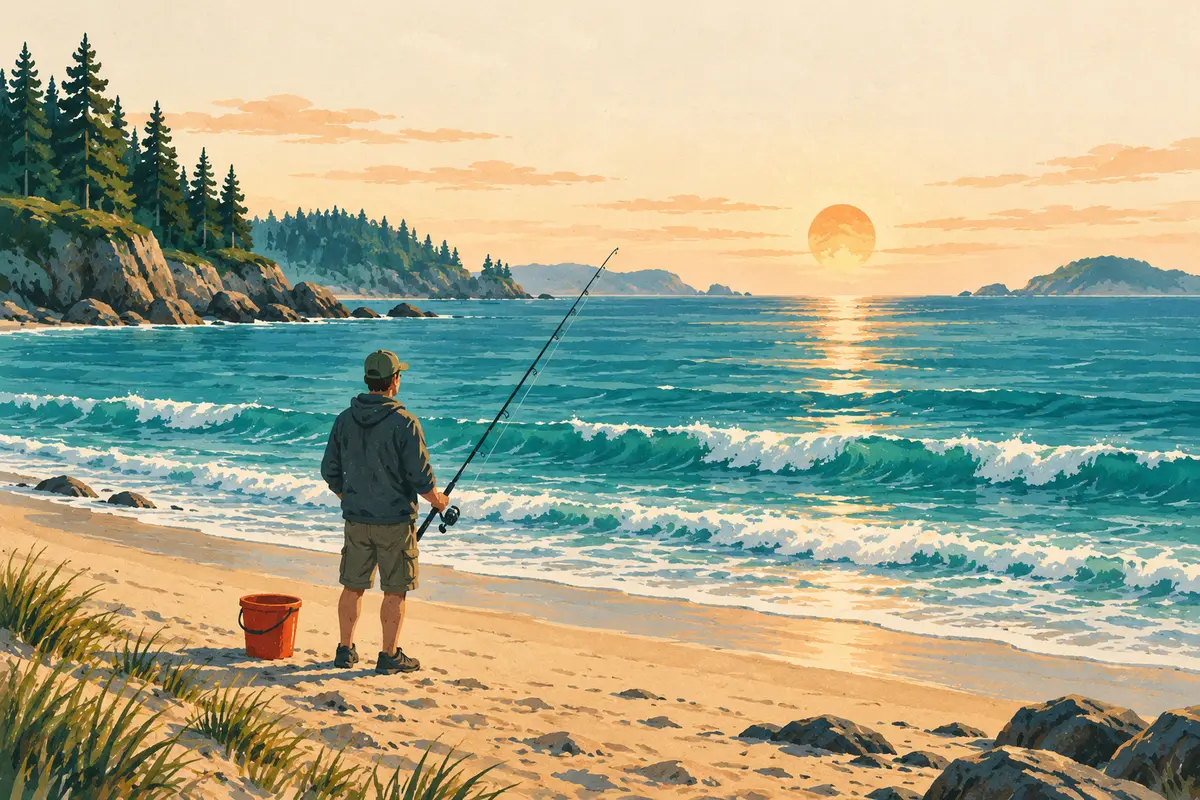
Watch the waves from a safe place before you choose where to stand.
Many fish feed actively around dawn or dusk, but fish can also be caught during the day. For a first visit, choose clear daylight and easy access rather than arriving in darkness for a possible feeding window. Ask locally which times suit the fish and water you have chosen.
Check the forecast before leaving and again at the water. At sea, check the marine forecast, waves and official tide predictions too. A tide table gives predicted high and low water times and heights. Read the entry for your location and date, and check its time zone and height units. Weather can make actual water levels differ from predictions.
Plan to leave before rising water reaches your route back. Do not use high tide as your departure deadline if the path floods earlier. Keep watching the waves while fishing. A darker gap with fewer breaking waves can be a rip current, a current flowing away from shore. Lifesaving guidance warns that rips can be difficult to see, so stay out of the water.
The app's sea lessons show shore hazards and how to read a local tide table, including high and low tide, local time and height units.
Take a companion and tell someone where you will be and when you expect to return. If someone falls in, do not jump in after them: call emergency services and throw them something that floats. If you hear thunder, stop fishing and go straight to safe shelter: a substantial building with plumbing or electricity, or an enclosed, metal-roofed car or truck with the windows up. Wait at least 30 minutes after the last thunder before going out again.
What to bring for your first time fishing
Pack for the place you have chosen, rather than carrying equipment for several kinds of fishing.
For calm fresh water, start with a bobber (float) and bait rig: the hook, any weight and float arranged on your line. The float shows bites. A bottom rig holds bait near the bottom with a sinker (weight) and can suit wind better. Ask locally which rig suits your sea spot.
Use this short list:
Permission and rules: the license, identification or other documents required locally, plus a way to check the rules for this water.
One fishing setup: a rod, reel and line suited to local fish, hooks and weights, plus a float if your rig uses one. Bring legal bait or a lure you practiced with, and a few spare small items.
Landing and release tools: a suitable landing net, hook-removal tool, line cutters and a measuring tool. Check that the net can reach the water from your chosen position.
Personal protection: a properly fitted, fastened life jacket, shoes with grip, sunglasses, a hat, sunscreen and clothing for the forecast.
Basic supplies: drinking water, food, a charged phone and a small first aid kit.
Cleanup: a bag for litter and a closed container for loose hooks and discarded line.
Rules, licenses, seasons, limits and life jacket requirements differ by country and region. Check your local fishing and boating authorities. Saltwater rules can be separate, and releasing fish does not automatically remove licensing requirements.
Some public programs offer free beginner events or gear loans; ask what is included and whether you need a license. To find them, see the free help section of can you teach yourself to fish.
Follow this plan from arrival to packing up
Give yourself time to look around before opening the tackle box.
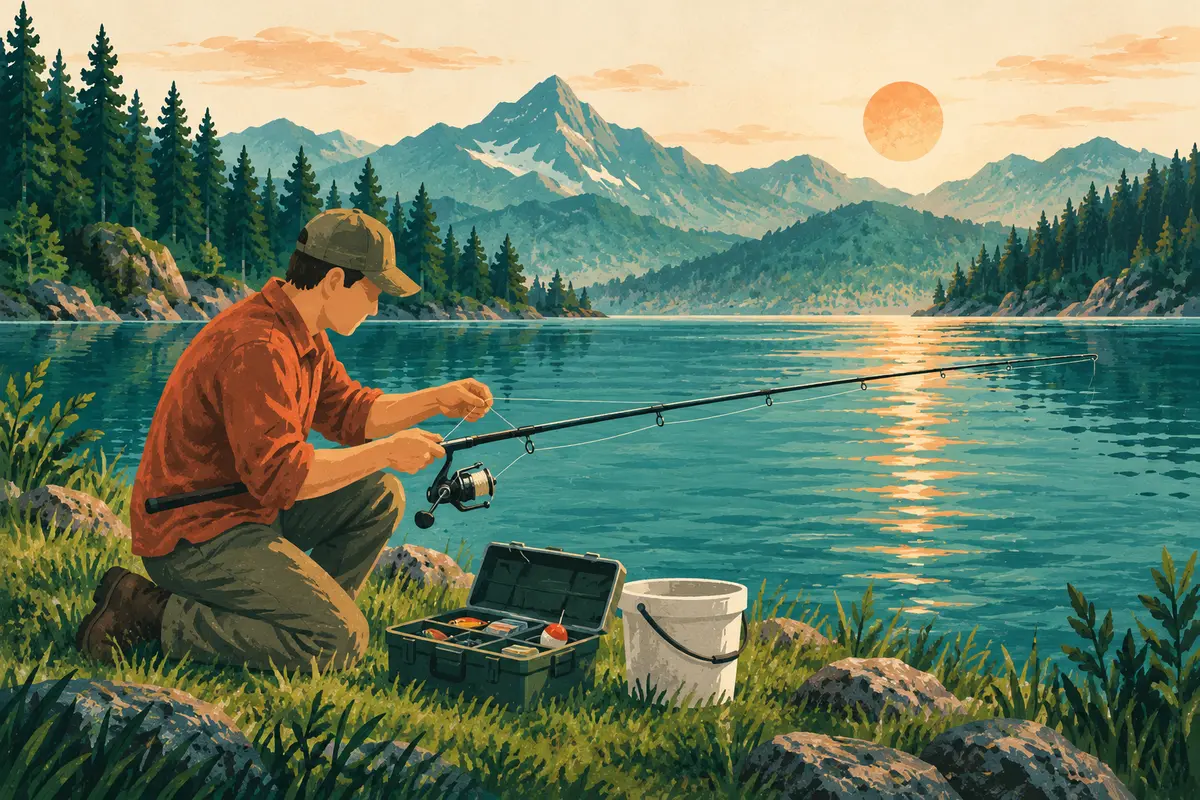
Look around first, then open the tackle box and set up.
This is an order of tasks, not a promise about how long fishing takes or when a fish will bite.
Stage
Your next action
Ready to continue when
Before leaving home
Check rules, forecast, access and sea tides
You have a safe destination and return plan
On arrival
Read signs; inspect footing, water and people nearby
You can stand, cast and leave safely
Before adding a hook
Check the casting space; practice with a hookless plug
Your casts stay in the clear area
Before the first cast
Prepare the net and release tools; check the setup
You know how you will bring a fish in
While fishing
Watch the line or float and changing conditions
Your rig and standing place remain safe
Before you go home
Secure hooks, collect litter and check your gear
Nothing sharp or loose is left behind
Keep your bag and tools together, clear of paths. Set up away from the edge if you need to concentrate on a knot. Make a controlled cast into clear water rather than trying to reach the farthest possible point.
For tying, rigging, casting and responding to bites, follow the learn fishing guide. Read its fish-handling steps before the trip, so you are prepared if the first cast produces a fish.
If the place looks unsafe on arrival, leave or choose another checked location. Going home before casting is a sensible decision when conditions do not match your plan.
Leave room for other people
Watch how the space is being used before choosing where to stand.
Leave at least one rod's length between you and the next angler, and allow more space if either person's cast could reach the other. Keep paths, steps and access points open. Check behind you before every cast, even when the space was clear a moment ago. Walkers, swimmers and boats also need room.
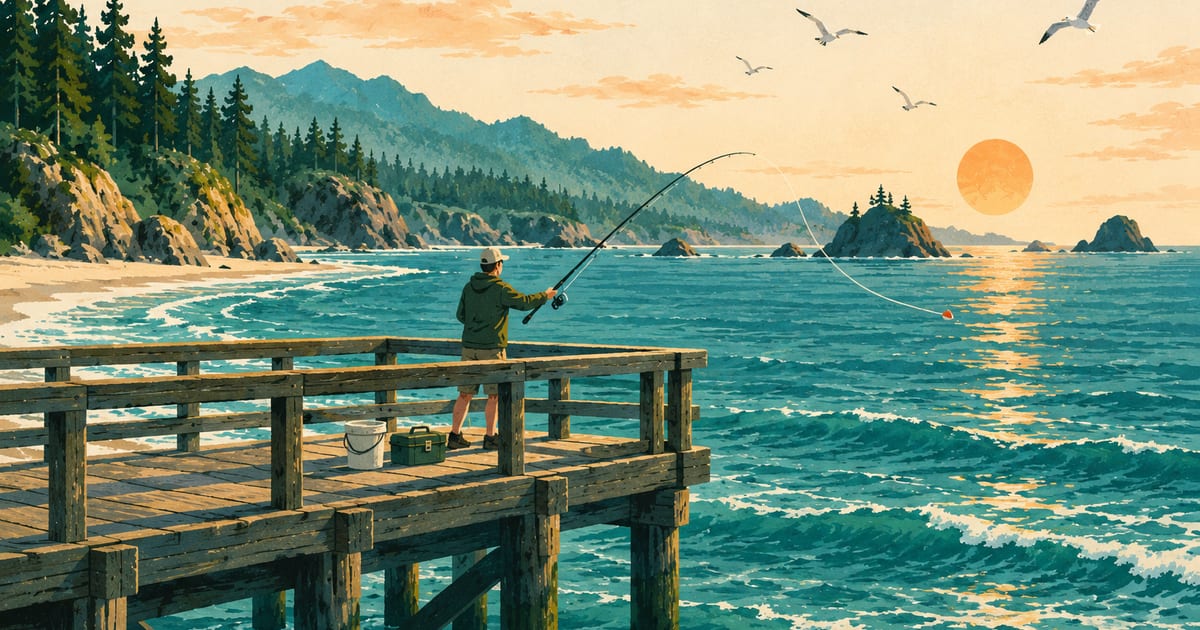
On a pier or jetty, ask where your line can go without crossing someone else's. Cast into your own clear area, and bring the line back if current carries it toward other lines. Do not reach across another person or cast over their line to reach a promising patch.
The app's pier lesson covers leaving room, checking the walkway behind you, casting straight out, controlling drift and having a drop net (a net you lower from the pier) ready.
You can ask, "I'm new here. Is this enough room, and which way are your lines going?" Wait until the person is free to answer. If there is no space for a safe cast and landing, choose another spot.
Keep noise considerate, take all litter home and leave wildlife alone. Secure bait and hooks while you pause for food or a drink.
Be ready for a fish, and for no fish
Prepare to handle a catch before you settle into watching the water.
Have your net, hook-removal tool and cutters within reach. Learn which local fish have sharp teeth or spines, how to identify them and which you must release or must not return to the water. If you want to keep fish, plan how you will keep them cold on ice and get them home within the local rules, and check local advice on eating fish from that water.
Keep a fish you may legally release in the water while you unhook it whenever possible, and follow the handling steps in learn fishing.
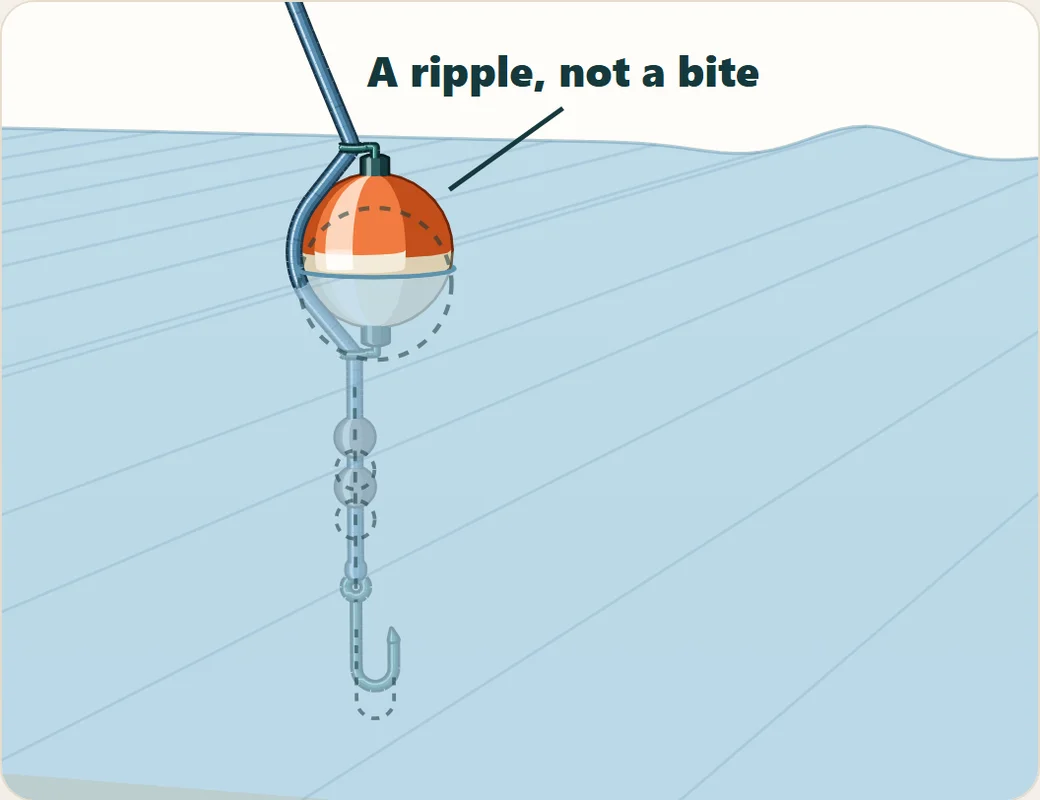
While waiting, pay attention to the rig you are using. A float can show a bite; a bottom rig without a float gives signals through the line and rod tip. The app's lake float lesson compares the float with the water around it to help distinguish a bite from wave movement.
From the lake float lesson: a ripple can lift the float, so movement alone is not always a bite.
You may finish without a fish. That does not erase a controlled cast, a knot you tied yourself or a safe decision about the water. If nothing bites, use why am I not catching fish to check the setup before changing things.
Avoid a few first-trip planning mistakes
The planning mistakes below can leave you without room to cast, land a fish or get home safely.
Choosing a spot only because someone caught fish there. Check permission, footing, weather, casting room and how you would land a fish yourself. A catch report does not answer those questions.
Learning fish handling only after catching one. Read the release steps and prepare your tools beforehand. Ask for a demonstration if you cannot picture how to reach a fish safely from the bank or pier.
Packing for every possible method. Choose one suitable setup and use the beginner fishing checklist to decide what can wait.
Letting one more cast delay departure. Finish early enough to secure hooks, collect your things and return by your planned route. Leave immediately if waves or weather threaten your position.
Using the catch as your only measure of the day. Pick a practice goal, such as casting into clear water with control. Record whether you achieved it and what needs help. You do not need to master the whole sport on this outing.
Pack up and make the next trip easier
Finish with enough time to leave the place tidy and care for the equipment.
Put hooks and lures somewhere their points cannot catch a person during the walk or drive home. Collect cut line, bait packaging and food waste. Never release unused live bait into the water or move it to another waterbody. Check local disposal instructions.
After a sea trip, rinse salt off your rod, reel and tools with fresh water and let them dry before storage; follow the care guidance in learn fishing. Check borrowed equipment and return it as agreed.
Write a short note while the day is fresh: the place, time, weather, method, bait and what happened. At sea, include the tide and what the line did. Record no fish too, along with any access or safety problem that would change your next visit.
The app ends its lake path with logging the trip and choosing what to practice next. Its sea guidance also asks you to record a trip with no fish and choose one safe change for next time.
Make that next goal specific: practice the cast, ask someone to check your setup or choose a place with easier landing access.
Frequently asked questions
Do I have to cast as far as I can on my first trip?
No. Accuracy is usually more useful than distance. Practice with a hookless casting plug, check behind and around you, and make controlled casts into clear water. Choose a spot where you can bring a fish within reach of your net without entering the water.
Where should I go fishing for the first time?
Ask your local fishing authority about public ponds, lake banks, docks, slow-river access or sheltered sea fishing areas. Choose firm footing, clear casting space and a safe way to land fish without entering the water. At sea, check waves, tides and your return route. Avoid slippery or wave-washed rocks.
What should I wear for my first time fishing?
Dress for the forecast and bring rain gear if showers are possible. Wear shoes with grip, a hat, sunglasses and sunscreen. Avoid heavy boots near the sea because they can fill with water. Wear a properly fitted, fastened life jacket; check local rules on when one is required.
What is the best time of day for a first fishing trip?
Many fish are active around dawn or dusk, but daytime fishing is possible too. For a first visit, choose daylight, manageable weather and safe access. Ask locally about feeding times. At sea, check tides, waves and the way back before choosing your arrival and departure times.
Can I share a pier when other people are fishing?
Yes, if there is room to cast and land a fish safely. Keep walkways clear, check behind you before casting and ask which way nearby lines are going. Keep at least one rod's length between you and the next angler. Bring your line back if the current carries it toward someone else's.
How do I plan my departure around the tide?
Check local tide predictions and where rising water could cover your route. Leave before that happens, allowing time to secure hooks, collect your things and walk back. High tide may be too late if your path floods earlier. Stop sooner if waves or weather threaten your position.
What if the spot looks unsafe when I arrive?
Leave or choose another location whose access and conditions you have checked. Do not climb onto rocks or enter the water to make the original plan work. Turning back before casting is a sensible first-trip decision. A familiar place or a report of good catches does not override today's conditions.