One misleading belief is that good swimmers do not need a life jacket. Boating safety guidance warns that an unexpected fall into cold water can affect breathing and muscle strength, regardless of swimming ability. Wear a properly fitted, fastened life jacket and check local approval and wear rules.
Beginner fishing checklist: gear for your first trip
A beginner fishing checklist should cover permission to fish, a working rod and reel, bait or a lure, landing tools and personal safety gear. Learn to Fish: Fishing Basics, our Android app, shows how to prepare your setup. Use the core list below, then add the items for sea or boat fishing.
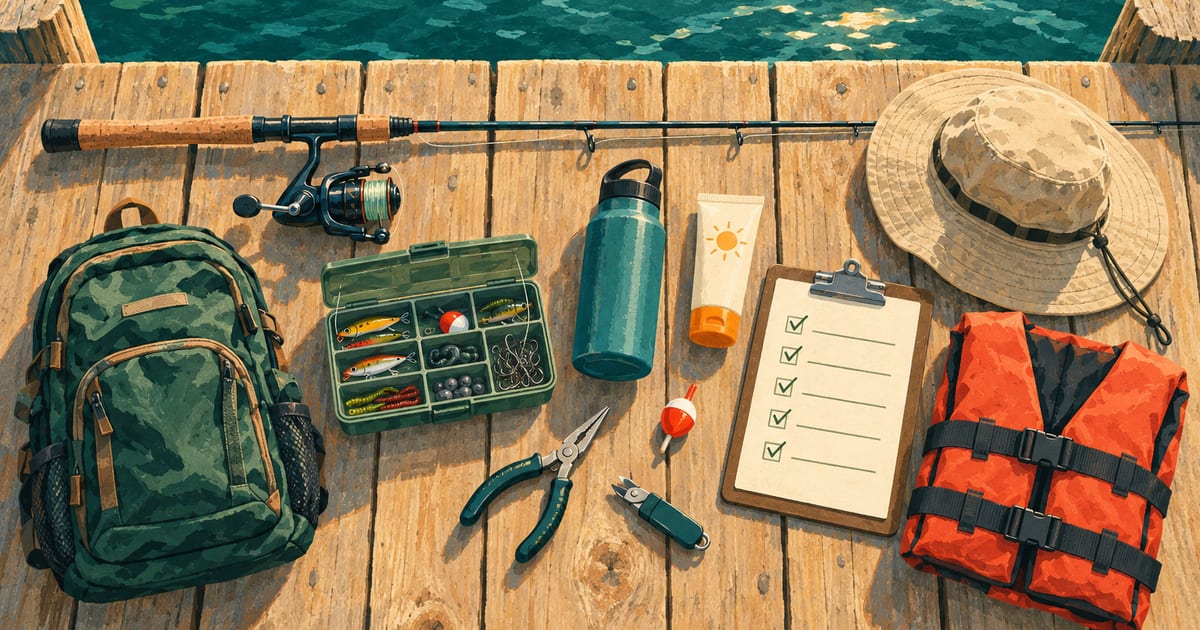
Use this beginner fishing checklist before packing
Start with the shared essentials, then choose the tackle for your particular water. Use this beginner fishing gear list as a packing check without buying every optional item mentioned later.
| Pack or wear | What to include | Check before leaving |
|---|---|---|
| Fishing permission | License, ID or exemption proof as required | Valid for this water |
| Rod and reel | One suitable, working outfit | Reel firmly attached |
| Fishing line | Line on the reel and a small spare spool | Suits rod and reel |
| Hooks and bait | Legal hooks and local bait, or a suitable lure | Matches local fish |
| Bobbers (floats) and weights | Only what your chosen rig uses | Enough for replacements |
| Landing tools | Suitable net, pliers and line cutter | Easy to reach |
| Fish identification | Local fish guide and measuring tool | Current size rules |
| Personal safety | Life jacket, first aid kit and phone | Jacket fits and fastens |
| Sun and weather gear | Hat, sunglasses, sunscreen and layers | Fits the forecast |
| Drinking water | Water and a snack | Separate from bait |
| Storage and cleanup | Small tackle box, bag and litter container | Hooks safely contained |
Rules, licenses, seasons, limits and life jacket rules differ by country and region. Check your local fishing authority, the government body managing fishing, for the exact place you intend to fish. Check the boating authority too if using a boat.
Save the relevant rules before leaving. Saltwater fishing can have separate requirements, so a freshwater license is not proof that you may fish at sea.
Match your rod, reel and line to one place
Choose equipment for the fish and conditions at your intended spot, whether that is a lake, river or sheltered sea shore. Ask a local fishing equipment shop to check that the rod, reel and line suit one another.
Official beginner guides recommend two reel types. Some favor a spincast reel, which has a closed cover and a push button for casting, as the easiest to use. Another recommends a spinning reel, which hangs below the rod and has an exposed spool, the part holding the line. Choose one suited to your water and fish, then learn its controls. Monofilament, a single strand of fishing line, is a common beginner recommendation.
For context, official guides suggest 8 to 10 lb (3.6 to 4.5 kg) line for general freshwater fishing, and one suggests about 20 lb (9 kg) line for salt water. One freshwater guide suggests size 6 or 8 hooks for certain small freshwater fish. These are starting examples, not specifications for every spot or fish. Ask locally before choosing sizes.
Check borrowed equipment as carefully as new gear:
- Make sure the reel is secure and the handle turns.
- Check that line passes through every rod guide, the small rings along the rod.
- Check the line for visible damage and make sure you understand the reel controls.
- Learn how to adjust the drag, which lets a strong pull take line from the reel.
Learn to Fish: Fishing Basics, our Android app, includes setting up and checking a spinning rod and reel in its lake, river and sea paths. It also teaches hookless casting practice. Add a hookless practice plug to your gear if you need to rehearse casting before fishing.
Pack tackle for the way you will fish
A rig is the arrangement of hook, line, weights and any float. Pack the parts for one rig you understand, with replacements for its small parts.
| Your chosen method | Pack these parts | What they do |
|---|---|---|
| Bait under a bobber (float) | Hooks, float, split-shot weights if needed | Suspend bait and show bites |
| Bait on the bottom | Hooks, sinkers and any required swivel and leader | Hold bait near the bottom |
| Casting a lure | One suitable lure and spare line | Provide an artificial bait |
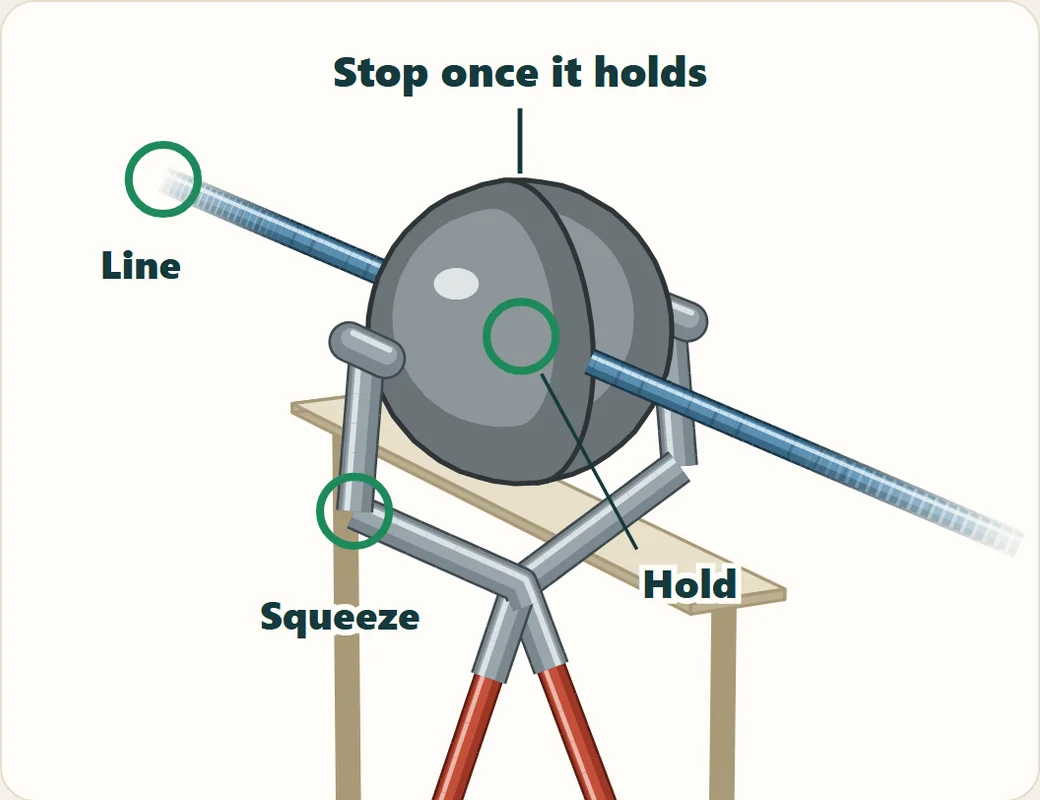
Split shot are small weights squeezed onto the line with pliers. A swivel is a rotating connector; a leader is the short section of line between the main line and hook on some rigs. You do not need to attach every part to every setup.
An oversized float makes a fish pull against more resistance. Pick one that carries the bait without going under and remains easy for you to see. The app's lake bait lessons show how to add the float and split shot, then test the depth. For a river, its bait path uses a stick float, weights and a controlled drift through one lane.
Check permitted hook types, bait species and bait sources with your local fishing authority. Some waters restrict live bait or particular hooks. Ask which legal bait suits the fish nearby, rather than buying an assortment for unrelated species.
Keep hooks in a closed tackle box. A bucket can carry bait or gear, but check what your bait needs and whether keeping or transporting it is allowed. Never release unused live bait into the water.
Get your landing and unhooking tools ready
Pack for a catch even if you expect to release every fish. Having the right tools ready lets you remove a hook with less handling.
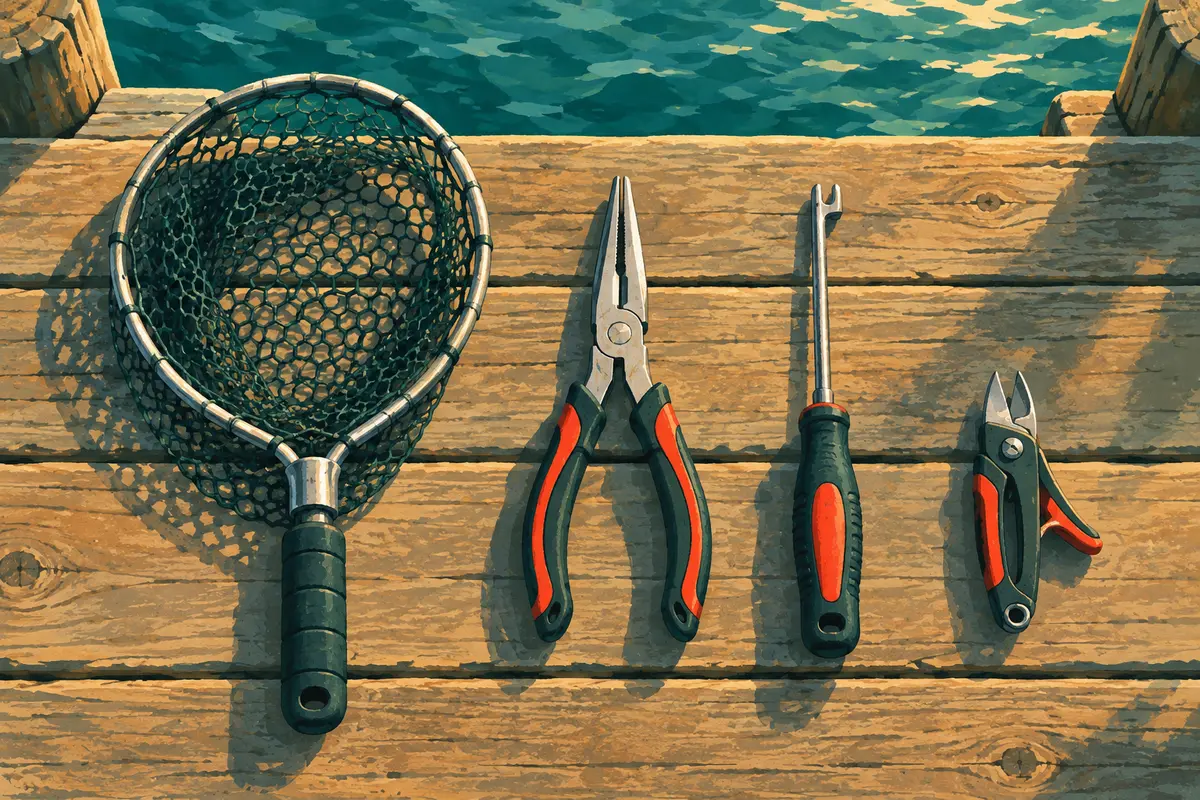
- Landing net: choose soft, knotless mesh or rubber. Wet it before use. These materials cause less damage to a fish's protective coating than rough alternatives.
- Pliers or a hook-removal tool: use them to reach the hook while keeping your fingers away from its point and any teeth. Pliers also help attach split shot.
- Line cutter: small scissors or nail clippers work with monofilament. Check that your cutter actually cuts the line you packed.
- Measuring tool and local fish guide: use these when identifying a fish and checking applicable size rules.
The app's lake bait path includes preparing the landing net before the first baited cast. Its later lessons cover guiding the fish into it and caring for, unhooking and releasing the fish.
For the release steps themselves, see the fish-handling part of learn fishing.
If you plan to keep fish, add a cooler with ice and learn the local identification, size, catch and transport requirements first. A bucket for carrying equipment does not replace release tools or a plan to keep your catch cool. Put the net, pliers and cutter within reach before you need them.
Wear safety gear and pack for the weather
Your personal kit matters on a riverbank or pier as well as on a boat. Wear the life jacket rather than leaving it packed in a bag.
Check its approval label, size and condition. Fasten it securely and make sure the straps and buckles work. Life jacket rules and approval standards differ by country and region; check the authorities for your location and activity.
Pack these alongside your fishing tools:
- Hat, sunglasses and sunscreen: official fishing safety guides recommend all three for sun protection. Sunglasses also help protect your eyes around hooks.
- First aid kit: keep it accessible rather than underneath the tackle.
- Phone: bring it charged, and tell someone where you will fish and when you expect to return.
- Drinking water and food: bring water for yourself and a snack, especially if leaving the spot means a walk back.
- Weather-appropriate clothes and footwear: take layers for cold or wind and shoes suited to the ground. Pack insect repellent if needed.
A small bag can keep these together; you do not need a special fishing backpack. A seat is optional comfort gear, not a replacement for any safety item. Choose a stable place to sit or stand, with room to use the rod.
Check the forecast before leaving and take a companion who can help in an emergency. For your first shore sessions, choose stable ground and stay out of the water.
Add these items for sea fishing
A sheltered beach, pier or jetty can call for different tackle and a different safety check from a small lake. Do not assume a light freshwater kit suits every sea location.
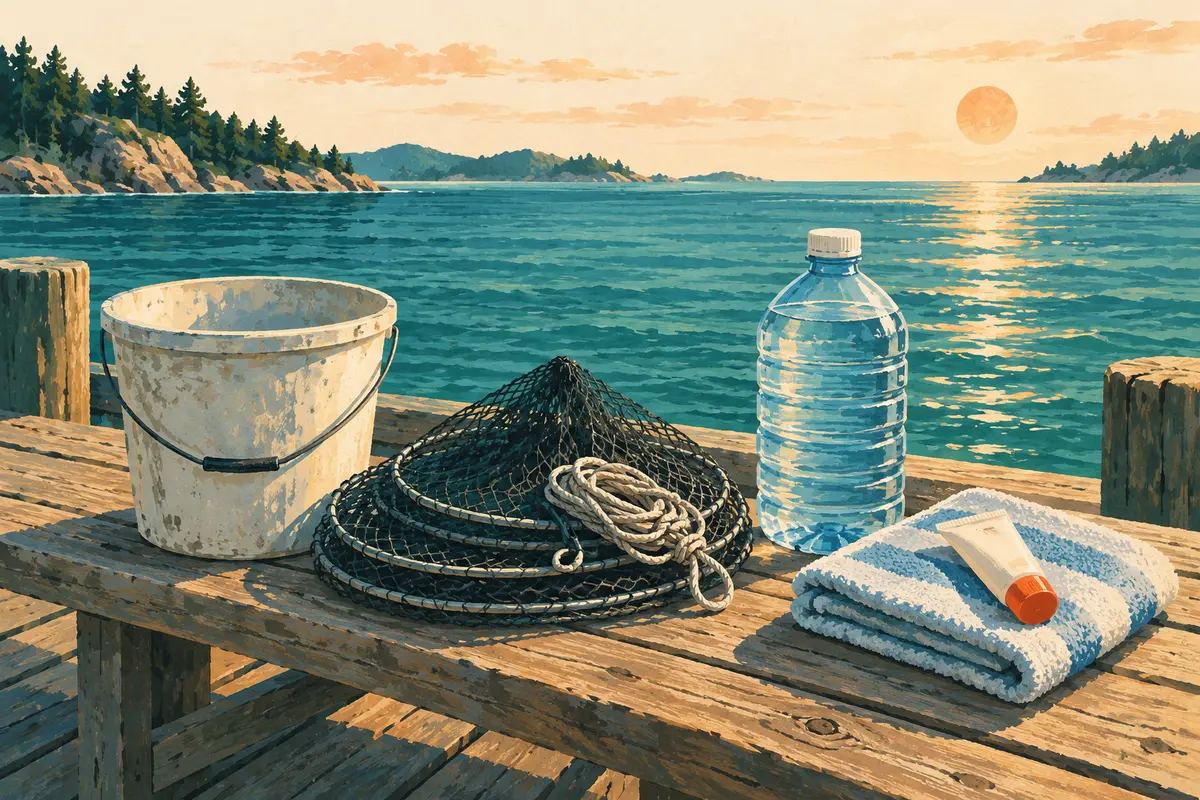
Add or confirm:
- Suitable sinkers: ask locally whether you need heavier sinkers for this spot and whether your rod can cast the complete rig safely. Match the weight to your equipment and conditions.
- Parts for your chosen sea rig: a running sinker rig uses a sliding weight, and may include a swivel and leader. Match hooks and permitted bait to local fish.
- A local tide table and coastal forecast: check rising water, waves and the route back. A tide table does not tell you whether waves make a spot safe.
- A suitable landing net: work out how to reach a fish from your standing place. At a high pier, ask about a drop net (a net you lower from the pier) or choose somewhere lower with safe access.
- Fresh water for cleanup: arrange a supply for rinsing your gear after salt water, separate from your drinking water.
The app's sea bait path shows a bottom rig with a running sinker and includes rinsing salt off the gear afterward. For care steps, see learn fishing, follow your equipment's instructions and check local guidance on cleaning and drying gear to stop aquatic pests spreading.
Stay out of the water and, as a beginner, off all rocks, including rock breakwalls (breakwaters). Rip currents can be difficult to see, so use the sea safety checks in first time fishing for rips, waves, tides and a safe route back.
Check these extras before fishing from a boat
A fishing bag is only one part of boat preparation. Whoever runs the boat should check it and its safety equipment before every trip.
Confirm these items with the operator:
- An approved, properly fitting life jacket for each person, worn and fastened.
- The safety equipment required for that boat and area, in working order and accessible.
- Suitable charts or navigation information, working communication equipment and a first aid kit.
- Fuel, engine and steering checks where applicable, plus a check of the boat's condition.
- Any required operator qualification or proof of competency.
- A weather check, a trip plan left with someone ashore and a safety briefing for everyone aboard.
Equipment requirements differ with country, region, boat type and trip. Ask the local boating authority for the complete list. This fishing checklist cannot replace it.
Ask a charter operator what fishing equipment is supplied before packing your own. Once aboard, follow the crew's briefing and keep loose hooks and bags out of walkways. Agree on the working space, and stow gear before the boat moves.
Avoid packing mistakes and postpone extra purchases
Check the job each item must do before adding it to the bag. A large kit can still be missing the tool you actually need.
Buying tackle for several methods at once: start with the rod and rig for your chosen spot. Leave extra rods, an electronic fish finder and a collection of unfamiliar lures off this simple shore shopping list. Add equipment when you can explain what you need it for.
Packing tools without testing them: try the line cutter, check the reel and work out how your landing net reaches the water. Finding these problems at home gives you time to fix them.
Treating safety gear as optional luggage: wear the jacket and keep first aid and communication equipment accessible. Do not bury them beneath tackle.
Before buying, ask about free gear loans or beginner events that supply equipment where you live. For help finding them and checking what is included, see can you teach yourself to fish.
For a first-trip budget, see what it costs to start fishing.
Frequently asked questions
What is the difference between spincast and spinning reels?
A spincast reel has a closed cover over its spool and a push button for casting. A spinning reel has an exposed spool and hangs below the rod. Both appear in official beginner guides. Choose equipment suited to your local fishing, then follow instructions for that type of reel.
Do I need a special tackle bag?
No. Use a bag you can carry comfortably and a small closed box to contain hooks and tackle. Keep pliers and line cutters accessible. Choose storage around the equipment for your trip rather than buying a large bag first and trying to fill it.
Do I need both bait and lures?
No. Choose one method for the spot and fish you intend to catch. Pack legal bait and its rig, or a suitable lure. Ask locally which option fits the conditions. Learning one setup is enough reason to leave the others at home.
Do I need a bucket or a landing net?
They serve different purposes. A bucket can carry gear or suitable bait. A wet rubber or soft, knotless net helps you land and support a fish carefully. If releasing fish, prepare a suitable net and hook-removal tools rather than planning to hold the catch in a bucket.
What fishing line and hook size should I buy?
Official guides give freshwater examples of 8 to 10 lb (3.6 to 4.5 kg) line and a saltwater example of 20 lb (9 kg). One suggests size 6 or 8 hooks for certain small freshwater fish. These are starting points; match line and hooks to your equipment, method and local fish.
What extra gear do I need for sea fishing?
Check suitable saltwater tackle, sinkers for local conditions, permitted bait, a workable landing net, tide information and the coastal forecast. Arrange fresh water to rinse gear afterwards. Wear appropriate safety gear, stay off rocks as a beginner and choose a position with a safe exit.
Sources
- Ontario Ministry of Natural Resources: Learn to Fish guide
- Texas Parks and Wildlife Department: A Basic Guide for the Beginning Angler
- New York State Department of Environmental Conservation: Freshwater fishing basics for beginners
- NOAA Fisheries: Catch and release fishing best practices
- Transport Canada: Choosing lifejackets and personal flotation devices (PFDs)
- Transport Canada: Pre-departure checklist
- Surf Life Saving NSW: Rock fishing
- Surf Life Saving NSW: Rip currents
- Department of Natural Resources and Environment Tasmania: Protecting against aquatic threats
- Ontario Ministry of Natural Resources: Free family fishing
- Ontario Ministry of Natural Resources: Learn to Fish
- New York State Department of Environmental Conservation: Basic fishing tackle and techniques
- National Park Service: Ten essentials
- Texas Parks and Wildlife Department: Fishing gear maintenance and repair