How much does it cost to start fishing? Often little: a short-term license plus a basic rod and reel, or almost nothing at a free beginner event that lends gear and a session license. Learn to Fish: Fishing Basics, our Android app, shows how to set up and check a spinning rod and reel. Bait and travel cost extra.
One misleading belief is that releasing every fish means you do not need a fishing license. Licensing can apply to the act of fishing, including catch and release. Check your local fishing authority before deciding that part of your budget is zero.
There is no worldwide starter price. Gear prices vary by country and store, so the worksheet below helps you price your own start. The license table gives official regional examples in their own currencies.
How much does it cost to start fishing on your first trip?
Start by splitting what you must buy from what you can borrow or already own.
Use this as a budget worksheet, rather than a full equipment checklist:
Cost category
Before the first trip
On later trips
License or permit
Check exemptions and duration
Renew when needed
Rod and reel
Borrow or buy one suitable setup
Maintain or repair it
Line and small tackle
Check what comes with the rod
Replace worn or lost items
Bait or lures
Choose one local method
Replace bait or lost lures
Safety and fish-care gear
Borrow or buy suitable equipment
Check condition before use
Travel and access
Check transport, parking and entry
Add the actual trip costs
Optional extras
Decide about paid lessons or a boat trip
Keep them separate
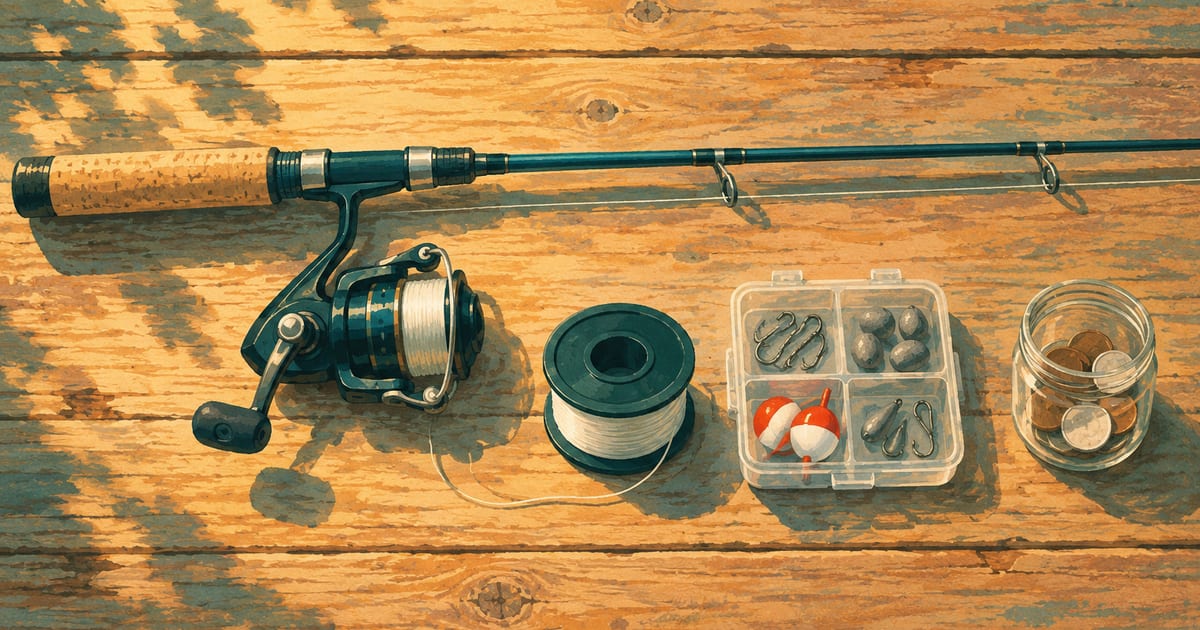
Small tackle means the parts attached near the end of the line, such as hooks, weights and a bobber (float). A lure is an artificial bait. Ask what a rod-and-reel package includes before adding line or tackle to your shopping list.
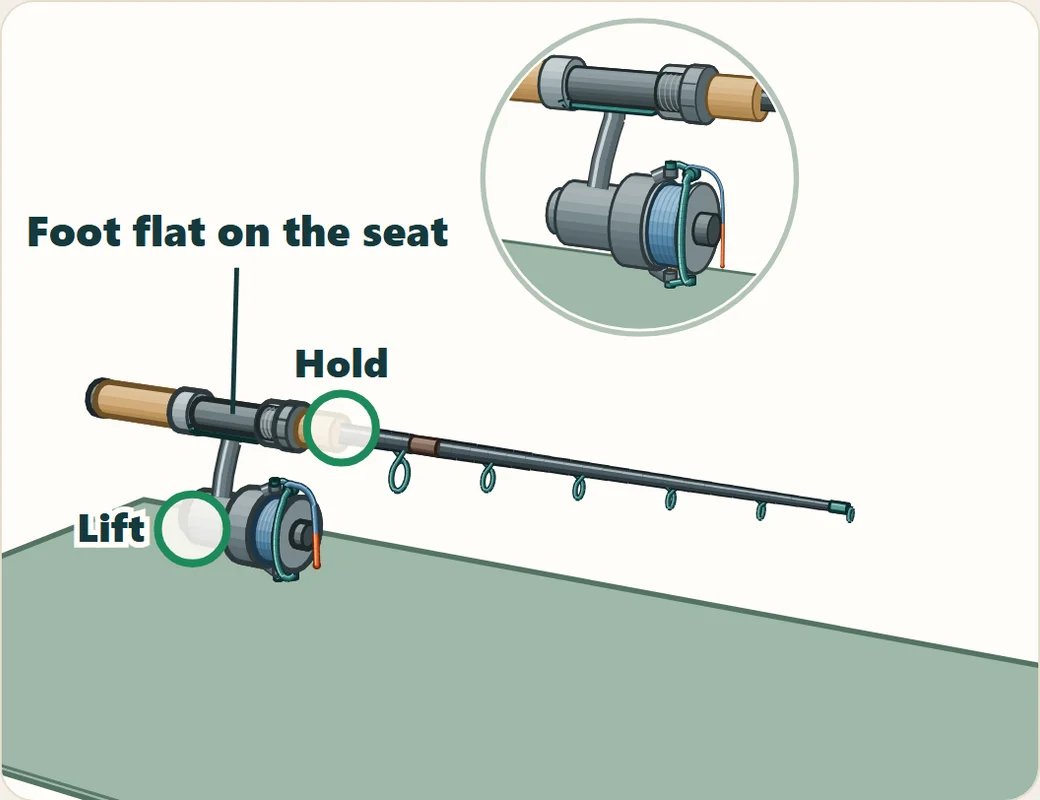
Learn to Fish: Fishing Basics, our Android app, shows how to set up and check a spinning rod and reel in its lake, river and sea paths. Use that lesson to try a borrowed spinning setup before deciding what to buy.
Putting the reel in the seat, from the spinning rod setup lesson.
Write down a local quote for each missing item. Count borrowed equipment as no purchase cost, but check deposit and return conditions.
What will your fishing license cost?
Your age, residency, chosen water and license duration can change what you pay. Start with the official fishing authority's current fee page.
These are examples checked on October 30, 2026. Each row describes one region, not a countrywide price. The Sources list identifies the authorities and regions.
Country and eligibility
Short-term license
Longer license
USA, resident of the issuing region
USD 11 for one day, fresh and salt water
USD 40 for fresh and salt water; August 31 expiry
Canada, resident of the issuing region
CAD 12.21 for a one-day sport license, plus 13% tax
CAD 26.57 for a one-year sport license ending December 31, plus a card and 13% tax
Australia, adult regional license
AUD 7 for three days, fresh and salt water
AUD 14 for one month, fresh and salt water
In the Canadian example, the one-year license expires on December 31 of its issue year, even if bought near the end of that year. The administrative card costs CAD 8.57 plus 13% tax if you need to buy one; the day license does not require it. In the US example, the USD 40 package runs from the purchase date to August 31, so one bought in midsummer covers only a few weeks; the same page lists a year-from-purchase package for USD 47.
Visitors can face different fees. These amounts are neither currency conversions nor estimates of your whole trip.
Ask your local fishing authority:
Does this license cover the exact water and fishing method?
Do freshwater and saltwater need separate licenses or added permissions?
Do I qualify for an age, disability or other exemption, and what proof must I carry?
When does the license expire, and are tax or purchase fees extra?
Rules, licenses, seasons and catch limits differ by country and region. Compare a short-term license with the longer option only after you know how often you expect to fish and when each expires.
Can you try fishing for free?
Some public programs remove equipment or teaching costs, but check exactly what their offer includes before traveling.
Some public programs lend rods or teach for free, so check what the offer covers.
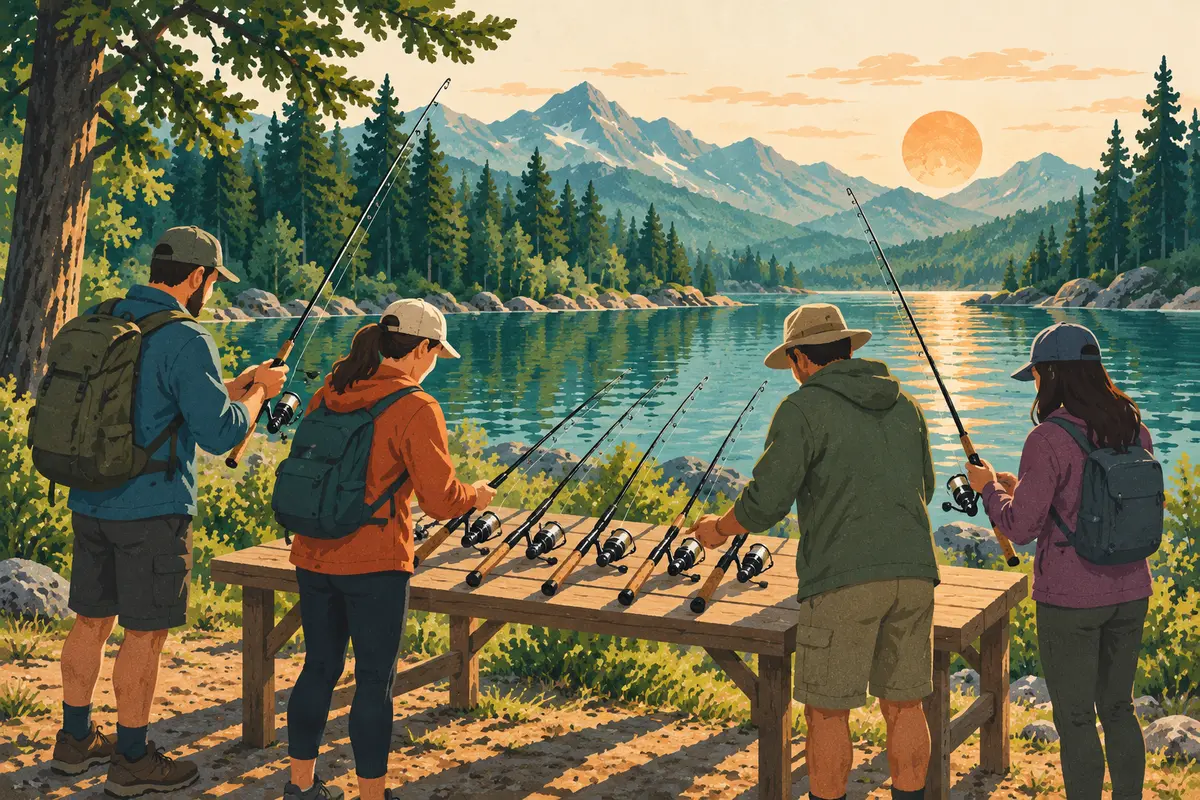
Gear loans: some agencies, libraries and parks lend rods, reels and tackle with no rental fee. A location may require a deposit, restrict where the equipment can be used or run out of available rods. Call ahead. Ask whether adults can borrow, whether bait is included and whether you still need a license.
Learn-to-fish events: some free beginner sessions include instruction, a rod, reel, bait, safety equipment and licensing for the session. Adults can attend some programs. Booking, age eligibility and availability vary. Parking or park entry can still cost money even when the lesson is free.
License-free fishing days: these waive a license requirement for eligible people on specific dates. They do not remove seasons, size limits, catch limits or other fishing rules. Check the current dates, residency conditions and covered waters. Equipment and instruction are separate questions.
To find these programs near you, use the search tips in can you teach yourself to fish. If equipment and licensing are both covered, your remaining costs may be travel, parking or entry, and anything the event asks you to bring.
What should go into your equipment budget?
Choose the water and fishing method before buying equipment. Otherwise, you can spend money on something that does not suit your first trips.
One official beginner guide recommends a basic spinning rod and reel because it is relatively inexpensive and simple to use. Ask for a setup suited to the fish, water and bait or lure you plan to use. A light freshwater outfit may not suit a sea spot, so ask about the exact place you plan to fish.
Allow for line and the small tackle your chosen bait or lure setup needs. Check what comes with a rod-and-reel package so you do not count the same items twice.
Keep fish-care equipment in the starting budget. A suitable soft knotless or rubber landing net and a hook-removal tool help you handle a catch carefully. Borrowing them is reasonable; waiting until a fish is hooked to work out how to land and release it is not.
If you consider used or borrowed gear, check it with an experienced angler. Inspect the rod's line guides for damage, make sure the reel works and check the line's condition. Allow for replacement line or repairs before comparing the total with a new setup.
Is fishing a cheap hobby after you have the gear?
Fishing can stay inexpensive when you reuse a suitable setup and choose trips with low travel and access costs. Your own records will tell you more than someone else's starter budget.
Keep purchases and outings separate in a simple note:
Equipment: what you bought, repaired or replaced.
Permission: license renewals and any other required permits.
Each outing: bait, lost tackle, transport, parking and entry.
Chosen extras: paid teaching, accommodation or a charter.
To work out your average spending per trip, add those costs for a period and divide by the number of trips you actually took. Include the equipment purchases if you want the full cost of starting, rather than just the cost of another outing.
Choose nearby legal access when it is safe and practical. Check parking and entry charges before leaving. Do not assume that a public park or pier has free access, equipment or licensing.
Before buying another setup after a trip without bites, check the float rig with the app's lake bait lesson and read why am I not catching fish.
Record trips with no fish too. Measure the cost of the hobby by what you actually spend, rather than assuming each outing will provide a meal.
How can you save on sea fishing without cutting safety?
A sea trip can add costs you would not have at a lake or river. Price them before you go.
Check whether salt water needs its own license where you live. Ask locally whether your rod and line suit the pier, jetty or beach you have chosen. For scale, one official gear-care guide suggests about 10 lb (4.5 kg) line for most freshwater fishing and 20 lb (9 kg) for salt water. These are broad starting points, so check before budgeting for replacement line.
Keep a properly fitted, fastened life jacket and suitable footwear in the plan. Life jacket rules and approval standards differ by country and region; check your local fishing and boating authorities. Borrow suitable safety gear or use an event that supplies it if buying it would otherwise prevent a safe trip.
Salt water corrodes metal parts, so allow for cleaning supplies and bring about 1 US gallon (4 liters) of fresh water for an initial rinse. The app's sea path includes rinsing salt off the gear; follow the care steps in learn fishing.
For choosing a spot around waves, tides, rip currents and slippery rocks, use the sea-safety advice in first time fishing.
Should you pay for lessons or a boat trip?
Treat teaching and boat trips as choices with their own budgets. First ask what you want help with and what the payment includes.
Before you pay for a lesson or a boat trip, ask exactly what the price includes.
Free official guides and beginner events can help you start. If you choose paid instruction, ask whether it is suitable for an adult beginner and whether equipment and licensing are included. If you already own a reel but cannot cast it yet, a lesson on using it may save you buying a different one.
For guided practice at home, the app shows the improved clinch knot in an animation you can slow down and replay. The first 2 lessons of a path are free; a weekly or yearly subscription opens the rest, with no free trial, and Google Play shows the price for your country before you confirm.
A charter is a separate purchase from a shore-fishing kit. Before booking, ask whether the quote includes rods, reels, bait, required fishing permissions and suitable life jackets. Ask about extra charges and what happens if weather cancels the trip. Do not assume the boat fare covers everything.
You can choose a paid trip because you want that experience. Keep its quote separate from the cost of learning to fish near home, so it does not become your assumed starting budget.
Which spending mistakes should you avoid?
Check these few decisions before paying. They can change your total without helping you learn more.
Buying for several kinds of fishing at once: price one local method first.
Counting only the rod and reel. Include the license, line, small tackle, bait, safe landing and release equipment, and the cost of reaching the water.
Treating a short-term license as automatically better value. Compare its total for your planned outings with a longer license. Check expiry dates and any separate card or permission costs first.
Calling borrowed equipment a completely free trip. Confirm deposits, bait, licensing, parking and entry. Return the equipment as agreed.
Leaving maintenance out of the budget. Allow for cleaning supplies, replacement line and repairs so a low purchase price does not hide later costs.
Add up your worksheet before you shop, then compare it with the cost of borrowing for the same trip.
Frequently asked questions
What is the minimum amount I need to start fishing?
There is no worldwide minimum. A free event may supply gear, bait and session licensing, leaving travel and possible access charges. Buying your own setup adds equipment costs. Check local license fees and get a quote for gear suited to one nearby place before setting your budget.
Is fishing a cheap hobby?
It can be if you reuse suitable gear and keep travel, access and optional purchases low. Track bait, lost tackle, license renewals and transport as well as the original setup. Fishing close to home and booking a charter are different budgets, so compare the version you actually plan to do.
How much is a fishing license?
In these official regional examples, a resident one-day license costs USD 11 or CAD 12.21 plus 13% tax, and an adult three-day license costs AUD 7. They are not countrywide prices. Your age, residency, chosen water and license duration can change the fee. Check your local fishing authority's current prices and exemptions.
Is it cheaper to use bait or lures?
There is no universal winner. Compare the local price of suitable bait with the lures your chosen method needs. Include replacements in your trip record. Start with one method and a small selection rather than buying both options and assuming one will always cost less.
Should I buy a day license or an annual license?
Add up short licenses for your planned fishing dates, then compare with the longer option, including tax and any required card. Check the expiry: in the Canadian example, a one-year license ends on December 31 of its issue year, even if you buy it late in the year.
Can I save money by buying used fishing gear?
Possibly, but compare the total after repairs and replacement line. Ask an experienced angler to check the rod, guides, reel and line before you pay. Borrowing a working setup first can help you decide what to buy without taking on an unfamiliar repair job.
What extra costs should I ask about before booking a charter?
Ask whether the quote covers gear, bait and required fishing permissions, and whether there are extra charges. Check what happens if weather cancels the trip, and add your transport and parking costs. Confirm that suitable life jackets are provided rather than assuming everything comes with the fare.