Fishing as an adult: how to start fishing as a hobby
By Learn to Fish · Updated
Start fishing as an adult by choosing nearby, safe water and learning one simple setup. Learn to Fish: Fishing Basics, our Android app, is made for adult beginners. Check local rules, find a beginner event or companion, and plan short practice sessions around your week. You can begin without a childhood fishing background.
The idea that fishing is something you must learn as a child is misleading. Public fishing programs explicitly welcome adults with little or no experience. You can ask someone to explain a reel, tie a knot with you or demonstrate fish handling without pretending you already know.
Taking up fishing as a hobby starts with a manageable commitment: one place to try, one way to fish and a plan for getting help.
Start fishing as an adult with a goal that suits you
Decide what you want from an outing before choosing equipment or a distant fishing destination. Perhaps you want quiet time outdoors, something to do with a friend or a practical skill to learn after work.
Make the first goal something you can practice: preparing your rod, casting into clear water or learning to handle a fish carefully. A catch can be part of the experience, but it should not be your only measure of whether the outing was worthwhile.
If you feel out of place, introduce yourself plainly: "I'm starting from scratch. Is this a suitable place for a beginner?" You do not need to learn all the fishing terms before asking for help. An organized beginner session gives you a place to ask those questions while someone watches you try.
Think about comfort, too. Check the walk from parking or public transport, available seating, toilets and whether you can reach the fishing area without climbing. Tell an organizer about any access needs before booking.
Start with the version of fishing you can realistically repeat. A nearby shore spot may suit your week better than a trip that needs a boat and a whole day away.
For calm fresh water, a simple option is a spinning rod and reel with line, a bobber (float), a hook and bait. Our learn fishing guide explains the setup and a bottom rig for sheltered sea fishing, where a weight holds bait near the bottom.
Choose water you can visit regularly
Choose the actual fishing location before choosing a general style. A lake, a river and the sea are all possibilities, but access, conditions and local rules decide which spot suits your first outings.
Water you can reach easily is water you will visit often.
Use your local fishing authority's public-access information, then ask about a suitable beginner location. Visit in daylight without fishing first. Check where you would stand, cast, bring a fish in and leave safely. Public access to the shore does not automatically mean fishing is allowed there.
Nearby option
Look for
Check before choosing
Lake or pond
Firm bank or a designated fishing platform
Fishing permission and room to cast
River
Stable bank beside gentle current
Safe access without entering the water
Sea
Sheltered pier, jetty or firm sandy shore
Waves, tides, fishing access and a clear exit
A breakwall may look sheltered while its outer rocks are exposed to waves. As a beginner, stay off slippery or wave-washed rocks. Ask locally about a safer platform or sandy alternative.
Learn to Fish: Fishing Basics, our Android app, uses three choices, where you want to fish, how and your experience, to set up a learning path. Its paths cover lakes, rivers and the sea, so you can choose lessons for the water near you.
Check the rules that apply to you as an adult
Treat the license check as part of planning, even if you remember fishing without one as a child. Some regions exempt children or have age-based concessions, but those rules may no longer apply to you.
Rules, licenses, seasons, limits and life jacket requirements differ by country and region. Check your local fishing authority for your chosen water. Saltwater can have separate licensing requirements from fresh water. Do not assume a license for one covers the other, or that releasing every fish removes the need for a license.
Before fishing, find out:
Whether your age, residency and chosen water require a license, permit or registration.
Which species you may fish for and when.
Which bait, hooks and methods are legal.
Which fish must be released and the size and number you may keep.
What proof of permission or licensing you must carry.
Learn to recognize the fish you are likely to encounter before deciding to keep any. If a rule is unclear, ask the authority rather than relying on another angler's memory.
Find people who welcome adult beginners
Look for a setting where teaching is part of the activity, especially if nobody you know fishes. Public learn-to-fish events, adult mentoring programs and community fishing sessions are possible starting points.
Community sessions and mentoring programs give adult beginners people to learn from.
Some sessions welcome adults alongside children; others are specifically for adults or women. Community events can cover fresh or salt water. Choose a session for the water you want to fish, and check that its dates fit your schedule.
Before registering, ask whether you can attend without a child or a fishing partner, and whether you will practice while someone helps. Explain that you need to start with the basics, even if everyone else seems familiar with the equipment.
Free instruction can still require your own equipment and license. For free learn-to-fish events, gear loans and license-free days, see can you teach yourself to fish.
For regular company, ask a local fishing club whether it offers beginner outings or can suggest someone who teaches. Say which water you want to fish and that you are starting from scratch. Ask whether a visitor can attend before joining.
At the water, wait until someone has finished casting or handling a fish before speaking. Ask one small question and accept that they may be busy.
Fit practice around work and home
Give yourself a small practice slot and a separate window for an outing. For example, set aside a short session at home one evening and a daylight visit when conditions allow.
Use home practice to become familiar with the reel controls or repeat one knot. For a demonstration and a way to check your work, see can you teach yourself to fish. You do not need a different learning method just because you started later in life.
The app stores lessons on your device, so you can study offline between trips. Most lessons have a 3D animation you can turn, slow down and replay when a movement is unclear.
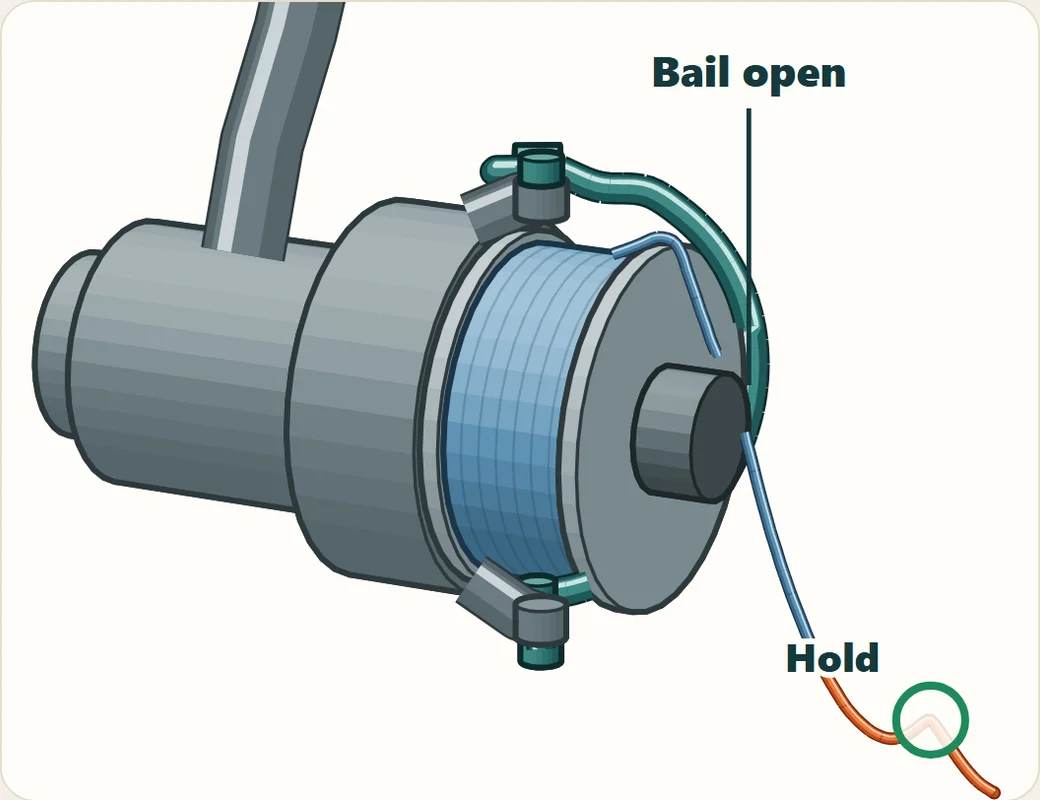
Practice casting in an open area where it is permitted, away from people and obstacles, with a hookless practice weight. Look behind and around you before every cast. The app's casting lesson uses a hookless plug and shows the index finger holding the line while the other hand opens the spinning reel's bail, the wire arm that releases line.
Opening the bail by hand, from the spinning reel lessons.
Count travel, setting up and packing away when choosing your outing window. After sea fishing, allow time to rinse salt off the gear; our learn fishing guide explains the care steps.
Try this flexible first-month plan
Use these four weeks as a suggested order, with room to repeat or postpone any stage. This is a planning aid, not a deadline for becoming competent or catching fish.
Week
Your main task
A useful result
1
Choose nearby water, check rules and contact a beginner event or helper
You know where you may fish and whom to ask
2
Borrow or arrange suitable gear and practice using it
You can prepare the rod and make controlled hookless casts
3
Make a short outing with a companion or attend a supervised session
You try the setup and identify one question
4
Repeat the outing or get help with the unclear step
You know what to practice and whether you want to continue
If you want to preview guided lessons while making that plan, the first 2 lessons of a path in the app are free. A weekly or yearly subscription opens the rest; there is no free trial.
After an outing, note where you went, what you tried, what happened and one question. "I couldn't tell a bite from wave movement" gives a helper something specific to explain.
If work, weather or a canceled session stretches the plan over several months, continue from the unfinished stage. Avoid squeezing a trip into unsafe conditions just to keep the schedule.
Make safety and fish care part of the hobby
Prepare for the things that could need an immediate response before you start fishing. Take a companion, tell someone your location and return time, and check the weather before leaving.
For initial outings, choose stable ground and stay out of the water. Wear a properly fitted life jacket and check local requirements. Leave space for other people and keep hooks clear of everyone when casting.
At sea, lifesaving guidance recommends watching conditions from dry ground for at least 30 minutes before setting up, and checking tides and your exit. For waves, rip currents and slippery rocks, follow the safety checks in first time fishing, and stay out of the water as a beginner.
Ask a helper to demonstrate how to land, unhook and release likely fish before your first catch, with a suitable net and tools ready. For the handling steps, see learn fishing.
Bring all discarded line and other litter home. Leave yourself enough time to pack up without rushing, even when you have only a short break from other responsibilities.
Avoid turning the hobby into another obligation
Keep early mistakes in proportion. A tangle or an awkward question tells you what needs attention; it does not mean starting as an adult was a bad idea.
Trying to look experienced. Tell a helper what you have never done. Ask them to demonstrate, then watch you try. That is more useful than nodding through instructions you cannot follow.
Comparing yourself with lifelong anglers. Tell your helper which part you want to try yourself rather than letting them do everything while you watch. Preparing your own rod is a useful goal even when someone beside you is catching fish.
Buying for several fishing styles at once. Choose one local outing first, and use the beginner fishing checklist to see what can wait.
Making the catch your only goal. Also notice whether you enjoyed the outing, could use the setup and want to repeat it. You can record no fish and still have a useful question for next time.
Keeping a date despite poor conditions. Move the outing or practice at home. A free evening is not a reason to ignore a rough-water forecast or an unsafe bank.
Choose your next step from what happened: another supervised session, another visit to the same safe place or a pause. Starting fishing as a hobby does not commit you to buying more equipment or spending every weekend at the water.
Frequently asked questions
Is it too late to start fishing as an adult?
No. Public beginner programs accept adults with little or no experience. Choose a session that welcomes adult newcomers, explain what you have never tried and ask about equipment and access. You can start with basic shore fishing rather than an ambitious trip.
How do I start fishing as a hobby?
Pick one nearby place you can visit regularly, check its rules and learn one simple setup. Find a beginner session or helper, practice casting with a hookless weight and plan a short outing. Use the first-month plan above as an order of tasks you can repeat or stretch.
Can adults attend learn-to-fish events without children?
Some events explicitly welcome adults, and some programs teach adults specifically. Others are for children with an accompanying adult. Before booking a family event, check whether it expects you to bring a child. If the eligibility information is unclear, ask the organizer.
How do I return to fishing after years away?
Check current rules for your chosen water, including licensing, rather than relying on what you remember from childhood. Ask a helper to watch you prepare the rod and make a controlled cast before fishing. Tell an instructor what you remember and which steps you want to practice again.
Why do I need a fishing license when my kids do not?
Some regions exempt children from buying a license, so an adult can need one where a child does not. Rules differ by country and region, and can depend on residency and whether you fish fresh or salt water. Check your local fishing authority for your own requirements and any proof you must carry.
Is fishing a good hobby for adults?
It can be. Official beginner guidance describes fishing as a fun and relaxing way to spend time outdoors. Try a short outing with one simple setup, and judge the hobby by whether you enjoy being there and want to return, as well as by what you catch.
How do I ask another angler for help without getting in the way?
Wait until they finish casting or handling a fish, then ask whether they have a moment. Explain that you are new and ask one specific question, such as whether the spot suits beginners. If you need ongoing instruction, arrange a beginner session or contact a club.