On a guided outing, you might hold the rod while someone else chooses the spot, ties the rig and handles the catch. Useful progress is taking over those jobs safely. The stages below are a practice plan, not measured averages or deadlines for your first catch.
How long does it take to learn fishing?
How long does it take to learn fishing? A two-hour class can introduce the basics; fishing on your own takes practice. Learn to Fish: Fishing Basics, our Android app, guides you step by step. One adult mentoring program offers three or four sessions of 2 to 4 hours. Judge progress by what you can do yourself.

How long does it take to learn fishing at each stage?
Start by deciding what you want to be able to do, because each goal asks something different of you.
One official beginner program offers a two-hour introduction: one hour of practical instruction followed by one hour of supervised fishing. Adults can attend. It shows what a supported first session can cover, with equipment and an instructor provided.
Another official program for novice adults schedules three or four sessions of 2 to 4 hours each, with teaching and fishing on every visit. When looking for instruction, consider whether you want an introduction or a series where you can practice and return with questions.
Use these milestones to decide what to work on next:
| Your goal | What you need to do | A useful sign of progress |
|---|---|---|
| Try fishing with help | Follow safety advice and use the equipment with guidance | You understand what the instructor asks you to do |
| Prepare for a first outing | Check rules, prepare one setup, cast safely and plan fish handling | You can explain and demonstrate the steps |
| Catch fish regularly at one place | Repeat a working method and learn where local fish feed | You can repeat a catch on separate visits and explain your choices |
| Fish unfamiliar water independently | Research access, rules, hazards and local fish | You can make a plan and recognize when to leave |
| Add another method | Learn its equipment, movements and safety needs | You can use it without relying on someone to finish each step |
Catching regularly does not mean catching on every visit.
Get ready for a first outing with one setup
Your first preparation goal is being able to use one suitable setup, rather than knowing every fishing method.
Choose a lake, a slow river or a sheltered sea spot with safe access. Check your local fishing authority's guidance for the fish and water there. A rig is the arrangement of hook, weights and any bobber (float) on your line. Learn one suitable rig before comparing alternatives.
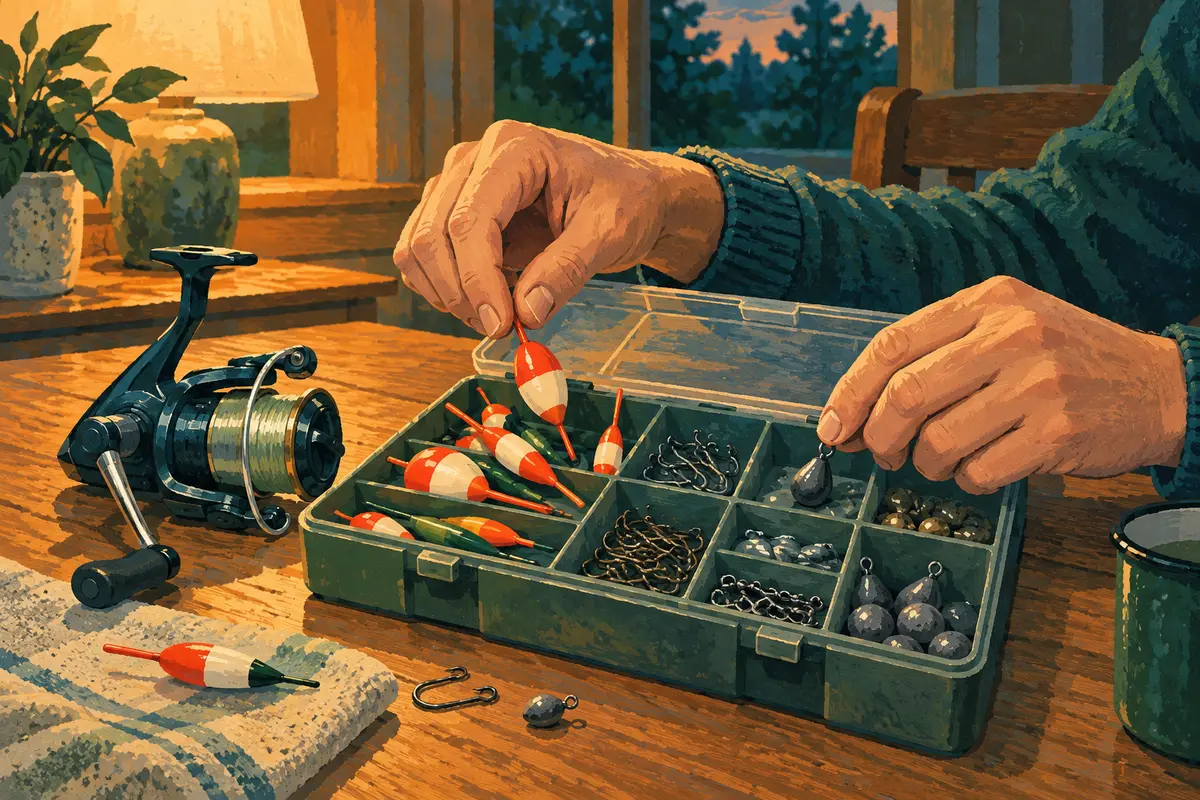
For a readiness check, put the equipment together, tie one knot, such as the improved clinch, and practice casting with a hookless plug, a weight made for casting practice. Look behind and around you before every cast. Learn how you will bring in and unhook a fish before adding bait.
Learn to Fish: Fishing Basics, our Android app, gives these jobs an order. Its lake bait path starts with rod setup and trip planning, then covers hookless casting practice, the knot and float rig, reading bites, landing and release.
You do not need to wait until you can catch fish regularly to join a supervised outing. If you still need help tying or casting, tell the instructor. For the actual setup steps, use our learn fishing guide.
Before fishing, check licenses, seasons, permitted bait, size limits and catch limits. They differ by country and region, and individual waters can have extra restrictions.
Learn to repeat a catch at one familiar place
Once you can use your equipment, the next goal is learning why you put your bait or lure in a particular place.
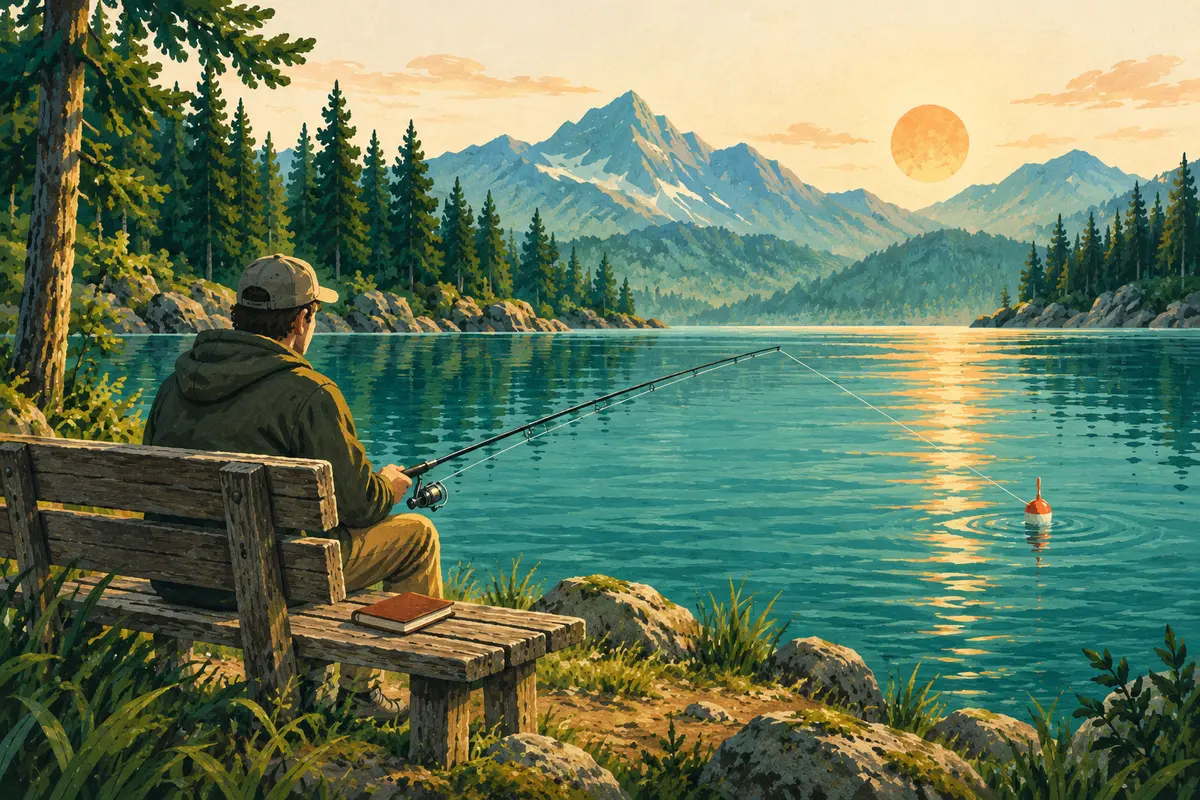
Official fishing guides describe different places to look: cover such as plants and fallen branches in lakes, and slower pockets beside moving water in rivers. A lure is an artificial bait. Casting it accurately near a chosen feature is a more useful practice goal than simply casting farther.
Return to an accessible spot with the setup you already understand. Keep a short record of the place, weather, bait or lure, depth and result. At sea, include the tide. Record trips with no fish too. Use those notes to choose what to repeat or change on your next visit.
Use two separate checks:
- Equipment and technique: Could you prepare the rig, cast where intended and notice changes in the line or float?
- Understanding the place: Could you explain where you expected fish, and compare that expectation with what happened?
The app's lake path ends with logging the trip and choosing what to practice next. Its float lesson also compares the float with the surrounding water to help distinguish a bite from movement caused by waves.
A float shows bites while holding bait at a chosen depth. Learning that signal is progress even before you can repeat a catch. For help deciding what to check during a fishless trip, see why am I not catching fish.
Check what changes before fishing new water
Being comfortable at one place is a reason to plan your next challenge carefully, rather than assume every shore works the same way.
Before changing waters, check legal access, local fish, permitted methods and where you can safely stand and land a fish. Saltwater rules and licenses can be separate from freshwater rules. Check your local fishing authority each time you enter a different area.
On a river, add current to your planning. Fish may use sheltered pockets beside faster water, so a lake approach will not always transfer directly. Begin from firm ground without entering the water.
At sea, check the forecast, waves, tides and rip-current hazards. Surf lifesaving guidance recommends watching conditions from dry ground for at least 30 minutes; stay off slippery or wave-washed rocks as a beginner and follow the sea safety checks in planning your first fishing trip.
Take a companion, tell someone your plans and wear a properly fitted life jacket. Life jacket rules differ by country and region; check local fishing and boating authorities.
After sea fishing, rinse salt off your gear; our learn fishing guide covers the care steps.
An important milestone is being willing to cancel. Knowing that a spot is unsuitable today shows better judgment than staying to prove you can fish it.
Practice between trips with a clear purpose
You can work on casting and tying without waiting for a fish to bite.
Use your usual rod and reel in an open area away from people, trees and other obstacles. Tie on a hookless practice plug. Choose a visible target and work on sending the plug toward it with control. Official beginner guides recommend practicing before going fishing and emphasize accuracy over distance.
Separate the movements that keep going wrong. With a spinning reel, which hangs below the rod, practice holding the line with your index finger before opening its wire arm, called the bail. Then practice the cast. Do not add a hook to make dry-land practice feel more realistic.
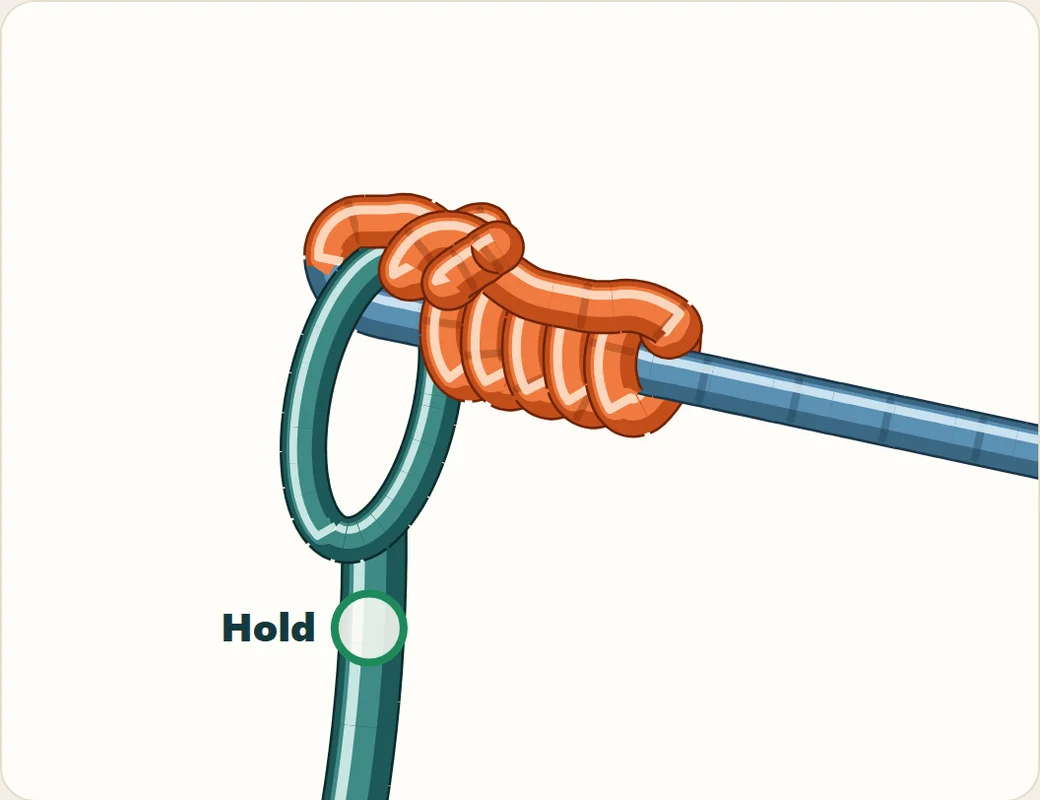
For tying, follow one knot demonstration, tighten the knot and inspect it. Repeat it using your actual fishing line, keeping any hook point clear of your fingers. Being able to repeat the steps is a better check than recognizing them on a screen.
The app's improved clinch knot lesson offers optional practice on a thick cord before you tie it in fishing line. Its casting practice uses a hookless plug and shows the index finger holding the line while the other hand opens the bail.
Keep practice focused on a result you can check. Stop to inspect a knot or review a cast instead of repeating something you do not understand.
Ask for feedback when a step keeps failing
An instructor can watch what your hands and equipment are doing, giving you a way to check a problem you cannot identify alone.
When choosing a lesson, ask how much time you will spend practicing yourself and whether the instructor can watch the step you want checked.
Ask a narrow question: "Can you watch me tie this knot?" or "Can you check when I release the line?" Try the movement again after the explanation, then ask whether you made the intended change. Your goal is to perform the step yourself, rather than have someone complete it for you.
For ways to find free instruction or gear loans, see can you teach yourself to fish.
Before leaving a lesson, ask what to practice next. Repeat that task with your own equipment so the feedback becomes something you can use.
Add fly or boat fishing as a separate learning goal
Changing methods adds jobs to learn, even when you already know how to handle a fish carefully.
Fly fishing generally takes more practice because the line's weight carries the cast and the equipment works differently. You can choose it from the start; use how to learn fly fishing for its equipment, casting and first trip.
For a first trip as a passenger, the app's charter lesson covers asking what is provided, following the crew briefing and holding the rail when moving.
If you want to operate a boat, add a boating safety course and practical help first. Learn preparation, required safety equipment, sharing the water and emergency procedures. Boat-operation requirements and life jacket rules differ by country and region. Check your local boating authority rather than assume shore-fishing experience qualifies you to drive a boat.
You do not have to add either method to count as someone who fishes. Staying with shore fishing while learning a familiar place is a worthwhile goal.
Avoid timing mistakes that slow you down
Judge the next trip by a skill you can observe, rather than by whether you match somebody else's learning story.
Keep these timing mistakes in mind:
- Counting only time spent beside water. If casting keeps failing, choose hookless practice and feedback as your next task.
- Treating one catch as the whole skill. Ask which jobs you completed yourself and which someone else handled.
- Changing everything between trips. Keep a familiar setup while you work on a particular movement or decision.
- Waiting until the catch to learn handling. Prepare release tools and learn the handling steps in our learn fishing guide before you fish.
Choose one next goal you can check: prepare the rig without help, cast toward a chosen target or explain why you selected a safe fishing spot. Repeat a stage when needed. Adding a new method does not erase the skills you already have.
For a closer look at what makes each method difficult, see is fishing hard to learn.
Frequently asked questions
Can I learn fishing in one day?
You can receive an introduction and try supervised fishing in a session. One official program combines one hour of instruction with one hour of fishing. Afterward, check which steps you can repeat without help before planning an independent trip.
Does one successful trip mean I have learned to fish?
A catch is a good start. Check which jobs you did yourself: preparing the equipment, choosing where to cast, responding to the bite and handling the fish. On later trips, work toward repeating those jobs without someone finishing them for you. Then consider a new place or method.
How long should it take to catch my first fish?
There is no dependable deadline. A first catch depends on fish being within reach and taking your bait or lure, as well as your technique. Ask locally about suitable beginner water. Use trips without a catch to check what you can do and identify a question for next time.
When should I repeat a lesson instead of moving on?
Repeat it when you still need someone to finish the step or cannot do it safely. If you can follow a knot demonstration but cannot tie the knot again yourself, keep that as your practice goal. Ask for feedback on the part that fails before adding another setup or method.
Will lessons help me learn faster?
Lessons give you demonstrations, supervised practice and someone who can spot a fault you cannot see. How much they speed you up varies. Ask the instructor to watch one step, such as releasing the line during a cast, then repeat it yourself before you leave.
Does fly fishing take longer to learn?
Usually, yes. Official guidance says fly fishing needs more patience and skill than many other kinds of fishing: the cast uses the line's weight, and the equipment works differently. There is no set number of hours or trips. If it interests you, start with its own equipment and casting practice.
When am I ready to fish independently?
When you can check local rules and conditions, prepare your setup, cast safely, respond to a bite and handle a catch without relying on an instructor. Independence does not require going alone. Take a companion and tell someone your plans, especially when exploring unfamiliar water.
Sources
- Ontario Ministry of Natural Resources: Learn to Fish
- Ontario Ministry of Natural Resources: Learn to Fish guide
- New York State Department of Environmental Conservation: Freshwater fishing basics for beginners
- New York State Department of Environmental Conservation: Basic fishing tackle and techniques
- Fisheries and Oceans Canada: Learn about and apply for a recreational fishing licence
- Surf Life Saving NSW: Rock fishing
- Surf Life Saving NSW: Rip currents
- National Park Service: Fly fishing
- Transport Canada: Pleasure Craft Operator Card (PCOC)
- Texas Parks and Wildlife Department: Fishing gear maintenance and repair
- U.S. Coast Guard: Life jacket wear: Wearing your life jacket
- Texas Parks and Wildlife Department: Angler Education Adult Mentored Fishing Program