Forget the idea that a child must sit patiently for hours to learn fishing. Official child-fishing guidance says an outing may end after just a few minutes if interest fades. You can build from there. A safe cast, a question about a fish or a request to go again can all make the trip worthwhile.
How to teach a kid to fish, even if you're new too
Here's how to teach a kid to fish: learn one simple setup yourself, practice casting without hooks, then take a short trip to calm water. Learn to Fish: Fishing Basics, our Android app for adults, can guide your preparation. Stay close, let the child do manageable jobs, and prepare for a gentle release.
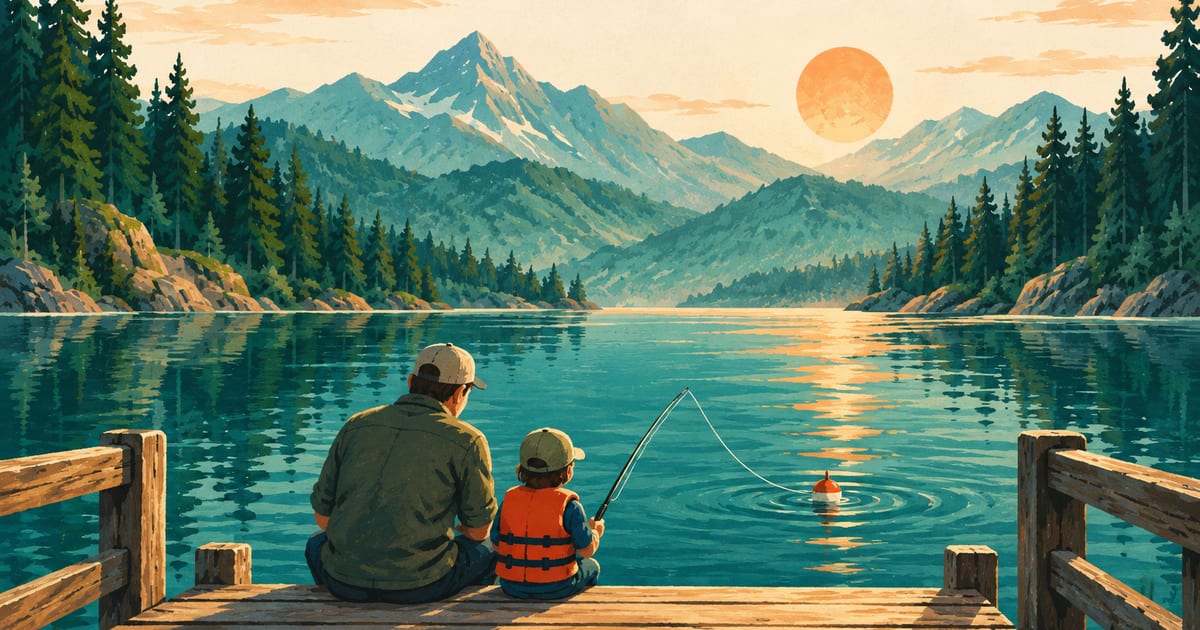
How to teach a kid to fish when you're learning too
Learn the jobs that will need your attention before you take responsibility for a child beside the water.
Practice assembling the rod, using the reel, tying one knot and casting without a hook. Read how to land and release a fish before you catch one. For the full setup instructions, start with our learn fishing guide.
Learn to Fish: Fishing Basics, our Android app, shows adults how to set up and check a spinning rod and reel. Its improved clinch knot lesson includes optional practice with thick cord first, so you can learn the movements before handling fishing line and a hook.
Check your local fishing authority for licenses, seasons, permitted bait and hooks, size limits and how many fish you may keep. These differ by country and region. Check the rules for both you and the child, including whether helping cast or reel counts as fishing. Saltwater requirements may differ from freshwater requirements.
Some areas offer family learn-to-fish events, gear loans and license-free days. For how to find help and check eligibility, see can you teach yourself to fish.
Choose a place where you can focus on the child
A nearby, easy-to-leave spot lets you finish when the child is ready, without a long journey back.
Visit first if possible. Look for firm, level ground, calm water and clear casting space behind and overhead. Ask locally where small, plentiful fish can be reached from shore.
| Place | Look for | Choose somewhere else if |
|---|---|---|
| Lake dock or platform | Stable footing, clear space and a reachable place to net fish | The edge is slippery or the platform is crowded |
| Slow river shore | A firm bank where you can stay out of the current | The bank is steep or the current threatens your footing |
| Sheltered sea pier or jetty | Railings, room to cast and a safe way to land fish | Waves reach the deck or landing a fish requires climbing |
| Calm beach | Firm sand and an easy route back | Waves, rips or a rising tide threaten your position |
At sea, lifesaving guidance recommends watching waves from dry ground for at least 30 minutes before choosing a spot. A darker gap with fewer breaking waves can be a rip current flowing away from shore. Keep the child out of the surf and off rocks, including exposed breakwalls. Use the sea-safety advice in first time fishing to check weather, waves, tides and your route back before bringing the child.
Make water and hook safety part of every lesson
Keep the same simple safety routine whether you fish beside a lake, river or sea.
Put a properly fitted, fastened life jacket on the child before approaching the water. Choose a child-sized model approved for its use under local standards. Check the label for the child's weight and chest size. It should fit snugly, with less than 3 inches (7.6 cm) between the child's shoulders and the jacket, and should not ride up over the chin or ears. For a small child, look for a strap between the legs to help prevent it slipping over their head. Wear yours too.
Life jacket rules differ by country and region. Check local fishing and boating authorities, even if you plan to stay on shore. A life jacket does not replace supervision: official guidance recommends keeping children within arm's reach around water.
Agree on these rules before unpacking:
- Walk with the rod. Stop before casting and look behind, overhead and around you.
- Wait until everyone is clear before moving the rod.
- Let the adult manage hooks and sharp tools until the child can use them cautiously under supervision.
- Choose barbless hooks, or have the adult press the barbs flat with pliers.
- Stay at the agreed standing place. Ask an adult for help with a snag or dropped item.
Keep spare hooks covered or boxed. Bring a first aid kit, drinking water, sun-protective clothing, a hat, sunscreen and sunglasses. Sunglasses also help protect eyes from hooks. Tell someone where you will be and when you expect to return.
If you hear thunder, leave the water immediately. Get inside a building with electricity or plumbing, or an enclosed, metal-roofed vehicle with the windows up. Stay there for at least 30 minutes after the last thunder.
When you need to untangle line, stop fishing and keep supervising. Another adult can help with equipment while you stay with the child.
Give them one rod they can comfortably use
Fit and simple controls matter more than having lots of equipment to choose from.
Let the child hold the rod and try the reel before the trip. A lightweight, shorter rod is easier to manage than an adult-sized outfit. Official beginner guidance suggests about 4 to 5 feet (1.2 to 1.5 m) for children, but choose something they can comfortably hold and control.
A push-button spincast reel has a covered spool and a button that releases line. A spinning reel has an open spool and a wire arm, called the bail, that you open before casting. Either needs practice. Use equipment suited to the local water and fish, especially if you are starting at sea.
A rig is the parts arranged on the line. For calm freshwater fishing, a hook, legal bait, small weights and a bobber (float) make a simple starting rig. The float supports the bait and gives the child something to watch.
At a sheltered sea spot, ask locally whether a float rig or a simple bottom rig suits the fish. A bottom rig uses a weight to hold bait near the bottom. Prepare a suitable landing net, hook-removal tool and line cutters before fishing. Use the beginner fishing checklist for the full kit and what can wait.
Teach casting with a hookless plug first
A backyard or open park gives you room to teach the movement before adding water and a sharp hook.
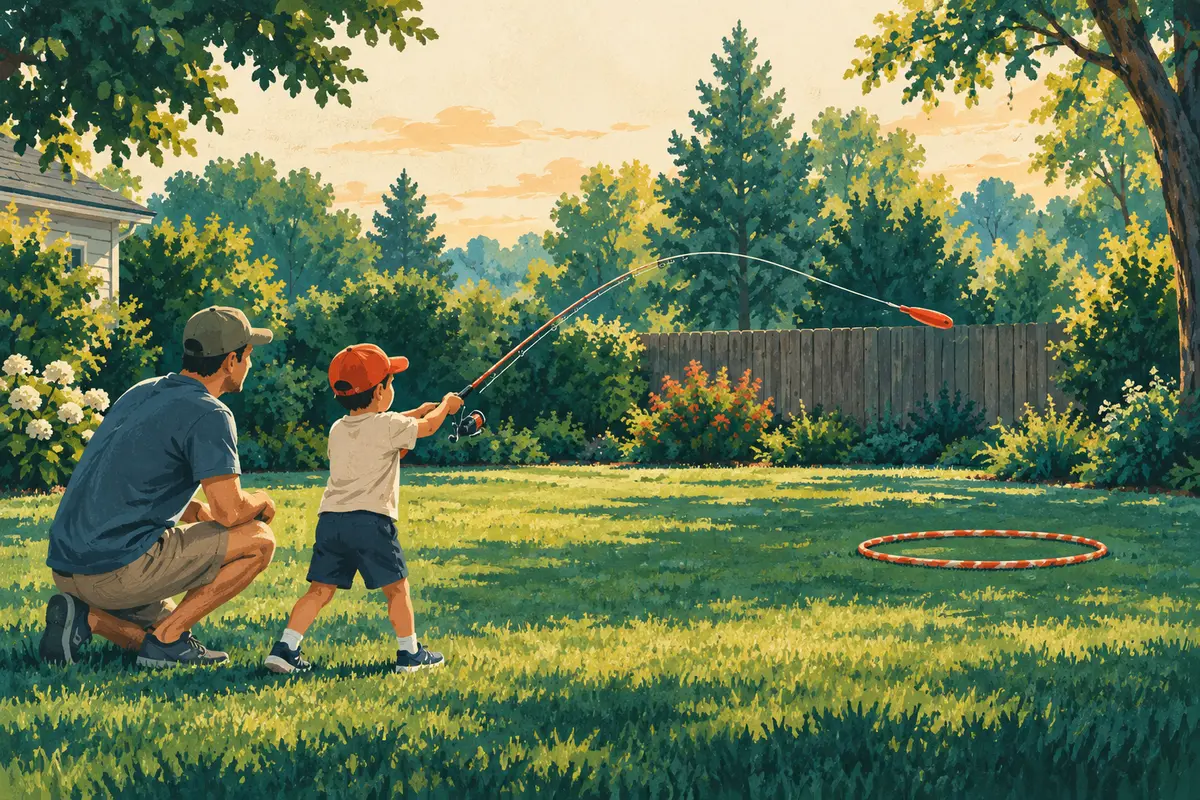
Tie on a casting plug, a practice weight with no hooks. Pick an open area away from people, paths, trees and overhead wires. Put down a hoop or another visible target. Demonstrate one slow cast, then let the child try. Aim for control before distance.
With a push-button reel
- Check the space and make sure the line is not wrapped around the rod tip. Let the plug hang 6 to 12 inches (15 to 30 cm) below the tip.
- Hold the rod securely, then press and hold the button.
- Bring the rod back gently over the shoulder, then sweep it forward smoothly.
- Release the button when the rod reaches about eye level on the way forward.
- Turn the handle and reel the plug back in.
With a spinning reel
- Hold the rod with the reel underneath.
- Hold the line against the rod with the index finger. Open the bail with the other hand while keeping hold of the line.
- Check behind and overhead, bring the rod back, then move it forward smoothly.
- Straighten the index finger to release the line when the rod reaches about eye level on the way forward.
- Close the bail by hand, then wind in the loose line.
The app's hookless casting lesson shows adults the index finger holding the line while the other hand opens the bail. Learn that sequence yourself, then demonstrate it with the child's equipment.
Give one correction at a time. If no line comes out, stop and check the rod tip and reel for tangles. Return to the hookless plug whenever casting becomes unpredictable. At the water, you can make the first cast and let the child concentrate on holding the rod and winding in.
If the plug drops close in front, try releasing earlier on the next cast. If it shoots almost straight up, try releasing later.
Keep the first session short and hands-on
Let the child's interest set the pace, rather than expecting a full morning of fishing.
Official guidance suggests an hour or two can be enough for young beginners, but some children want to stop after a few minutes. Leave room to finish sooner. Bring snacks and take breaks away from exposed hooks and the water's edge. Wash hands after handling weights and before eating.
Keep weights, also called sinkers, and hooks out of reach of young children. If a child swallows one, get medical help immediately. Do not wait for it to pass.
Introduce one job, let the child try it, then add the next. You might bait the hook and make the first cast while they hold the rod. Next, let them reel in. Add their own short casts when they can control the rod and check the space reliably. Keep helping with hooks as needed.
With a float rig, show them where to look. A float going under or moving across the water can signal a bite. Waves move it too. The app's lake lesson teaches the adult to compare the float with the surrounding water, and to take up a little loose line before responding.
With a bottom rig at sea, watch the rod tip and line for tugs or sudden changes instead. Learn how to respond to your hook type in learn fishing before you demonstrate it.
For checks when nothing bites, see why am I not catching fish. Keep games simple: who can catch the smallest fish, or spot a bird first? When interest fades, put the hooks away and explore the shore together under the same close supervision. Avoid promising a fish.
Let them help with a gentle release
Talk about what will happen to a caught fish before the first bite, so the child knows what to expect.

Check local identification and release rules first. Some fish must go back; some introduced species must not be returned. Do not teach the child that every fish has the same rules.
The adult should manage the net and hook removal until the child can safely help. Some fish have sharp spines or teeth, so learn the local handling advice first. Keep handling brief and remove the hook with the fish in the water whenever possible; follow the full release steps in learn fishing.
The app takes the adult through guiding a fish into the net, then caring for, unhooking and releasing it. Review those steps before teaching them beside the water.
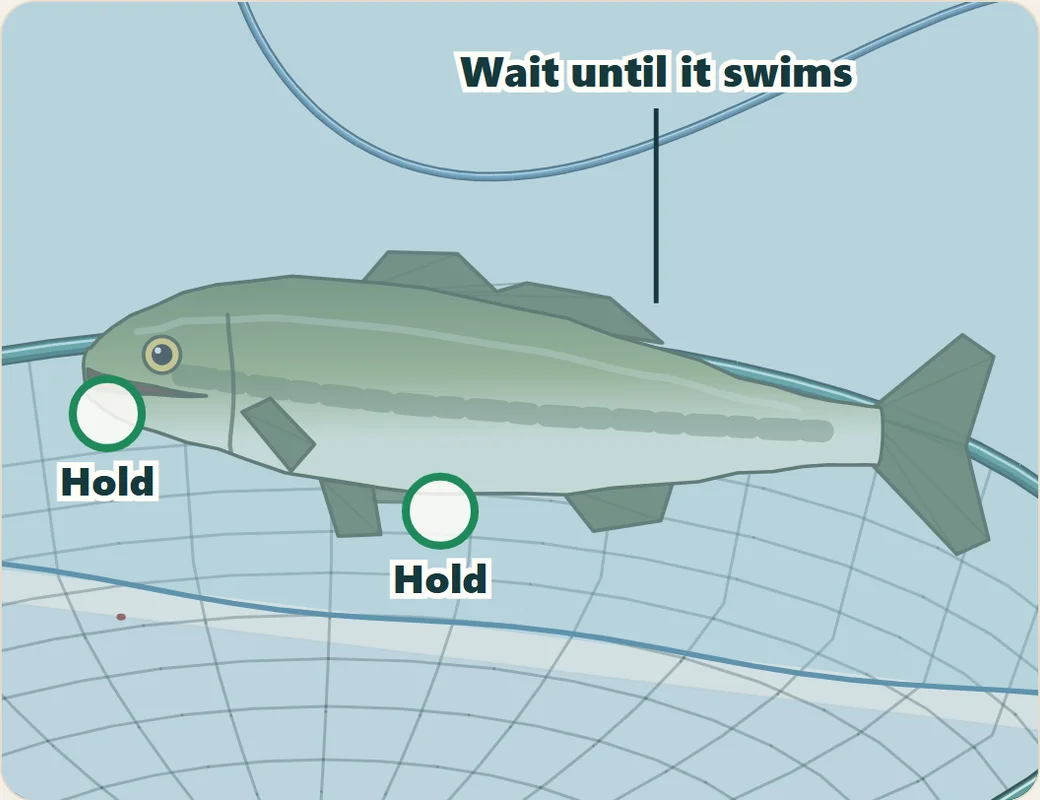
Let the child watch if they do not want to touch the fish. If they want to help, choose a job they can manage while you stay beside them. A photo can wait if it delays release or distracts you from supervision.
Avoid turning the outing into a test
Keep expectations small enough that you can notice what the child enjoys and what needs more practice.
Fishing your own rod while trying to teach. Put your fishing aside when the child needs help. A tangle or fish on your line can pull your attention away from them.
Changing equipment every time something goes wrong. Repeat one setup. Fix one step, such as releasing the button or checking behind, before adding another method.
Insisting on one more cast after interest fades. Pack up while the child is comfortable. They may want a shorter trip, another activity or a chance to try again another day.
Rushing a fish photo. Have the camera ready beforehand, or skip it. Gentle handling and close supervision come first.
Finish by collecting loose line, hooks and litter. After salt water, follow the gear-rinsing advice in learn fishing.
Ask what they liked and what they want to try next. If you need more practice yourself, can you teach yourself to fish gives you a way to work through the basics between outings.
Frequently asked questions
What is a good age to teach a child to fish?
There is no single right age. Very young children can watch fish with you under close supervision. As reference points, some official programs accept children from age 6 with a parent or guardian, while others offer workshops for ages 8 to 14. Those are program limits, not milestones. Add jobs as the child gains control and interest.
How do I teach a child to cast a fishing rod?
Start on dry land with a hookless casting plug and a target. Show the controls for their reel, then demonstrate a gentle cast. Teach looking behind and around before every attempt. Let them try, correct one movement at a time and keep practicing without a hook until casts are controlled.
How long should a child's first fishing trip last?
Keep it flexible. Official guides suggest an hour or two can be enough, while some children may finish after a few minutes. Stop sooner if they are tired, uncomfortable or no longer interested. A nearby spot makes a short outing easier.
Does my child need a fishing license?
It depends on the country, region and water. Check your local fishing authority for child exemptions and the adult's requirements, including assisting with casting or reeling. Freshwater and saltwater rules may differ. Seasons, limits and equipment rules still matter even when a license is not required.
Should a child wear a life jacket when fishing from shore?
Yes. Official guidance recommends a properly fitted life jacket for children learning beside the water, including from shore. Keep it fastened and supervise closely within arm's reach. Check local approval standards and life jacket rules, which differ by country and region.
What if my child does not want to touch the fish?
Let them watch while you handle it. Do not insist on touching or posing with the fish. Keep supervising at the water's edge and release promptly when local rules allow. They can try another part of fishing instead.
Sources
- California Department of Fish and Wildlife: Teach your child to fish
- Massachusetts Division of Fisheries and Wildlife: 10 tips for taking kids fishing
- Ontario Ministry of Natural Resources: Learn to Fish guide
- Victorian Fisheries Authority: Family fishing guide
- Transport Canada: Choosing lifejackets and personal flotation devices (PFDs)
- U.S. Coast Guard: Life jacket wear: Wearing your life jacket
- Victorian Department of Health, Better Health Channel: Fishing: Preventing injury
- Surf Life Saving NSW: Rock fishing
- Surf Life Saving NSW: Rip currents
- New York State Department of Environmental Conservation: Basic fishing tackle and techniques
- NOAA Fisheries: Catch and release fishing best practices
- Ontario Ministry of Natural Resources: Free family fishing
- NSW Department of Primary Industries and Regional Development: Come Fish with Us
- Texas Parks and Wildlife Department: Fishing gear maintenance and repair
- National Weather Service: Lightning tips
- National Weather Service: Rip current science
- Fisheries and Oceans Canada: Learn about and apply for a recreational fishing licence
- Texas Parks and Wildlife Department: A Basic Guide for the Beginning Angler
- Ontario Ministry of Natural Resources: Learn to Fish