You may hear that you should yank the rod as hard as you can at every bite. You do not need to. Fisheries guides say one moderate lift usually sets an ordinary J-shaped hook. With a circle hook, whose point curves inward, reel steadily instead of lifting.
Beginner fishing mistakes and how to fix them
Beginner fishing mistakes include overfilled reels, weak knots, unsafe casts, loose line and rushed fish handling. Learn to Fish: Fishing Basics, our Android app, guides you through setup, casting and careful release. Check the rules first, match your gear to local fish, and prepare your landing net before you cast.
Beginner fishing mistakes at a glance
Start with the stage that went wrong, then use the matching fix below. These common fishing mistakes occur on lakes, rivers and the sea, although equipment and rules differ.
| Stage | Mistake | What to do instead |
|---|---|---|
| Before the trip | Assuming the same rules apply everywhere | Check the exact water and method |
| Choosing gear | Using an outfit too heavy or complicated for the job | Match rod, reel and line to local fish |
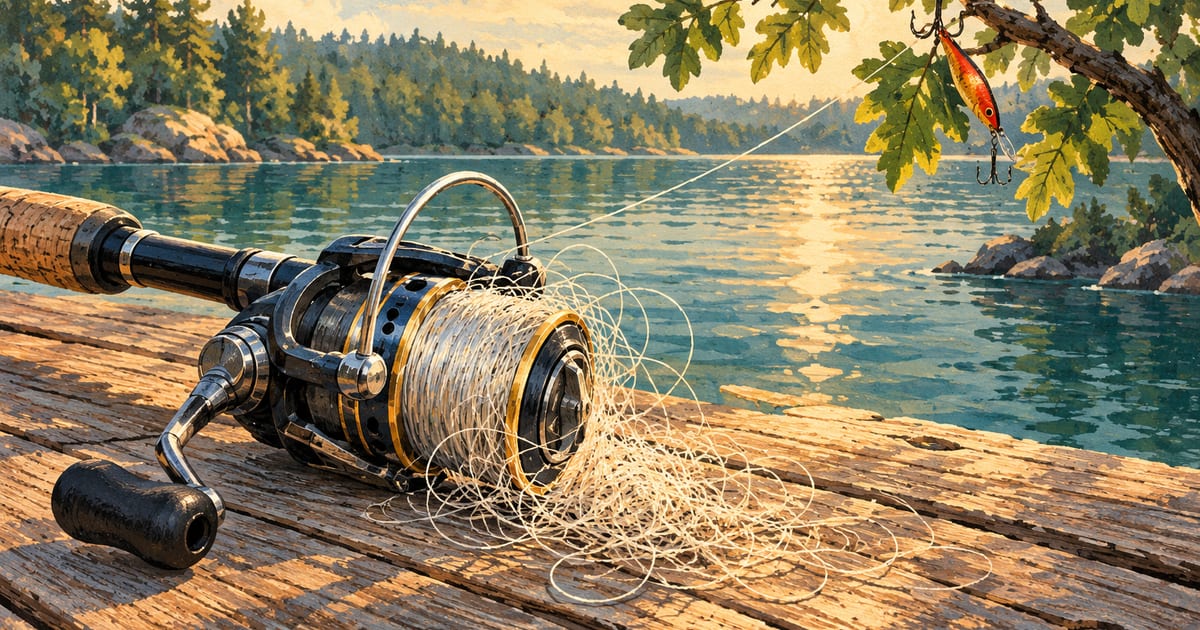
| Preparing line | Overfilling the spool or leaving loose loops | Leave the correct gap and remove loops |
| Tying on | Tightening a knot dry or choosing the wrong hook | Wet and test the knot; match the hook to the fish |
| Casting | Forgetting the bail or people behind you | Practice without a hook and check your space |
| Getting a bite | Leaving slack, jerking every hook or locking the drag | Remove slack, identify the hook and test the drag |
| Landing | Lifting by the line or handling with dry hands | Use a net, wet hands and body support |
| Staying safe | Trusting a quiet sea or leaving a life jacket unworn | Check waves and tides; wear the jacket |
| Packing away | Storing salty or wet equipment | Rinse sea gear gently and let it dry |
Work through the preparation checks before casting. Correcting a knot or setting the drag is easier before a fish is pulling on the line.
Check the rules and simplify your setup before you go
Start with the water you will fish.
Skipping the rules check: licenses, seasons, permitted bait, hooks and catch limits differ by country and region. Check your local fishing authority, the government agency managing fishing, for your chosen water. Learn which fish you may keep, their size limits and any fish you must release or must not return to the water. Planning to release your catch does not mean you can skip checking license requirements.
Sea fishing can have separate licenses and rules. Do not assume a freshwater license covers a pier, jetty or beach.
Using gear that does not match the job: check the recommended line and casting-weight ranges printed on the rod, plus the reel's line capacity. Ask locally which simple outfit suits the fish and conditions. Gear for large fish or heavy weights may be excessive for small fish. Gear that is too light can also make landing a fish take too long.
Learning several reel types at once: start with one outfit. A spinning reel has an open spool beneath the rod and a wire arm called the bail. A spincast reel uses a push button. Baitcasting reels need additional spool-control practice.
Buying before checking for a loan: some fishing authorities offer free beginner events, gear loans or license-free days (other fishing rules still apply on those days). See can you teach yourself to fish for where to find them.
Fix your line, knot and hook before casting
Check these parts while the hook is safely in front of you.
Stop overfilling the reel
The spool is the part that holds line. Follow your reel and line instructions when filling it, keeping light tension as line goes on. Unless the reel specifies otherwise, stop filling a spinning spool about 1/8 inch (3 mm) short of its rim.
If a loop shows on the spool, do not cast it out. Pull it off with the bail open, then wind the line back under light tension. Is fishing hard to learn covers the other causes of tangles.
Wet and test the knot
Do not finish an improved clinch knot by pulling it tight while dry. Wet it first, tighten it, then test it with a firm pull while keeping clear of the hook point. Retie a knot that slips. Check the nearby line for damage too.
Learn to Fish: Fishing Basics, our Android app, shows the improved clinch knot in an animation you can slow down and replay. You can practice with thick cord first, before repeating the steps with fishing line.
For the complete tying sequence, see our learn fishing guide.
Match the hook to the fish and bait
Choose for the fish's mouth and the bait you will use, rather than grabbing any spare hook. An oversized hook can be unsuitable for small fish, while a very small one can be swallowed. Ask locally for a suitable size and check any hook restrictions. There is no single hook size for every lake, river and sea trip.
Practice the cast before adding a hook
Casting practice lets you sort out the reel controls without a baited hook flying through the air.
Skipping practice: use a hookless casting plug, a weight made for practicing casts, in an open area away from people. Aim at a nearby target. Official beginner guides emphasize accuracy before distance.
Forgetting to look behind you: check behind, beside and overhead before every cast, including on a busy pier. Look for people, branches and other obstacles. Check that the line is not wrapped around the rod tip. Wait if someone walks through your casting space.
Opening the bail before holding the line: with a spinning reel, hold the line against the rod with your index finger first. Open the bail with the other hand, then make a smooth cast and release the line during the forward movement. Close the bail by hand afterwards.
The app's hookless casting practice includes a close-up of the index finger holding the line while the other hand opens the bail.
Releasing at the wrong moment: if the plug drops close in front of you, you probably released too late. If it flies almost straight up or behind you, you probably released too early. Return to smooth, controlled practice casts before adding a hook.
Check slack, hook type and drag when fish bite
For a missed bite, check how the line, hook and reel are working together.
Leaving too much slack: slack is loose line between you and your float or rig. After casting, remove the excess without dragging the bait out of position. With a bobber (float), watch for it going under or moving sideways. With a bottom rig, keep light contact and watch the rod tip and line for movement. Waves move a float too, so avoid striking at every bob.
Striking too early or too hard: match your response to the hook. With a float and an ordinary J-shaped hook, respond when the float goes under or moves along the surface. Take up slack and make a short, quick lift. With a circle hook, reel steadily until it takes hold. Do not apply a fixed waiting period to every fish and method.
Leaving the drag unchecked: drag is the reel's adjustable resistance to line being pulled out. Too tight, and the line can break. Too loose, and you may struggle to hook or control a fish. Before baiting, set the reel to retrieve and pull the line by hand, away from the hook. Adjust the drag until the line feeds out against firm resistance.
The app's lake path includes checking the drag before baiting the hook. Its float-response lesson shows taking up the small slack before responding.
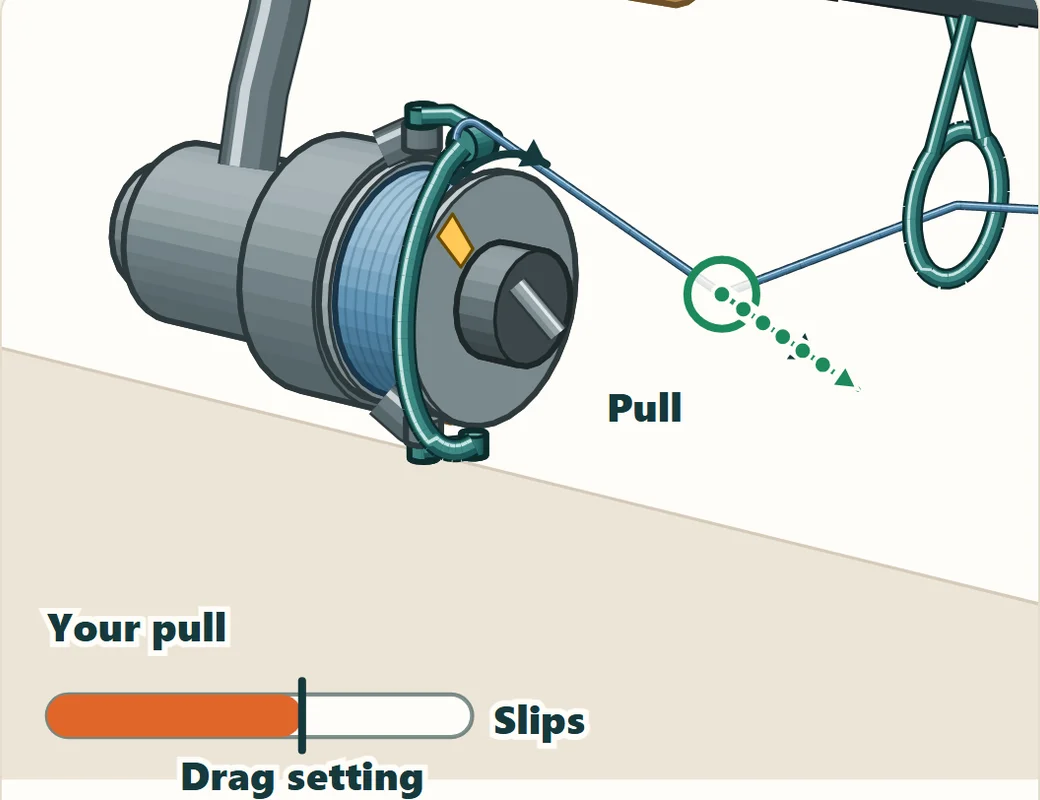
Keep steady pressure once a fish is hooked, allowing the drag to give line during a strong pull. Avoid letting the line fall loose or fighting the fish to exhaustion.
Get your net ready before you catch a fish
Landing and release begin with preparation, rather than a search for tools while a fish waits.

Lifting the fish by the line: use a suitable landing net and support the fish's body instead of suspending its weight from the hook. A wet rubber net or soft, knotless mesh reduces damage to scales, fins and the protective mucus coating. Keep a hook-removal tool and line cutters within reach.
From a pier, decide before casting how you will reach a fish. If you cannot land and release it safely from your standing place, choose another spot. Avoid scrambling down slippery rocks after a catch.
Dry hands or a long photo stop: wet your hands, support the fish's body and keep it in the water whenever possible. Follow the release steps in learn fishing, including what to do if a hook is swallowed.
The app's lake path shows how to prepare the landing net before fishing, then guide the fish into it and care for, unhook and release the catch.
Take waves, tides and boat safety seriously
Your standing place and route home matter more than reaching a promising patch of water.

Trusting a few quiet waves: coastal safety guidance recommends watching from dry ground for at least 30 minutes, then staying alert while you fish. Start on firm sand or a sheltered pier or jetty with railings, stay off slippery or wave-washed rocks, including rock breakwalls (breakwaters), and use first-time fishing to check waves, tides and your route back.
Wading out to recover tackle: a darker gap with fewer breaking waves can be a rip current, and rips can be hard to see. Stay out of the surf and leave a snagged rig rather than entering the water for it.
Carrying a life jacket without wearing it: wear a properly fitted, fastened life jacket on a boat. You may be unable to find and put it on after falling in. Choose one approved locally for your activity and check its condition before leaving.
Jumping in after someone who falls in: call emergency services and throw them something that floats instead.
Life jacket rules differ by country and region, including for some shore fishing. Check your local fishing authority and boating authority. Take a companion and tell someone your destination and return time.
Rinse sea gear and record one thing to fix
The trip ends after the equipment is clean, dry and ready to use again.
Storing gear without rinsing off the salt: salt water corrodes metal parts, so rinse sea gear gently with fresh water and let it dry before storage. The learn fishing guide covers rinsing and reel care.
The app's sea path includes rinsing salt off the gear after fishing.
Closing a wet tackle box: hooks, swivels and tools can rust when stored damp. Leave the box open somewhere secure until its contents are dry. Inspect the rod and line for damage before the next trip.
If nothing bit, work through why am I not catching any fish before choosing one change for next time.
Write down the specific mistake you noticed, such as a loose spool loop or a late casting release, and practice that fix.
Frequently asked questions
What beginner fishing mistakes should I fix first?
Start with safety and rules, then check your spool, knot and drag before casting. Prepare the landing net and release tools too. If something went wrong last time, choose its specific fix, such as removing loose loops or practicing the casting release with a hookless plug.
Is a baitcasting reel a mistake for a beginner?
It adds a skill: controlling a spool that turns during the cast. Fishing guides describe baitcasting as better suited to more experienced anglers. A push-button spincast reel or a spinning reel is simpler to start with. If you already have a baitcaster, practice with a hookless plug before fishing.
Is it a mistake to use very heavy fishing gear?
Yes, if it makes small baits difficult to cast or discourages fish that bite softly. Gear that is too light can make landing a fish take too long. Match the line and lure to the rod's printed ranges, and ask locally what suits the fish you want to catch.
Should I use a smaller hook if I miss bites?
Check hook size against the fish and bait, but check slack, drag and your response too. Smaller is not always the fix: a very small hook can be swallowed. Ask locally for an appropriate size, including any rules about hook type.
Should I wade out to free a snagged rig?
Leave the rig if reaching it means entering surf or moving water. Rip currents can be hard to spot, and a darker gap with fewer breaking waves can be a rip. Retie from a safe place on dry ground.
Can I lift a fish onto a pier with my rod?
Do not hoist a fish by the rod and line. Before casting, arrange a net that can reach the water or choose a lower spot. If landing it would require climbing onto wet rocks, fish somewhere else.
Is it a mistake to take a photo before releasing a fish?
Only if it keeps the fish out of the water too long, so have the camera ready before lifting it. Fisheries guidance recommends minimizing air exposure, ideally to less than 60 seconds.
Sources
- New York State Department of Environmental Conservation: Basic fishing tackle and techniques
- New York State Department of Environmental Conservation: Intermediate fishing tackle and techniques
- Texas Parks and Wildlife Department: A Basic Guide for the Beginning Angler
- Ontario Ministry of Natural Resources: Learn to Fish guide
- Fisheries and Oceans Canada: Learn about and apply for a recreational fishing licence
- Ontario Ministry of Natural Resources: Learn to Fish
- Ontario Ministry of Natural Resources: Free family fishing
- Texas Parks and Wildlife Department: Tackle Loaner Program
- NOAA Fisheries: Catch and release fishing best practices
- National Park Service: Catch and release fishing
- Transport Canada: Choosing lifejackets and personal flotation devices (PFDs)
- Surf Life Saving NSW: Rock fishing
- Surf Life Saving NSW: Rip currents
- Texas Parks and Wildlife Department: Fishing gear maintenance and repair
- Illinois Department of Natural Resources: Fishing: For anglers of all ages
- Wiley: Fishing For Dummies, 2nd edition, by Peter Kaminsky and Greg Schwipps (2011)